There was a time when the communications task for a national governing body of sport was relatively straightforward. Issue a press release, update the website, provide results and perhaps arrange an interview when an athlete performed particularly well.
That world has disappeared.
Today, every governing body is also expected to operate as a publisher, broadcaster, photographer, community manager and commercial storyteller. A championship is no longer simply an event to be organised. It is a stream of previews, team announcements, live updates, short-form video, photography, results, interviews, sponsor content and reaction.
The audience does not necessarily adjust those expectations according to the size of the sport. A supporter scrolling on their phone compares what they see from a smaller national governing body with the output of the biggest teams, leagues, and media organisations in the world.
That creates one of the less visible pressures within Irish sport.
For a major governing body, specialist teams can support content across media, social platforms, video, design, data, and commercial partnerships. In a smaller organisation, much of the same work may sit with one communications executive or with somebody for whom communications is only one part of a much broader job.
They may post results while also answering athlete queries, supporting an event, satisfying a sponsor, updating the website, and preparing material for the board. The polished post seen by the public can conceal a remarkable amount of improvisation behind it.
Content is no longer an optional extra
Content is not merely publicity. It now supports almost every important objective of a governing body.
It helps people discover a sport and understand how to participate. It gives clubs and volunteers material they can share. It provides athletes with recognition. It demonstrates activity and impact to Sport Ireland and other funders. It offers sponsors visibility and evidence of value. It gives broadcasters and journalists usable stories. It can also help a sport establish a more persuasive case for investment.
For smaller sports in particular, content may bridge achievement and awareness. An Irish athlete can deliver a world-class performance in a discipline that receives little mainstream coverage. If the governing body does not capture the moment, explain its significance and distribute it effectively, the achievement can pass almost unnoticed beyond those already involved.
That is why the best smaller governing bodies have become highly resourceful. They build networks of trusted photographers and videographers. They use athletes as authentic voices. They equip team managers and volunteers to gather material from venues. They repurpose one strong interview across a website, newsletter and several social platforms.
They understand that a phone, used well and with a clear plan, can sometimes deliver more value than an expensive production assembled too late.
The work is often excellent. It should not, however, be mistaken for effortless work.
The danger of feeding every platform
Demand is relentless because each platform appears to require its own tone, format, and rhythm. A website needs permanence and detail. Instagram rewards strong imagery and personality. TikTok favours immediacy and native storytelling. LinkedIn can serve commercial and governance audiences. Email remains valuable for clubs, members and stakeholders. Live results and streaming carry another set of technical demands.
Trying to feed all of them equally can keep a small team permanently busy without making it significantly more effective.
The answer is not necessarily to produce more. It is to decide more clearly what the content is meant to achieve.
A governing body might choose participation, athlete storytelling and commercial value as its three priorities. That decision provides a filter. A beginner explainer may matter more than another generic training photograph. A strong profile of an emerging athlete may create greater long-term value than a sequence of routine posts. A sponsor activation that tells a genuine story about the sport will travel further than repeated logo placement.
Consistency also matters more than pretending to be everywhere. An achievable weekly rhythm, supported by a shared calendar and a bank of reusable assets, is more valuable than a burst of activity followed by silence.
There is also scope for greater collaboration. Governing bodies can provide clubs and athletes with simple templates, guidance and shared standards. Major events can budget collectively for content capture. Sponsors can invest in storytelling capacity as part of a partnership, not simply purchase branding inventory. Educational institutions can give emerging creators experience, provided the relationship is structured, and the work is properly valued.
Technology and artificial intelligence can reduce the burden of transcription, captioning, editing and repurposing. They can make a small team faster. They cannot replace judgement, access, or trust, and they should not become an excuse to assume one person can now do the work of five.
Content capacity is organisational capacity
There is a wider strategic point here for boards, funders and commercial partners.
Communications should not be treated as the final layer added after the sporting work is complete. It is part of how that work achieves reach and value. If an organisation wants stronger participation, greater profile, deeper sponsor relationships and a clearer public identity, it needs some capacity to tell its story.
That does not mean every governing body requires a large media department. It does mean the workload must be recognised honestly. Expectations should match resources. Content priorities should form part of the organisation’s strategy. The people responsible need access to athletes and decision-makers, clarity around rights and approvals, and enough budget to secure specialist help at the moments that matter most.
The smallest governing bodies will never win a volume contest against the largest sports. Nor should that be their ambition. Their advantage lies elsewhere: close access, distinctive communities, and compelling athletes and stories that haven’t been flattened by overexposure.
The strongest content from a smaller sport often succeeds precisely because it feels close to the action and true to the people involved.
The challenge is to preserve that authenticity while building a system that does not depend upon constant overextension by a small number of committed people.
Irish sport rightly celebrates the athletes, coaches and volunteers who make performance possible. We should also recognise the people working behind the screen, often late at night or from the side of a venue, ensuring those performances are seen, understood and remembered.
In the modern sporting economy, that is not peripheral work. It is part of the performance.
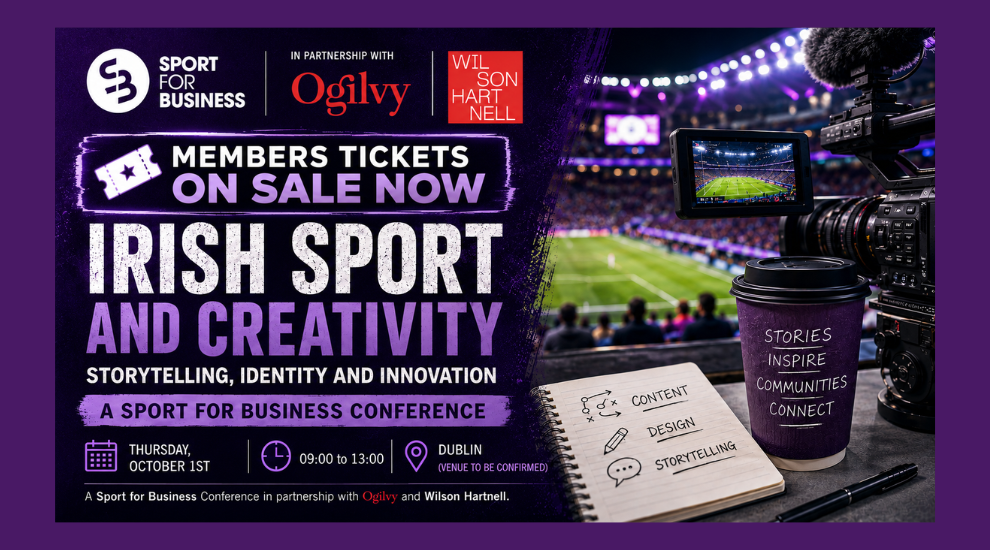
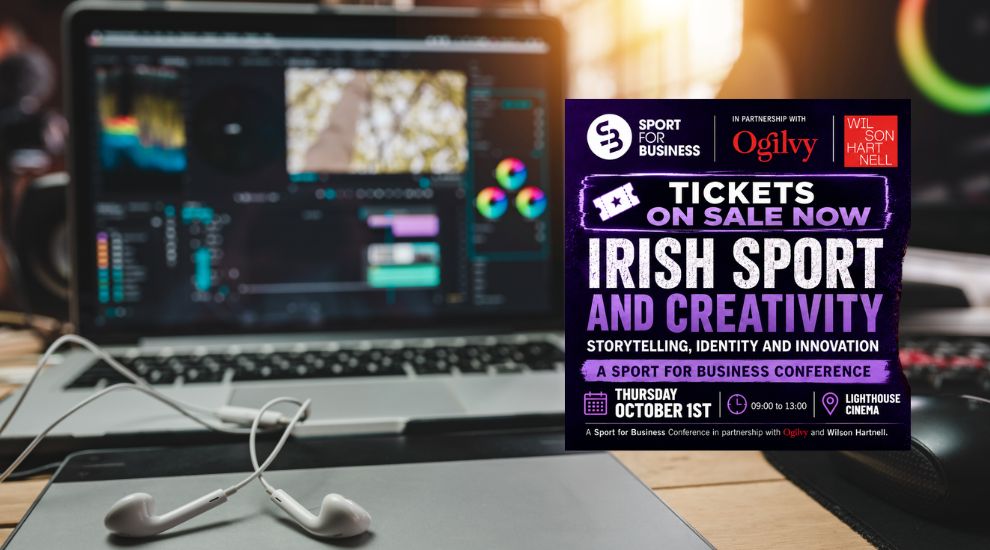
It will also be a key element of the inaugural Sport for Business Sport and Creativity Conference, in partnership with Ogilvy and Wilson Hartnell on October 1st.
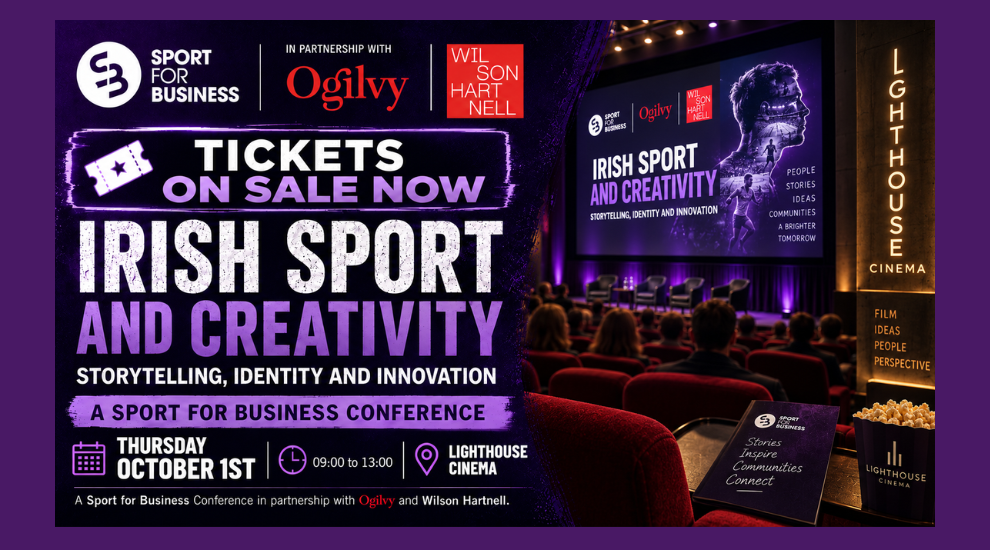
Join leaders from sport, business, media and the creative industries at the Lighthouse cinema in Dublin on the morning of Thursday, October 1st for a thought-provoking morning exploring how Irish sport can harness creativity to build stronger brands, inspire communities, engage new audiences and create greater commercial impact.
The programme will feature conversations around:
- Why Creativity Matters in Irish Sport
- The Power of Storytelling
- Clubs and Governing Bodies as Publishers
- The Kits We Wear – Identity, Design and Meaning in Irish Sport
- Creativity in Sponsorship and Commercial Partnerships
- Community, Identity and Place
- The Next Creative Opportunity for Irish Sport
Whether you’re working in a governing body, club, brand, agency, media organisation or the wider creative sector, you’ll leave with fresh perspectives on how creativity can strengthen every aspect of sport.
Tickets are on sale now, with Speaker announcements starting this week as we build towards one of our key gatherings of Sport for Business members in 2026.