Sport has an extraordinary supply of stories. The creative challenge is deciding which to tell, how to tell them and how to make people care.
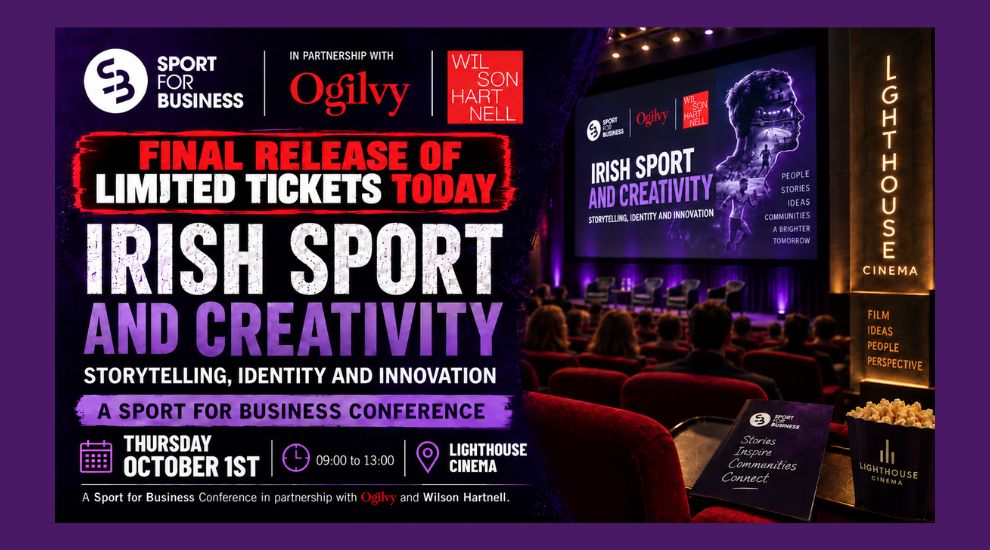
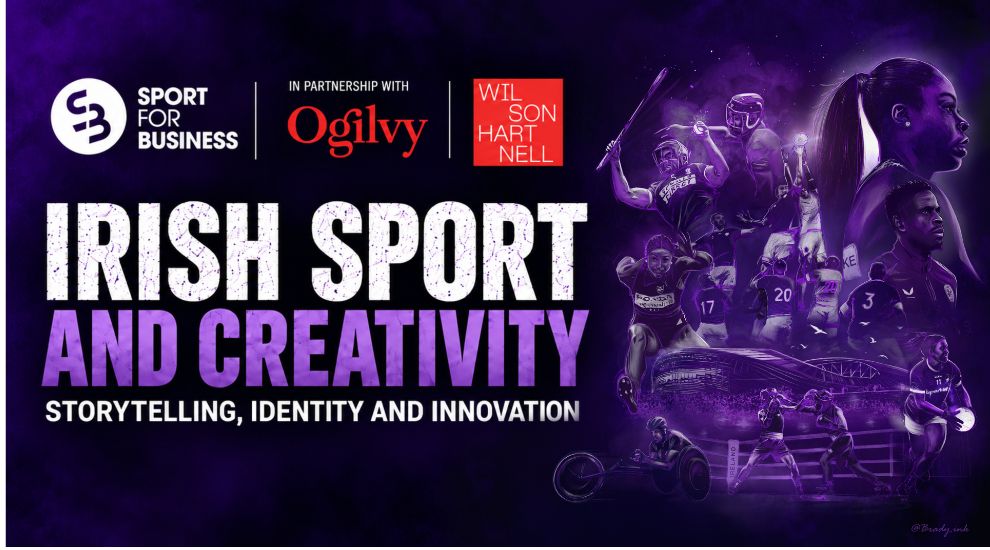
That challenge brought a full house to the Lighthouse Cinema yesterday for the Irish Sport and Creativity Conference, delivered by Sport for Business in partnership with Ogilvy and Wilson Hartnell.
Across a morning of international campaigns, Irish experience and candid conversation, the recurring message was that creativity begins with understanding people, their passions, their communities and the things that make sport important in their lives.
Charlie Coney of Ogilvy set the tone with a challenge relevant to every organisation competing against rivals with deeper pockets: “If you can’t outspend the establishment giants, you have to outthink them.”
He argued that while results on the field will always be uncertain, organisations have greater control over the relationships and value they build around it.
He offered three approaches. Use existing assets more imaginatively, give fans greater creative freedom, and use sport to address bigger problems.
Making the best use possible of the cinema screen behind him, he then showed three examples from South American and Global campaigns that absolutely shone.
Mercado Libre turned advertising boards into ball dispensers, making its promise of fast delivery part of the match itself. Then Peruvian club Deportivo Municipal opened its jersey to small businesses through a collective sponsorship model that ticked every box for engagement and revenue.
Powerade’s Athletes Code demonstrated how a creative idea could reach into the substance of a sponsorship agreement, supporting athletes taking a break for their mental health.
The common thread was finding a useful role for a brand and earning attention through what it contributed.
Human Truth and the Courage to Protect an Idea
Nuala Kroondijk of AIB brought that thinking into the Irish sporting landscape, explaining how a longstanding partnership must keep finding fresh relevance.
Longevity brings recognition, but it also risks becoming part of the furniture. For AIB, creativity starts with a human truth and a credible role for the brand.
Players provide compelling stories, but so do coaches, volunteers and the communities that sustain them.
Her reflections on The Toughest Trade and The Toughest Summer illustrated the breadth of that approach, from exploring the abilities of amateur GAA players alongside elite professionals in their own sporting system to documenting communities responding to the pandemic.
There was also a lesson for anyone commissioning creative work: good ideas need protection. That can mean difficult conversations, internal advocacy and bringing partners along before every detail is resolved.
Sporting Organisations as Publishers
Aoife Clarke of the IRFU, Eadaoin Keane of the FAI and Noel Quinn of GAA+ explored how sporting bodies have become publishers and broadcasters in their own right.
Clarke described the IRFU’s investment in in-house videographers who can become embedded in team environments. Consistent relationships build the trust needed to reveal personality while respecting the demands of high-performance sport.
Keane reinforced that point, describing players as active collaborators in content creation. The opportunity extends beyond international teams into clubs, grassroots activity and the League of Ireland.
Her account of preparing communications for different match outcomes showed how creativity and data work together. An organisation cannot determine the result, but it can prepare to respond quickly and meaningfully when the moment arrives.
Quinn traced the development of the GAA’s streaming offering from serving the diaspora to building a broader publishing operation. In an environment of abundant content, the challenge is creating material worth people’s time.
The panel also recognised the storytelling potential of women’s sport, alongside the continuing need for greater visibility. A preview of the documentary series following Athlone Town’s women’s team, produced by Iris Productions, brought those opportunities to life on the cinema screen.
Global Brands and Local Identity
Paddy Carberry of Guinness described a global brand with a local heartbeat, using sport’s capacity to bring people together across different markets and cultures.
That requires consistency of purpose alongside flexibility in execution. An idea must feel relevant in the community where it appears.
He also discussed the prominence of Guinness 0.0 in sporting activity and the brand’s work in women’s sport, including addressing the limitations of footwear historically designed around men’s feet.
Padraic McKeever brought identity into its most tangible sporting form: the kit we wear.
For McKeever Sports, design is central to the business because teams and supporters must feel proud of the product. Tradition provides the starting point, with detail and storytelling giving familiar colours fresh meaning.
His discussion of Team Ireland and the David Clifford range showed how an Irish business can create new opportunities by understanding both collective pride and individual personality.
Giving Fans Their Due
Gillian Herlihy’s closing presentation connected the morning’s examples through fan and community behaviour.
Supporters bring their own humour, language and cultural references. Brands need to understand those codes, recognise when they can contribute and know when to let a moment belong to the community.
Her framework for measurement extended beyond reach into creative, distribution, cultural, commercial and relationship value. Fans help produce stories, carry them into new spaces and shape what they mean.
That was a fitting conclusion to a morning centred on human connection.
Thanks
Our thanks to all the speakers, to Sharon Murphy and the teams at Ogilvy and Wilson Hartnell, including Louise McCleery, who produced the reel below, to Rory McEvoy and Quiz Wizards for producing the Creative Pulse activation we used through the coffee break, to Eoin Brady, BradyInk.ie, for the brilliant human-made illustration that served as the backdrop to our big screen and lanyards and can be seen above, and to everyone who joined us.
If you were one of them, we’d love to hear your thoughts on how the day went. Complete our short feedback survey here. Or add your voice to the Creative Pulse, which will remain open through the weekend.
The challenge now is to take the ideas we spoke of and the notes we took back into our organisations: be brave, earn trust, work together and give sport’s stories the care they deserve.
View this post on Instagram
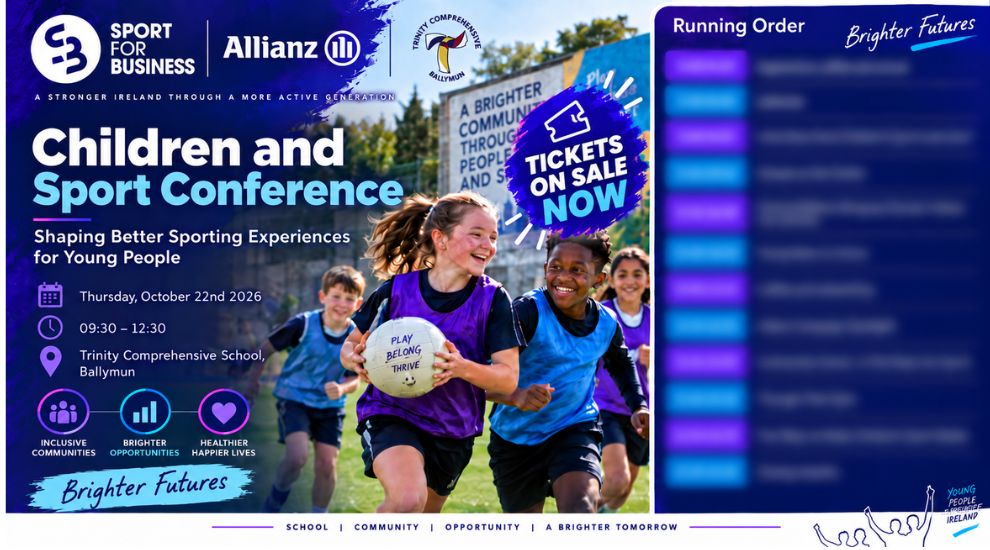
If you enjoyed yesterday, or you couldn’t make it but like the sound of how we bring people together for great events, you might enjoy one of the two events below that are coming up in the next few weeks…
 Wilson Hartnell, AIB, Guinness, the IRFU, GAA, FAI, Brady Ink, Iris Productions, Lidl Ireland, Boxing Ireland and Catapult, all of whom featured in yesterday’s Conference, are among the many organisations that see the value of a Sport for Business membership. If you would like to join them and see your organisation in our content, on our stages, and in the conversation happening every day around the commercial world of Irish Sport, email us today and let’s see what is possible, or sign up straight away from the link below.
Image Credit: Sport for Business and BradyInk.ie
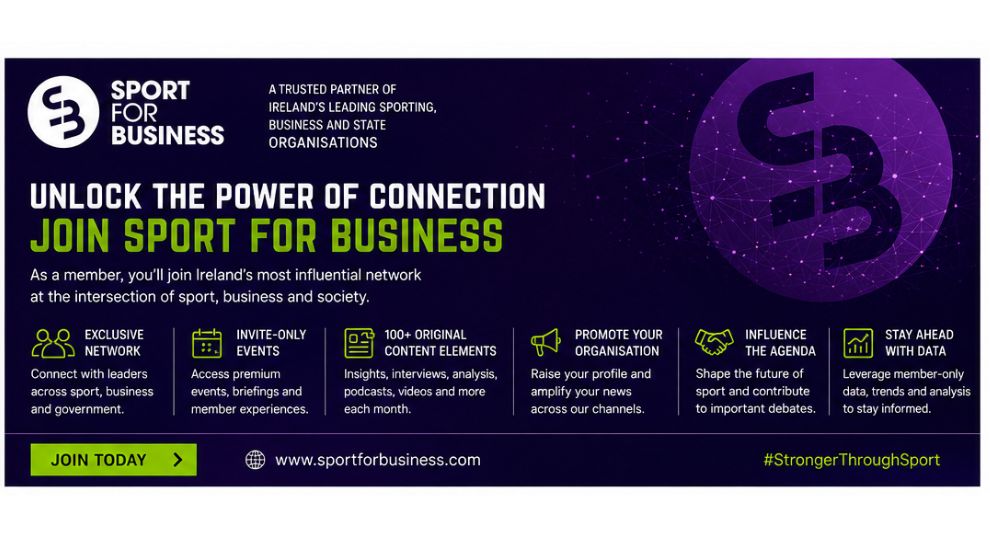
ABOUT SPORT FOR BUSINESS
Sport for Business is Ireland’s leading platform focused on the commercial, strategic and societal impact of sport. It connects decision-makers across governing bodies, clubs, brands, agencies, and public institutions through high-quality content, events, and insights.
Sport for Business explores how sport drives economic value, participation, inclusion and national identity, and how your story can be part of ours.
Through analysis, storytelling and convening the sector, it helps leaders understand trends, share best practices, and make better-informed decisions. It positions sport not just as entertainment but as a vital contributor to Ireland’s social and economic fabric.
Find out more about becoming a member today.
Or sign up for our Daily Sport for Business Snapshot email bulletins to get a flavour of the material we cover.
Sign up for our News Bulletins here.