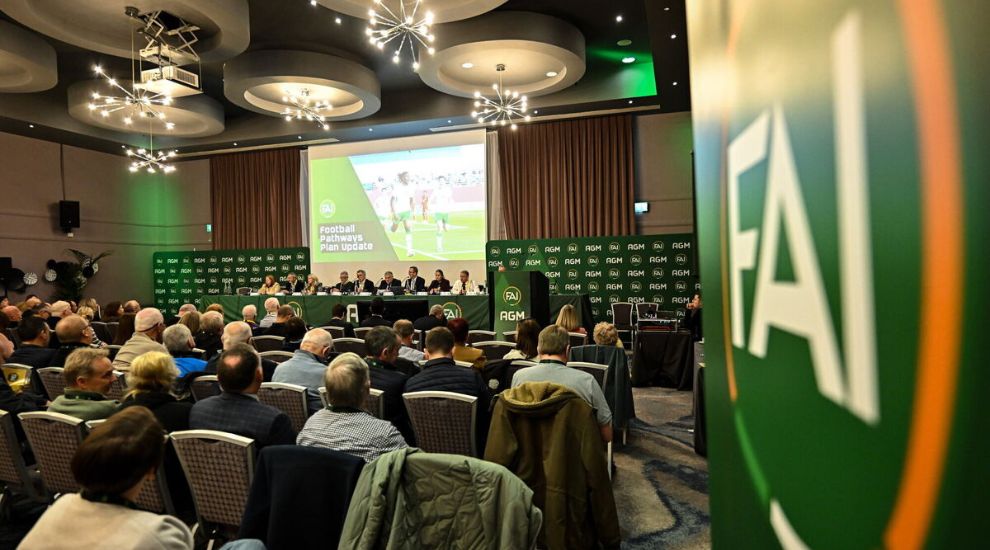
The FAI’s Annual General Meeting on Saturday was marked by a decisive vote to urge UEFA to suspend Israel from European football, followed by discussions about the Association’s financial position, governance reforms, and the long road ahead in rebuilding trust across the game.
Meeting in Dublin, delegates opened proceedings by continuing the earlier Extraordinary General Meeting (EGM), where members voted overwhelmingly — 74 in favour, seven against, with two abstentions — to submit a formal motion to UEFA calling for the suspension of the Israel Football Association from all UEFA competitions.
The motion, proposed by Bohemian FC and supported by the FAI Board, was based on breaches of UEFA statutes arising from the inclusion of clubs based in occupied territories and from failures to enforce anti-racism provisions.
FAI President Paul Cooke said the decision reflected “the clear democratic will of the membership,” even while acknowledging that it placed the Association in a sensitive international position.
“The members have spoken clearly,” said Cooke. “This motion is about football governance and about upholding the standards that UEFA itself has set. We are conscious of the sensitivities involved, but the process will be followed properly and transparently.”
The vote makes the FAI one of the first European national associations to take a formal stance on the issue, setting up what could be a complicated discussion at UEFA level in the months ahead.
Debt and Realism: The FAI’s Financial Picture
If the political motion dominated headlines, the financial report is likely to have a more immediate impact on the sport here.
FAI Chief Executive David Courell presented figures that underscored the scale of the challenge facing the governing body, and the realism now defining its strategy.
The Association’s overall debt stands at approximately €38 million, with repayments now re-phased out to 2036 in agreement with creditors and Government partners. Courell said the restructuring provided “breathing space” for reform but warned that the current financial model remained fragile.
“Football in this country needs to change,” he told delegates. “We’ve been operating on a structure that isn’t sustainable, and the transformation we’ve started will affect every area of how we work, from payroll to governance to how we serve the grassroots.”
Turnover for 2024 was reported at €61.56 million, a slight decline from the previous year. This mainly resulted from a drop in matchday revenue, from €18.6 million to €14.3 million. Cash reserves dropped from €1.6 million to €0.9 million, although the FAI expects to boost that figure to around €6 million with a new credit facility.
A voluntary redundancy scheme was announced as part of the Association’s “transformation programme,” with payroll currently accounting for about 27 % of total expenditure, well above UEFA’s recommended 17 % benchmark.
Chairman Tony Keohane told the meeting that while such measures were painful, they were necessary to build a more sustainable structure.
“We have to change the way we do our business. Every euro saved on administration is a euro we can reinvest in football,” he said.
Leadership Re-elected but Fresh Voices Join Board
The governance agenda, once a flashpoint for tension, passed more smoothly than in previous years. Paul Cooke was re-elected as FAI President, while Tony Keohane retained his position as Chair of the Board.
A new Vice President, Dave Moran, was elected, and two new directors joined the Board. Geraldine Nagle as a Football Director and Ciara Carty as an Independent Director. Their arrival was seen as a positive signal of renewal within the association’s leadership.
In his acceptance remarks, Cooke struck a pragmatic tone: “We are not out of the woods yet, but we are now on a defined path. Governance reform is not a box to be ticked, it’s about rebuilding the trust we lost and proving we can run football professionally, transparently and inclusively.”
The FAI’s leadership spoke openly of culture change, regional engagement and devolved decision-making, but acknowledged that the association still faces scepticism from clubs, leagues, and the grassroots community.
Keohane admitted as much: “We’ve lost trust and connection in the past. Rebuilding it will take time, communication and consistency.”
Around the edges, delegates raised issues that continue to dog Irish football, from fixture scheduling and funding for League of Ireland clubs to the calendar-year model’s ongoing disputes among schoolboy leagues.
The success of the FAI’s transformation plan will depend on how effectively it supports clubs and volunteers, manages debt, and capitalises on opportunities such as Ireland’s co-hosting of UEFA Euro 2028.
For all the turbulence of recent years, the 2025 AGM suggested a measure of maturity, of an organisation aware of its limits but also of its responsibilities.
In closing the meeting, Cooke told delegates that the path ahead would not be glamorous, but necessary. “Our job is to restore pride in Irish football,” he said. “That will take discipline, hard work and honesty — but the direction is clear.”
Image Credit: Onside
Further Reading for Sport for Business members:
Read our Sport for Business Coverage of Sponsorship
SPORT FOR BUSINESS Upcoming Events
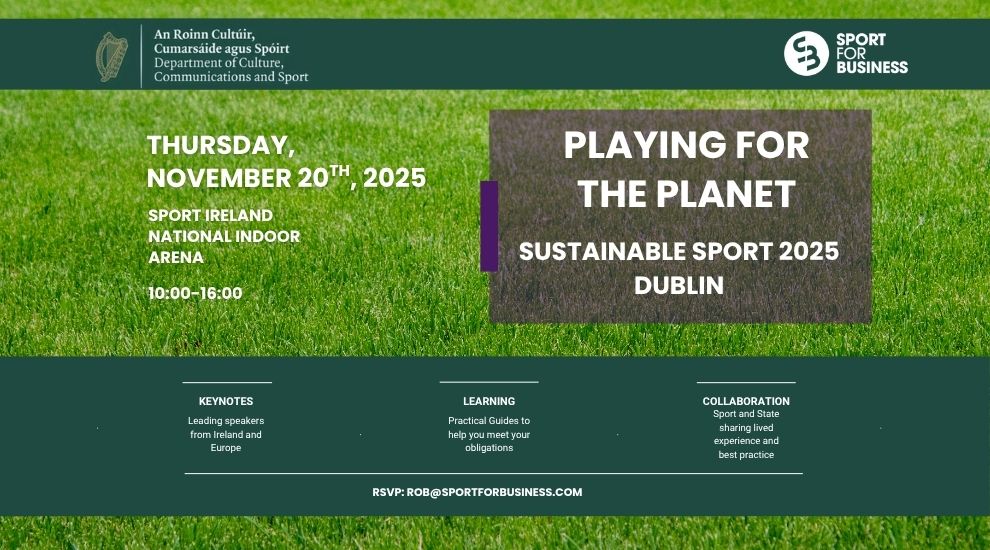
November 20th – Playing for the Planet – A new event focused on Sustainability in Sport with the Department of Culture, Communications and Sport
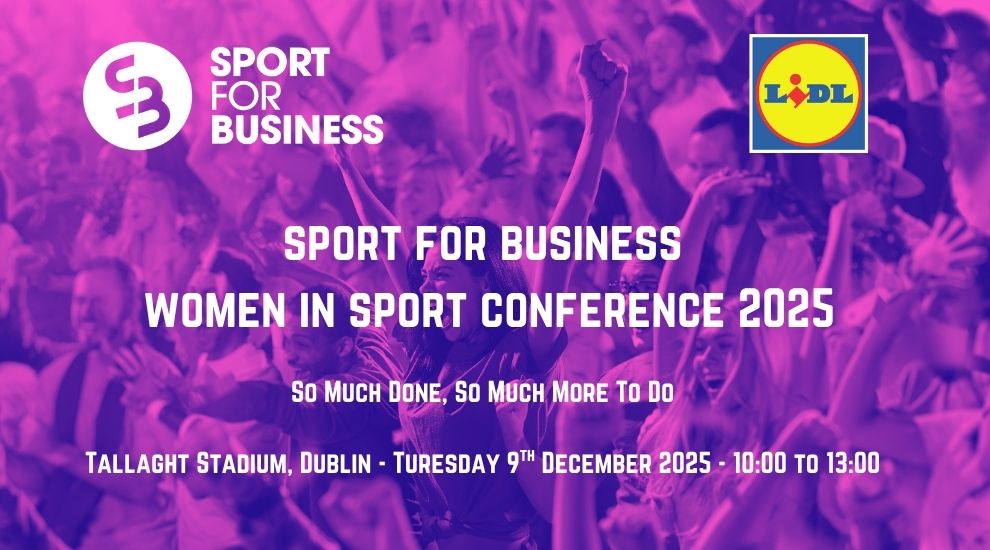
December 9th – Our 12th Annual Women in Sport Conference in partnership with Lidl.
January – The Sporting Year Ahead 2026 in partnership with Teneo.
Sport for Business Podcasts
MEMBERSHIP AND EVENT,
The GAA, Electric ireland and AIB, as well as all the leading sporting and business organisations in and around the world of sport, are among the 300+ members of the Sport for Business community.
This includes all of the leading sports and sponsors, as well as commercial and state agencies, individuals interested in our world, and an increasing number from beyond these shores taking a keen interest in Ireland.
Find out more about becoming a member today.
Or sign up for our twice-daily bulletins to get a flavour of the material we cover.
Sign up for our News Bulletins here.