The FAI has confirmed it has no choice but to fulfil its upcoming Nations League fixtures against Israel, in order to protect the long-term sporting and financial interests of Irish football.
In a letter issued to members of the FAI General Assembly, the governing body confirmed that the home fixture scheduled for 4 October will be played in Dublin, following consultations with Government and An Garda Síochána.
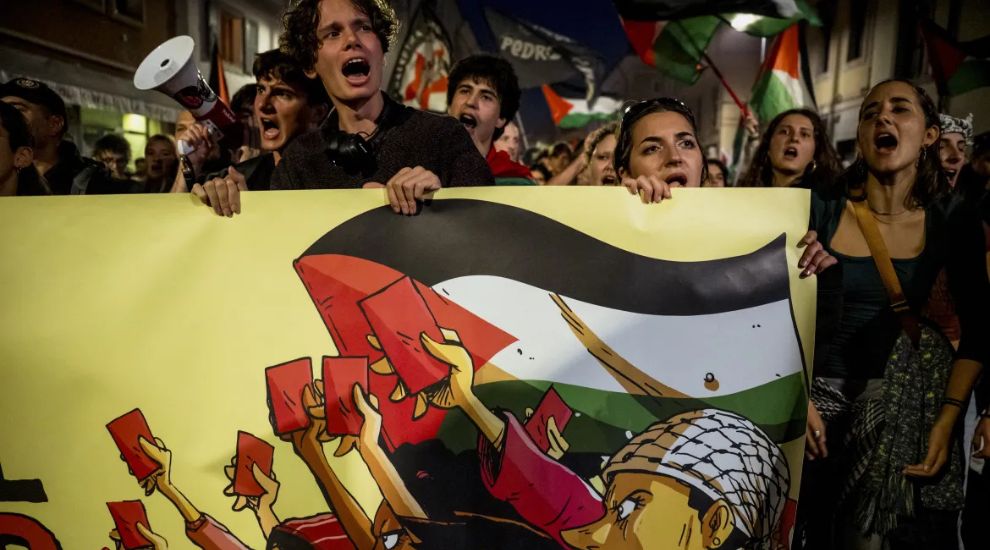
The decision comes amid significant political and sporting controversy following the draw for the 2026–27 UEFA Nations League in Brussels on 12 February, which paired the Republic of Ireland with Israel. Several figures within Irish football and politics have called for a boycott in light of the humanitarian situation in Gaza.
The Professional Footballers Association of Ireland (PFAI) has today published the results of a member survey, with 63% of 214 respondents indicating that Ireland should not play the fixture. Participants included players from the League of Ireland Men’s Premier Division, Women’s Premier Division and First Division.
High-profile figures within Irish football, including former manager Brian Kerr and League of Ireland managers Stephen Bradley and Joey O’Brien, have publicly called for a boycott.
However, Courell said the FAI’s executive and board had been presented with a situation that offered only “one viable option”.
“While our Federation and our members have made our position clear in terms of Israel’s involvement in international football, that has not been taken on board by UEFA,” he said.
“As such they are permitted to compete. And we have been consistent from day one that we will fulfil these fixtures.”
“We, in reality, do not have a choice for a variety of reasons.”
“We are in these posts and in these positions to safeguard the future of Irish football. And in this situation, difficult as it is, the decision presented to us only has one viable option — which is to fulfil these games.”
Financial and Regulatory Exposure
In the letter, FAI President Paul Cooke outlined the consequences of failing to play the fixtures, warning that refusal could expose the association to “severe sporting, financial and reputational sanctions”.
From a sporting perspective, forfeiting the matches would result in the automatic loss of six points, potential relegation to League C of the Nations League, damage to Ireland’s seeding for UEFA EURO 2028 qualification and a negative impact on FIFA world rankings.
“Such outcomes would materially harm the long-term sporting interests of Irish football,” Cooke wrote.
While stressing that the decision was not financially motivated, he acknowledged there would also be significant financial and regulatory consequences if Ireland refused to play.
The board, he said, could not act in a way that would breach directors’ legal duties or expose the association to sanctions from UEFA.
Unless there is a significant change to the situation in Gaza, it is likely that the game would be played before a much reduced audience, as was the case in similar circumstances in Italy, and it may even be the case that a game behind closed doors is a possibility though that has not been raised.
Speculation that the match could be moved to a neutral venue due to security concerns has also been addressed.
Courell said any relocation would require a formal instruction based on safety and security risk, which has not been issued.
“The Garda Síochána have been very clear that they are confident in their ability to deliver a safe and secure environment to facilitate the game to go ahead here,” he said.
There would be undoubted protest but is would be generally from once side of the debate, lessening the threat of conflict or public disorder.
Belgium previously relocated a home tie against Israel to Debrecen in Hungary in 2024 due to security concerns, but Irish authorities have indicated no such requirement exists in this instance.
Courell said the FAI remains open to hearing the views of its General Assembly but reiterated that the matches will be fulfilled.
“The reality is the games will be fulfilled because it is within the best interests of our football,” he said.
Cooke added that the association fully recognises the humanitarian concerns raised by members and supporters and intends to use the October fixture as an opportunity to provide tangible support for humanitarian efforts assisting civilians affected by the conflict.
In norway, all match proceeds from the game they played at home to Israel were donated to Medecin Sans Frontiers for the support of work they are doing in Gaza.
Further details on those initiatives are expected closer to matchday.
For the FAI, the decision represents a balancing act between governance responsibility, regulatory compliance and stakeholder sentiment — with the board concluding that the financial, sporting and legal risks of non-fulfilment outweigh the calls for boycott.
They are between a rock and a hard place and while the decision is difficult and no doubt personally very challenging, when you sit in the big chair, you have to make decisions based on the best thing for your organisation.

ABOUT SPORT FOR BUSINESS
Sport for Business is Ireland’s leading platform focused on the commercial, strategic and societal impact of sport. It connects decision-makers across governing bodies, clubs, brands, agencies and public institutions through high-quality content, events and insight. Sport for Business explores how sport drives economic value, participation, inclusion and national identity, and how your story can be part of ours.
Through analysis, storytelling and convening the sector, it helps leaders understand trends, share best practice and make better-informed decisions. Its work positions sport not just as entertainment, but as a vital contributor to Ireland’s social and economic fabric.
Find out more about becoming a member today.
Or sign up for our twice-daily bulletins to get a flavour of the material we cover.
Sign up for our News Bulletins here.
Upcoming Events