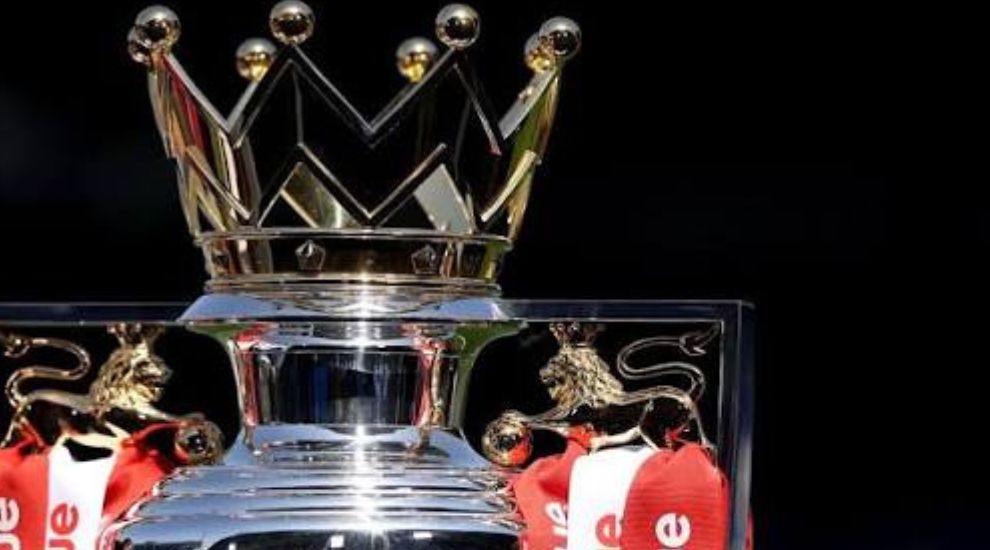
When Arsenal and Coventry City walk out at the Emirates Stadium tonight, the focus will naturally be on whether the champions can begin another successful title campaign and how Coventry cope on their return to the top flight.
Behind the football, however, the 2026/27 Premier League begins with perhaps an even more interesting set of commercial storylines.
There is record money flowing through the competition, a fundamental change to what appears on the front of club shirts, a new media production model controlled by the Premier League itself and the first meaningful experiment with selling all 380 matches directly to supporters in one international market.
For Irish supporters and businesses there are additional layers. Guinness remains one of the Premier League’s most significant global partners; Premier Sports retains an advantage unavailable to viewers across the water with live Saturday 3 pm football; and Sky is using the opening night of the season to launch another significant innovation in how sport is consumed on television.
It all makes the start of the 2026/27 Premier League as interesting commercially as it promises to be competitively.
The Money Keeps Getting Bigger
The financial numbers remain extraordinary.
Deloitte’s most recent Annual Review of Football Finance put Premier League club revenues at £6.8 billion for 2024/25. Reporting this week suggests the next benchmark will be around £7.4 billion, with commercial growth and the value of playing and succeeding in European competition continuing to push the figure higher.
Premier League clubs have already spent approximately €2.7 billion on transfers this summer, putting them on course for another record window.
The scale of the competition stretches well beyond club accounts.
A new EY economic impact study estimates that the Premier League will generate £33 billion in gross value added for the UK economy across the three seasons from 2025 to 2028, generate £14.8 billion in tax and support more than 107,000 jobs annually.
There were a record 15.9 million attendances last season, while the League estimates its global following at 1.9 billion people across 189 countries. Broadcast exports alone are now worth close to £1.8 billion annually.
Those numbers explain why virtually every commercial development around the Premier League now has significance well outside England.
A New Look on the Front of the Shirt
One change for this season will be immediately visible.
This is the first Premier League season since the clubs’ voluntary agreement to remove gambling companies from the front of match shirts came into effect.
It closes a chapter that saw betting businesses become one of the dominant categories in English football sponsorship, particularly among clubs outside the traditional top six.
It does not mean betting sponsorship has disappeared from the Premier League. Gambling companies can still appear on sleeves, training clothing and through other partnership assets.
The front-of-shirt change, though, has opened premium inventory to a much broader group of businesses.
Nielsen Sports identified financial services, fintech, AI, and technology businesses as sectors moving into the space. Crystal Palace’s deal with technology company Temporal, Everton’s partnership with CMC Markets and Aston Villa’s agreement with Visit Rwanda illustrate the changing mix.
Nielsen believes software and technology companies could become an increasingly important shirt-sponsorship category over the coming seasons.
Betting companies were often prepared to pay heavily for immediate global visibility. Clubs now need to demonstrate that the same assets can command equivalent value from mainstream global brands seeking reputation, customer acquisition, and international awareness.
Guinness at the Centre of It
Guinness enters the third season of its four-year agreement as Official Beer of the Premier League, with Guinness 0.0 holding the corresponding non-alcoholic designation.
For a brand born at St James’s Gate, the partnership offers access to one of the largest international audiences available anywhere in sport.
When the deal began in 2024, Guinness described it as its first global football partnership and built activation around the football-viewing occasion in pubs, retail, and at home. Its launch famously included 20 Guinness tankers, dressed in Premier League club colours, departing Dublin ahead of the new season.
The Premier League is effectively serving as a global distribution network for the Guinness brand and, perhaps even more importantly strategically, for Guinness 0.0.
Ireland Still Has a Unique 3 pm Advantage
The television position is also different here.
For the Republic of Ireland, the Premier League lists Sky Sports, TNT Sports and Premier Sports as its rights holders.
The significant difference from Britain remains Saturday afternoon.
The traditional UK blackout prevents Premier League games kicking off at 3pm on Saturday from being shown live in the UK. Ireland sits outside that restriction, allowing Premier Sports to broadcast a selected game from the slot.
That means while British viewers on the opening Saturday can watch Hull City against Manchester United at 12.30 on TNT Sports and Brentford against Tottenham at 5.30 on Sky Sports, the three 3 pm games fall into the blackout period.
Irish viewers can add another live game, with Nottingham Forest against Leeds United the opening Premier Sports selection.
It remains one of the unusual ways in which the Irish television market actually provides greater Premier League choice than the domestic market in England.
The current Irish broadcast arrangements run through the existing rights cycle, with Premier Sports’ Irish package extending to 2028/29.
Sky Changes the Way We Watch
Sky is also using tonight’s Premier League return to launch Your Multiview, allowing customers to watch up to four live Sky Sports events simultaneously on one television.
It is a response to a problem largely created by the extraordinary volume of sport now available.
Premier League games can overlap with EFL or Scottish football, Formula One, golf, tennis or other major events. Rather than forcing subscribers to choose one, broadcasters increasingly want the television screen to behave more like a personalised digital sports hub.
Multiview will sit alongside Sky’s Sports Hub, live scores, statistics, clips and other interactive features.
Sky says it will show more than 1,500 football matches across the Premier League, EFL, WSL and Scottish Premiership this season.
That volume is commercially important. The battle between broadcasters is no longer only about who owns the rights.
It is increasingly about who provides the easiest and richest experience once a fan has access to them.
TNT Sports is moving in the same direction from another angle, making the opening 30 minutes of its Premier League pre-match coverage available on YouTube this season to bring viewers from free digital content to its paid offering.
The Premier League Becomes a Broadcaster
Potentially the most important long-term media development is happening behind the camera.
From this season, the Premier League has brought its international media production and distribution operation in-house, ending the structure under which IMG and Premier League Productions had performed the role for more than 20 years.
The operation produces the match feeds, highlights, studio programming and other material supplied to broadcasters around the world.
Bringing that capability inside the Premier League creates greater control of content, data, technology and ultimately its relationship with supporters.
It is difficult to overstate the strategic significance.
The Premier League is no longer simply selling broadcasters permission to televise its competition. It is increasingly becoming a media organisation capable of creating, packaging, distributing and potentially selling that content itself.
And this season we get the first major glimpse of where that might eventually lead.
Premier League+ and the Direct-to-Consumer Question
In Singapore, supporters can now subscribe directly to Premier League+, with all 380 matches available live and on demand.
For the first time, the Premier League will have a substantial direct subscription relationship with its own viewers rather than relying entirely on a local broadcaster.
Singapore is a test, not the beginning of an immediate worldwide rollout. Ireland continues under its existing Sky, TNT Sports and Premier Sports arrangements.
But every sports broadcaster and rights buyer will be watching.
If the Premier League can successfully acquire customers, manage subscriptions, distribute matches, and build shoulder programming itself, the balance of power in future rights negotiations will change.
The League has said all 380 matches will be available through Premier League+ in Singapore this season.
Smaller but highly engaged football markets such as Ireland will inevitably be interested in how the experiment develops when future rights cycles come to market.
Artificial Intelligence Joins the Commercial Mix
Technology is also becoming embedded in the Premier League’s own product.
Microsoft is one year into a five-year agreement as Official Cloud and AI Partner, with its technology supporting the Premier League’s digital infrastructure as well as the fan-facing Premier League Companion.
The ambition stretches from personalised content and multilingual interaction to Fantasy Premier League assistance, real-time data overlays and deeper use of more than three decades of archived content.
Again, the objective is greater engagement.
The more the Premier League knows about an individual supporter — favourite club, favourite players, fantasy team, viewing habits and content interests — the greater its ability to personalise and ultimately monetise that relationship.
Clubs Become Ever More Valuable Assets
Then there is ownership.
Days before the new season, Liverpool announced a major new minority investment which values the club at more than £5 billion, or approximately $7 billion.
Fenway Sports Group bought Liverpool for £300 million in 2010.
The new consortium will acquire roughly one-third of the club while FSG retains majority ownership and control.
The numbers provide another measure of what the Premier League has become.
Clubs are no longer viewed simply as football businesses whose value depends on gate receipts, broadcast distributions and winning matches.
They are global media, entertainment, property, data and consumer brands.
That explains why private capital continues to circle the Premier League even as clubs collectively spend enormous sums pursuing sporting success.
The Sport for Business Perspective
Tomorrow night a ball will be kicked, and the conversation will very quickly return to goals, managers, transfers and league tables.
But the bigger Premier League story is the commercial machine behind it.
It begins a season with unprecedented revenues and spending, a reshaped sponsorship marketplace, increasingly sophisticated broadcast technology and a League taking much greater control of the production and distribution of its own content.
Ireland occupies an unusually interesting position within that ecosystem.
We have one of the Premier League’s biggest global partners in Guinness; a distinctive broadcast market which still permits live Saturday 3 pm coverage; Sky using Premier League demand to drive television innovation; and one of the most football-engaged audiences outside Britain.
Perhaps the most important commercial story to watch, though, is happening thousands of kilometres away in Singapore.
If Premier League+ succeeds, the League will have demonstrated that it can move from being the world’s most valuable domestic football competition to being its own global broadcaster.
That would have implications for Sky, TNT Sports and Premier Sports, for sponsors such as Guinness, and eventually for how Irish supporters pay for and consume the Premier League.
The new season starts at the Emirates tonight.
The next phase of the business of the Premier League has already begun.

 Guinees and Sky Ireland are full members of Sport for Business.
If you would like to be part of the Sport for Business community and see your organisation in our content, on our stages, and in the conversation happening every day around the commercial world of Irish Sport, email us today and let’s see what is possible.
Image Credit: Premier League
ABOUT SPORT FOR BUSINESS
Sport for Business is Ireland’s leading platform focused on the commercial, strategic and societal impact of sport. It connects decision-makers across governing bodies, clubs, brands, agencies, and public institutions through high-quality content, events, and insights.
Sport for Business explores how sport drives economic value, participation, inclusion and national identity, and how your story can be part of ours.
Through analysis, storytelling and convening the sector, it helps leaders understand trends, share best practices, and make better-informed decisions. It positions sport not just as entertainment but as a vital contributor to Ireland’s social and economic fabric.
Find out more about becoming a member today.
Or sign up for our Daily Sport for Business Snapshot email bulletins to get a flavour of the material we cover.
Sign up for our News Bulletins here.