As we look forward to 2026, we do so with hope and anticipation that sport will play an increasingly relevant and vital part in how our society organises itself for the benefit of all the population; in how businesses promote themselves and their appeal to their audience; and in how we see ourselves.
Here is a snapshot of some of the themes we see as capturing our attention broadly over the next twelve months.
A – Attendance as a Growth Metric
Attendance will remain a primary indicator of sporting and commercial health in 2026. From building on record League of Ireland crowds to growing women’s sport audiences, governing bodies, sponsors, and media will continue to value consistent domestic attendance as proof of relevance, loyalty, and long-term sustainability.
B – Brand Purpose in Sport
Brands active in Irish sport are increasingly focused on purpose-driven partnerships. In 2026, alignment with participation, inclusion, climate action and community impact will define successful sponsorships, particularly across Gaelic Games, Rugby, Football and Women’s Sport, where audiences increasingly expect authenticity and measurable social return on investment.
C – Commercial Confidence in the League of Ireland
The League of Ireland enters 2026 with renewed confidence built on attendance growth, better governance and stronger storytelling. Clubs are increasingly viewed as year-round community assets, not just teams, opening the door to multi-year partnerships, local authority collaboration, and deeper engagement with fans. We will host a Business of the League of Ireland event in February.
D – Data-Informed Decision Making
Data now shapes decisions across Irish sport, from fixture scheduling to fan engagement and participation strategies. In 2026, governing bodies and clubs that can turn insight into action — rather than just collection — will gain a competitive advantage in sponsorship sales, resource allocation and long-term planning.
E – Events as Economic Anchors
Major sporting events continue to act as anchors for regional economies. Whether global showcases or domestic finals, events in 2026 will be assessed not just on attendance but on tourism impact, sustainability credentials and legacy value for local sport infrastructure and participation pathways.
F – Facilities as Shared Assets
Facility development in 2026 is increasingly framed around shared use rather than single-code ownership. Multi-sport hubs, community access agreements and year-round utilisation models are becoming essential to funding approvals, particularly as public investment demands broader social and economic returns from sporting infrastructure, and with another round of the Community Sports Facilities Fund on the near horizon.
G – Governance Reform and Transparency
Governance remains a defining issue across Irish sport. In 2026, organisations that demonstrate transparency, clear strategy and stakeholder engagement will be best placed to attract sponsors, government funding and public trust.
H – High Performance Pathways
Investment in high performance remains vital, but 2026 will see greater scrutiny of how pathways connect to grassroots participation. Success will increasingly be measured by system health — coaching depth, athlete welfare and retention — rather than medals alone, shaping future funding and sponsorship decisions.
I – Integration of Gaelic Games
The integration of Gaelic games across the GAA, LGFA and Camogie Association will accelerate in 2026 with the deadline for this being in place in 2027. Playing facilities with shared access, integration at County and Regional, as well as at National and Club levels will demand some degree of compromise from many in order to be ready for a single Association, with it’s multiple constituent sports.
J – Juvenile Participation Retention
Retaining young people in sport is as important as recruiting them. In 2026, sports organisations will need to focus on transition points — primary to secondary school, youth to adult — with flexible formats, social competition and better volunteer support seen as critical to sustaining lifelong participation. esports and mobile technology will also play an imoportant role here, as enablers rather than enemies.
K – Key Commercial Partnerships
Long-term partnerships will increasingly replace short sponsorship cycles. In 2026, rights-holders that offer integrated storytelling, access to participation programmes and year-round engagement opportunities will attract brands seeking stability, data and demonstrable community impact rather than short-term exposure.
L – Leadership and Talent Development
Leadership development within Irish sport organisations is gaining prominence. As commercial complexity increases, 2026 will highlight the need for professional expertise in governance, marketing and finance, alongside traditional sporting knowledge, to ensure organisations can scale sustainably without losing cultural identity.
M – Media Rights Evolution
Media rights in 2026 will continue to extend beyond traditional broadcast to include streaming, social clips and direct-to-fan content. Rights-holders who package these assets coherently will unlock new revenues, particularly in domestic competitions seeking visibility without relying solely on legacy broadcasters. Look at Clubber’s partnerships within Gaelic Games and other sports and the attraction of Aviva as a main sponsor.
N – New Venues
Diggers will be on site at Dalymount Park at the end of the Year in the biggest element of the Large Scale Sports Infrastructure Funding but the RDS will also reopen after redevelopment as the Laya Arena and there will be multiple new openings in challenger sports especially Padel.
O – Olympic and International Cycles
The Olympic and international cycle continues to shape funding, sponsorship and public interest. In 2026, Irish sport will enjoy some exposure at the Winter Olympics but the focus will increasingly be on Los Angeles which will be 18 months away this time next year.
P – Participation as Policy
Participation is now central to public policy in sport. In 2026, funding decisions will increasingly prioritise measurable increases in activity levels, inclusion and accessibility, positioning sport as a health, education and social intervention rather than purely competitive entertainment.
Q – Quality of Experience
Fan and participant experience will be a competitive differentiator. From ticketing and facilities to digital engagement and customer service, organisations that invest in quality touchpoints in 2026 will build stronger loyalty, higher lifetime value and more compelling commercial propositions.
R – Rugby’s Commercial Balance
Rugby in Ireland continues to balance elite success with grassroots sustainability. In 2026, commercial discussions will centre on how professional revenues support community clubs, women’s pathways and schools programmes, ensuring the sport’s growth is broad-based rather than top-heavy.
S – Sustainability and ESG
Environmental and social governance is no longer optional. In 2026, sporting organisations will be judged on waste reduction, energy use, inclusivity and governance standards, with sponsors and public funders increasingly demanding credible Sustainability strategies tied to real outcomes. This was evidenced in listening to Ministers and Government Departments speaking at last November’s Sport for Business ‘Playing for the Planet event with the Department of Culture, Communications and Sport.
T – Technology-Enabled Engagement
Technology is reshaping engagement across Irish sport. From cashless venues to CRM systems and performance tracking, 2026 will reward organisations that adopt tech strategically, using it to deepen relationships rather than simply adding digital layers without clear purpose.
U – Urban Sport Development
Urban sport presents unique challenges and opportunities. In 2026, collaboration between clubs, schools and local authorities will be critical in addressing space constraints, population growth and participation demand. Belfast’s position as European City of Sport will also be tracked with great interest for what that will deliver.
V – Volunteer Value Recognition
Volunteers remain the backbone of Irish sport. In 2026, organisations that formally recognise, support and develop volunteers will be better positioned to sustain participation growth, reduce burnout and maintain community trust amid increasing administrative and compliance demands. The Federation of Irish Sport Volunteer Awards will take place on Thursday, February 26th.
W – Women’s Sport Commercial Momentum
Women’s sport continues its upward trajectory. In 2026, the focus shifts from visibility to value, with sponsorship, broadcast and attendance models needing to prove long-term commercial viability while protecting the distinct identity and momentum built over recent seasons. Watch out for the Irish Women’s Rugby team hosting a first standalone Guinness Six Nations game at the Aviva Stadium on Saturday, May 17th.
X – Cross-Sector Collaboration
Sport’s influence increasingly intersects with tourism, education, health and culture. In 2026, cross-sector collaboration will unlock new funding streams and audiences, positioning sport as a platform for broader societal outcomes rather than a standalone industry. Watch out for Sport for Business events through the year which will focus on this area of closer collaboration across sectors.
Y – Youth Voice and Representation
Young people are demanding a stronger voice in sport governance. In 2026, organisations that meaningfully include youth perspectives in decision-making will gain credibility, relevance and insight into evolving participation preferences and consumption habits.
Z – Zero-Based Strategy Reviews
2026 will see more organisations undertake zero-based strategic reviews — reassessing what they do, why they do it and who they serve. In a resource-constrained environment, clarity of purpose will be essential to prioritise investment, partnerships and long-term growth.
Image Credit: Sport for Business
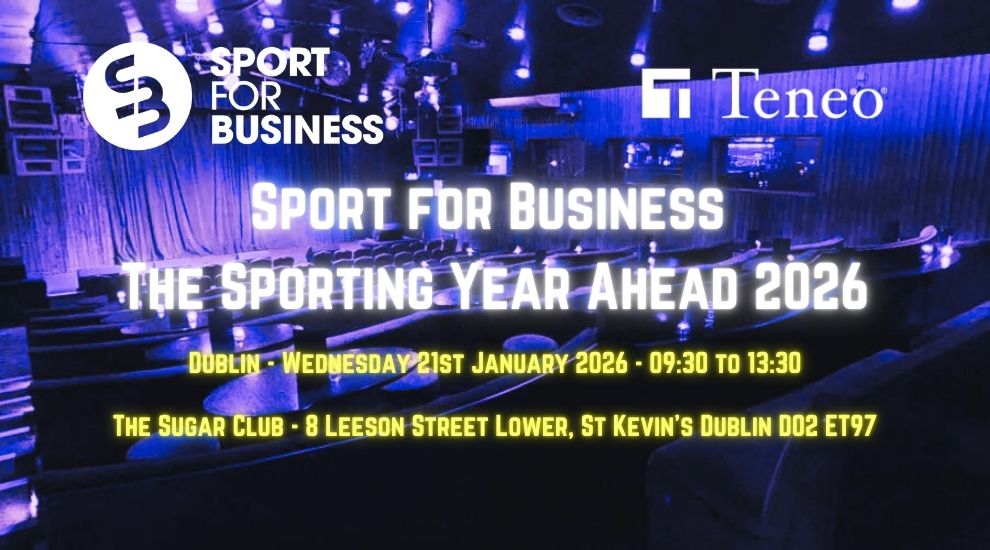
SPORT FOR BUSINESS Upcoming Events

SPORT FOR BUSINESS
Sport for Business is Ireland’s leading platform focused on the commercial, strategic and societal impact of sport. It connects decision-makers across governing bodies, clubs, brands, agencies and public institutions through high-quality journalism, events and insight. Sport for Business explores how sport drives economic value, participation, inclusion and national identity, while holding organisations to account on governance and sustainability.
Through analysis, storytelling and convening the sector, it helps leaders understand trends, share best practice and make better-informed decisions. Its work positions sport not just as entertainment, but as a vital contributor to Ireland’s social and economic fabric.
Find out more about becoming a member today.
Or sign up for our twice-daily bulletins to get a flavour of the material we cover.
Sign up for our News Bulletins here.