 Sport Ireland has played a key role in drafting recommendations for global reform in the fight against doping in sport.
The subject became the advance theme of this year’s Olympic Games with the banning of Russian athletes from all track and field events and the revelation that subsequent testing would result in a significant number of medals being stripped from athletes in previous games.
“The global fight against doping in sport is at an important juncture,” said Sport Ireland CEO John Treacy.
“Sport Ireland joined with 16 other National Anti-Doping Organisations to collaborate and together we have drawn-up a list of recommendations.”
“We believe these reforms will help protect clean athletes and the integrity of sport. We need to ensure that events in the recent past cannot be allowed to be repeated.”
Among the recommendations, leaders are seeking to remove the fundamental conflict of interest which exists when anti-doping decisions are controlled by sport organisations.
“The group is proposing wide-ranging changes in governance across all anti-doping organisations, and is recommending that no decision maker within anti-doping organisation should hold a position of authority within a sport, or a body tasked with the organisation of an event. This is important as we need to remove the conflicts of interest.
At present anti doping education, regulation and testing in Ireland is carried out by Sport Ireland who also serve as the primary funding channel for Government investment in high performance as well as participation in sport.
That link from regulation and control of funding could be seen as a model for how others manage governance though the perennial judgement of high performance teams on victory and medals may also blue lines that should be crystal clear.
“The recommendations also include important proposals for WADA to be strengthened and reformed through improved independence, transparency and increased investment.”
Other recommendations made include the extension and separation from sport of WADA’s authority and capacity to investigate and impose sanctions and consequences for World Anti-Doping Code non-compliance, and increased protection and support for whistleblowers by all relevant organisations including the IOC and Russia.
“It is vitally important that the momentum of the action taken by the NADOs is carried forward as we push for unilateral change in the fight against doping,” added Dr Una May who serves as Sport Ireland Director of Anti-Doping.
“As a group there was a clear recognition of the need and a strong commitment and willingness to assist in building capacity amongst NADOs globally.”
Those present at the summit also expressed unequivocal support for the completion of the independent investigation into state sponsored doping in Russia by Richard McClaren.
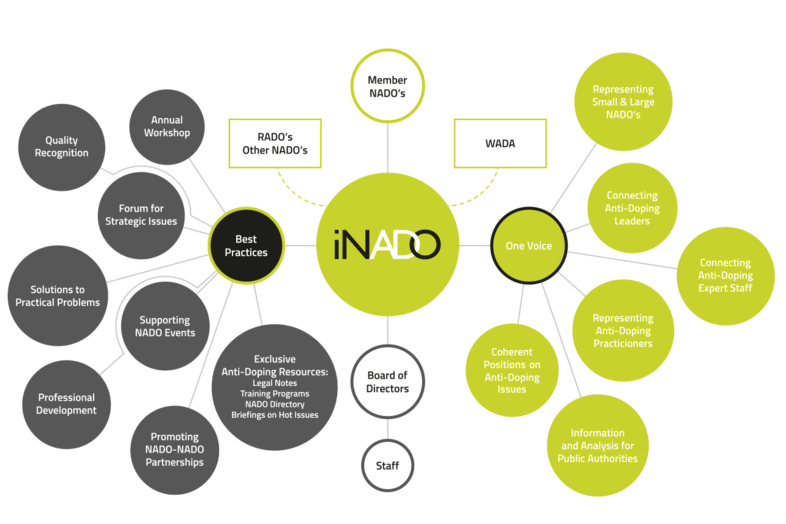
The proposals were written and endorsed by anti-doping leaders from around the world including Ireland, Australia, Austria, Canada, Denmark, Finland, France, Germany, Japan, Netherlands, New Zealand, Norway, Sweden, Singapore, Switzerland, United Kingdom, United States as well as the Institute of National Anti-Doping Organsiations (iNADO).
The full text of the declaration published after the meeting in Copenhagen is as follows:
We, a dedicated group of National Anti‐Doping Organisations from around the world, recognise that we are at a crossroads in the fight for clean sport. With the best interests of clean athletes at heart, we have come together to propose reforms that we believe will better protect them, restore confidence in the integrity of international sport which has been deeply damaged and ensure that the disturbing events of recent years are not repeated. Therefore, at this time we recommend and propose the following:
The World Anti‐Doping Agency (WADA) has been responsible for significant advancement in the fight for clean sport since 1999. We support the authority and autonomy of WADA and reject any efforts to weaken its mandate, autonomy or operations. We fully endorse a strong WADA that adheres to the principles of independence, separation of powers, and best governance practices, including:
- Improved monitoring systems for World Anti‐Doping Code (“Code”) and UNESCO International Convention Against Doping in Sport compliance in order to permit the earlier identification of failing anti‐doping systems;
- The Code should be amended to clarify and broaden the range of violations and the consequences of Code non‐compliance such as systematic subversion of anti‐doping systems (such as recently occurred with Russia), including adoption of clear sanctions with strong deterrent effect;
- WADA must have authority and capacity to investigate and to impose proportional sanctions and consequences for all instances of Code non‐compliance;
- Mentoring of developing and/or non‐compliant NADOs must be emphasized to raise the quality and ensure the integrity of national level anti‐doping efforts around the world; A mechanism should be established that allows the possibility of anti‐doping organisations maintaining operations while serving consequences for less severe non‐compliance;
- Adoption and implementation of best governance practices, e.g., independence, transparency (including mechanisms for oversight), term limits, global inclusivity, audit committee, etc.; and
- Independence in governance and operational decisions and activities as described in proposed reform number 2 below.
The anti‐doping system should be independent of sports organizations. The current Code principle that NADOs must be independent in their operational decisions and activities (Art. 20.5.1) should apply equally to WADA, Major Event Organisations (including the IOC as the
Officers, directors, employees and all decision‐makers of anti‐doping organisations should not simultaneously hold a board or officer position or other policy‐making position in any IF or major event organization.
The chief executive and any board of directors of anti‐doping organisations should be selected independently and transparently consistent with 2(a) above.
The continuing involvement of IFs, Major Event Organisations and other sport organisations in anti‐doping rules formation and evaluation, education, deterrence programs, intelligence sharing, and working with anti‐doping organisations, remains critical to the fight against doping in sport and every step should be taken to increase this involvement.
Anti‐doping efforts are fundamental to ensure the integrity of competition and the value of sport. The IOC has called for the anti‐doping system to be independent from sports organisations. It is therefore understood that the IOC and IFs need to continue significant independent funding and should make the funding available initially at no lower than the level of the present investment in the fight against doping.
In addition to the current commitment of financial support from governments, the funding to anti‐doping from current and new sources that benefit from clean sport should be increased, including increased financial commitments to WADA and other anti‐doping organisations.
A program for the encouragement, management and protection of whistleblowers ought to be given the highest priority by WADA.
In recognition of the important international events that have recently transpired, we further recommend:
1. Support for, and completion of, the independent investigation of state‐sponsored doping in Russia by the Independent Person, Richard McLaren, including:
adequate sanctions for rule violations and all instances of Code non‐compliance;
meaningful recognition and compensation for those who have been harmed by doping violations committed by others; and
continuation of oversight by international experts at the Russian Anti‐Doping Agency and the Russian drug testing laboratory to guarantee their reform and the reliability of future anti‐doping programs for the wellbeing of Russian athletes and the clean athletes of the world.
2. Meaningful recognition and compensation for their courageous contributions should be extended to Yuliya and Vitaly Stepanov and other whistleblowers relied upon in the investigation of the Independent Person and preceding WADA Independent Commission investigations, without whom the state‐supported system of doping would likely never have been exposed. All relevant organisations should do everything in their power to protect and ensure safety, security, and a sustainable future for Yuliya and Vitaly and the other whistleblowers. We ask the IOC and Russia to publicly commit to do everything in their power to recognise the significant contributions to clean sport made by Yuliya and Vitaly and the other whistleblowers and to also assist in guaranteeing the safety, security, well‐ being and a sustainable future for Yuliya and Vitaly and the other whistleblowers.