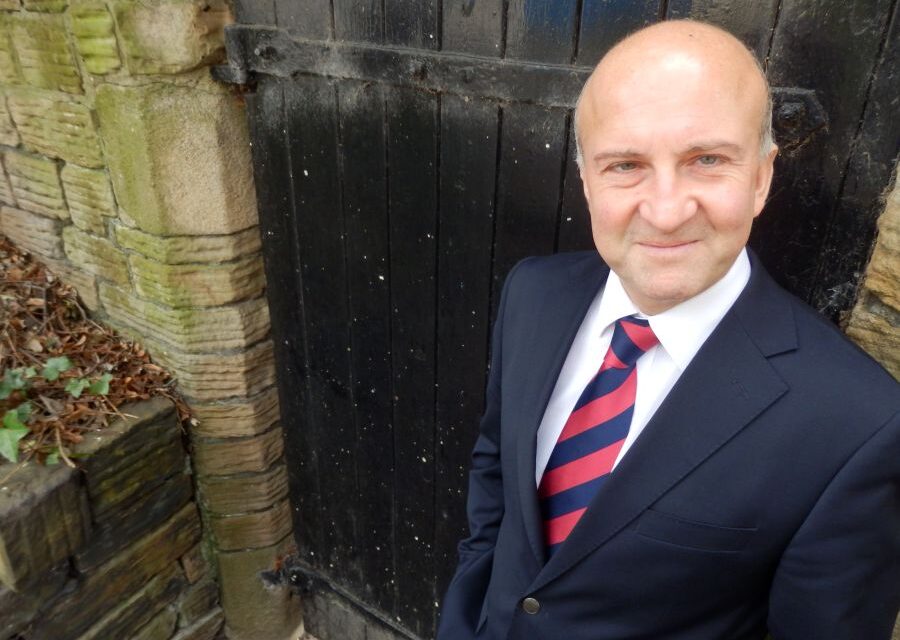
Professor Simon Shibli is Head of the Sport Industry Research Centre at Sheffield Hallam University and a key player in determining the key measurements by which success is judged for for sport and leisure in the UK
He is coming to Dublin next week as one of a number of senior international speakers at a major event looking at the future of sporting facilities as part of our societies.
In advance of his trip to Dublin Shibli took time out to look at a number of issues posed by Sport for Business on how to quantify the real value of investing in sport.
Sport for Business: How do you approach questions on how to assign value to providing sporting infrastructure?
Simon Shibli: Most of the sporting infrastructure I work with is sport and leisure centres, which enjoy some form of public subsidy in the form of Lottery grants or other public sector investment to set them up and indeed to run them. This automatically makes you think about how this subsidy might be justified.
Local authorities have a responsibility to perform statutory duties such as education and highways’ maintenance as well as to improve the quality of life for local residents – this is where sport and leisure facilities fit in.
The provision of physically and financially accessible facilities which enable people to benefit from the preventative and curative properties of sport is a worthwhile long term investment. In the UK, the new government strategy for sport, Sporting Future, focuses on physical and mental health alongside individual, societal and economic development.
Sport facilities can contribute strongly to the delivery of these wider social outcomes and have become enablers of government policy.
Should facilities be planned to cater for existing demand or to prime it? Is there evidence to support the idea that supply generates demand?
The rational answer would be that all capital projects should be constructed to cater for existing and anticipated demand. However, all this tends to do is to improve the quality of supply for the already active and does little to stimulate new demand.
Buildings in and of themselves do not stimulate demand. It is what goes on in them (programming) and how well this is delivered (people) that makes the difference. If we want more people to take part in sport, then it follows that we need more facilities to make this desire a reality.
Providers need to accept that there may be a lag between a facility opening and people altering their habits to take up sport and physical activity. What we can’t have is increased demand with fixed supply, which will push prices up and marginalise further the so called ‘hard to reach’ groups.
There was evidence in the UK in the late 1970s and early 1980s that the ‘build it and they will come’ mantra was true, as there was considerable pent up latent demand at the time. Now that there are so many more competing interests for people’s time and money it is not so straightforward. However, the logical consequence of pushing up demand means that supply must increase to match it, or else we face the risk of over promising and under delivering.
How can sport compete for public expenditure against the competing demands of education and healthcare?
Sport has to demonstrate its wider value to society. We know that people with high levels of education thrive in the jobs’ market and we know that improved healthcare has increased our life expectancy. What do we know about the impacts of sport?
In comparison with the evidence we have on the impacts of education and healthcare, the evidence base for sport is modest. Recent research by my colleague Professor Peter Taylor shows for the first time, that for every £1 invested in sport there is a wider social benefit worth £1.91 see here.
The challenge we face is to be able to use this evidence to make the case for sport robustly. If we dare to dream, then as sport has a physical and mental health benefit, it should therefore figure as a credible intervention in the minds and generous budgets of healthcare professionals and not be isolated in low budget ‘ministries of fun’.
Is this an area for national government, local government or others including private sporting interests and universities?
It is an area for all of the above and more. National and local government do not have to be the providers, they can be content being the enablers. Within that enabling framework, it becomes possible for roles to be found for numerous providers as outlined below.
· The private sector (efficient and effective operation of facilities).
· Schools (delivery of high quality habit-forming sport; and increasing supply by opening up facilities to the community).
· Universities (helping to produce well-rounded employable graduates with good communication, teamwork and leadership skills).
· Employers (creating work environments conducive to the benefits of sport and physical activity, such as bike racks, showers, table tennis tables etc.).
· Health care providers to harness the preventative and curative aspects of sport for both physical and mental health.
· Local authorities (provision of facilities; transport policies that encourage walking and cycling; provision of green spaces and play spaces).
Collectively we can all achieve a great deal more through sport by working strategically rather than in a piecemeal fashion.

Join us on February 9th and 10th at the International Swimming Pool and Leisure Centre Conference to hear more insight from Professor Taylor as well as others including Marie Sallois Dembreville: Director Corporate Development, Brand and Sustainability with the International Olympic Committee who for the past two years has led the global consultation and stakeholder engagement to develop the IOCs ‘Framework for Sustainability and Legacy Planning’.
Aura Holohan Group, Dublin City Council and Dun Laoghaire Rathdown County Council are among more than 180 members of the Sport for Business community. If you would like to discuss the benefits of joining them as a member contact us today and let’s see what we might achieve together…
 Aura Holohan Group, Dublin City Council and Dun Laoghaire Rathdown County Council are among more than 180 members of the Sport for Business community. If you would like to discuss the benefits of joining them as a member