Sport for Business was a partner of the 2017 Irish Sponsorship Summit which took place in Dublin yesterday.
It was a packed day of learning from practitioners that are creating great partnerships at home and as far afield as Britain and the United States.
We couldn’t capture every moment of insight and magic but here is a taste in words and images of what the day was about.
Workshop with AIB on Digital activation of GAA club championships
In 2013, after 22 years, the AIB Club Championship was the 22nd best sponsorship in Ireland. That needed to change and so #TheToughest was born and became a vital part of twin approach, year round activation alongside All Ireland Championship in 2015 .
The campaign in 2016 was marked by a need to innovate, to differentiate from other sponsors within the GAA and to commercialise digital activation through a new insurance offer .
It was built out through collaborative partnerships to drive messages via Joe.ie, GAA, RTE, TG4, and of course, Sport for Business

Weekly planning meetings were held to create topical and quirky content like around the Kaiser sisters who might never otherwise be known outside Newmarket on Fergus
It was important to mix up content with stills, gifs and content to stand out on social channels
It was perhaps appropriate for a bank to build a bank of social content, with video imagery gathered on a single players day at the start of the season and then used in a variety of formats, including live content through the year.
Embedding live streaming of this weekend’s Junior and Intermediate Finals is a mark of where the campaign is going in 2017.
In terms of social media Facebook is a clear number one for hero content where eyeballs and reach and wider than other channels. There is an increasing interest in what Instagram can do while Twitter is best for match day activity, in the moment.
Afternoon session on the sponsorship model and data
Phil Stephens was on from the from ever insightful Two Circles and he was joined by Stuart Ramsay, Sponsorship Manager at Southampton FC.
 “+300 per cent growth at premium end of sponsorship but limited elsewhere so only 5 per cent growth overall.”
“The landscape is changing all the time.”
“Millennials check their mobiles 157 times a day.”
“Linear TV is still king of live sport but 85 per cent of viewers are now second screening and consuming via OTT and mobile clips.”
“Brands continue to buy audience through sport because sport delivers in terms of a direct relationship.”

“Data is driving everything, from new assets to dramatically increased value of your known database.”
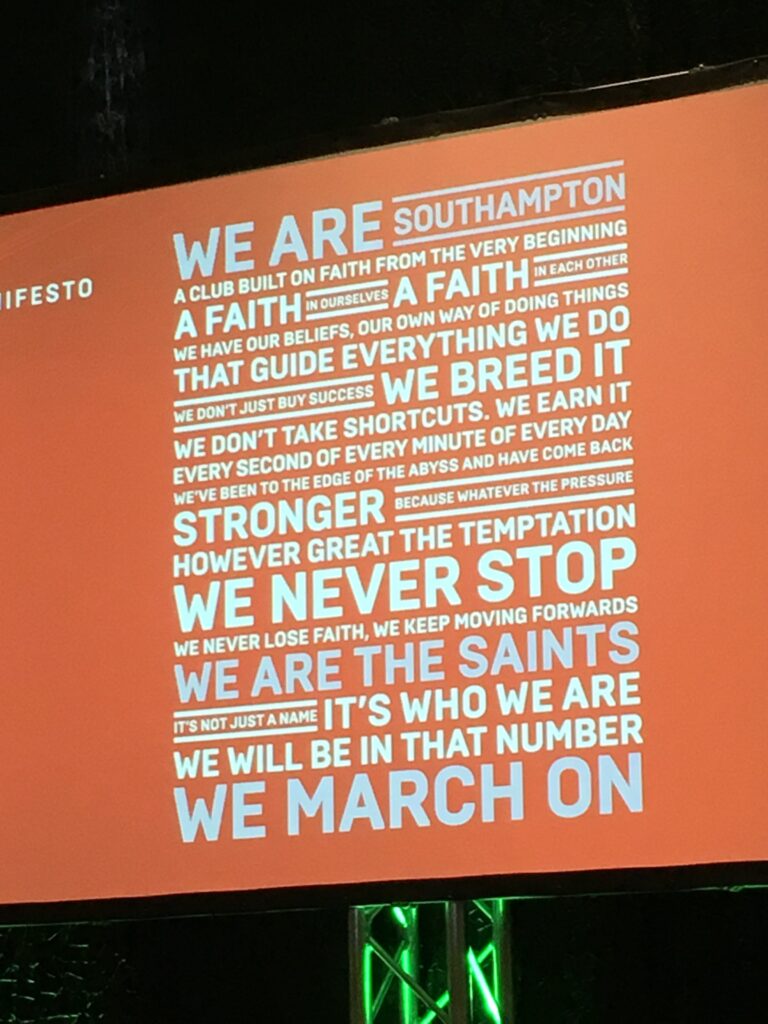
“Putting that into practice in reality can be difficult it needs to be built on a solid values based statement of identity. Here is Southampton FC’s statement of who and what they are.”
Workshop One: Measuring Sponsorship
Ian Malcolm from Lumency guided us through a North American perspective on the importance of measurement.


“Return on Investment will be measured on different parameters by each brand.”
“What is the health and make up of your sponsorship portfolio?”
“Can you back up the governance of how you made your decision?”
“Scrutiny of marketing is now essential. Vague relation to spikes in sales was never robust enough and now being called out.”
“Sponsorship is absolutely measurable.”

“Pivot in sports sponsorship moving towards amateur and grassroots in North America.”
“Big sport needs to see itself as a content factory away from live experience and an experiential hub at the event itself.”
“Sponsorship buyers have already moved from eyeballs and awareness to experience and moments.”
“Measurement is simple but not easy. There’s no out of the box all encompassing solutions.”
“Trickier and softer to measure in B2B but still possible once you know what the target is. That will generally be smaller and forming a pathway from experience to relationship.”
Session Four: Digital Value and the Attention Economy
Charlie Beall of Seven Leagues was joined by Elly Cockroft of Lords Cricket Ground and the MCC.
“Does sport work in the way that modern brands like to? They want to test and learn, not be afraid of failure.”
“The digital journey comes in three stages, from reaching, to engaging, to monetising. It’s a five year path.”

“We can provide a strong connection for brands who ‘love’ cricket and the Lords brand.”

“So how do we make money from sale of digital assets?”
“Synergy has to be right between rights holder and brand enhancement and protection of reputation and values.”
“On digital rights there is a challenge between bundling in for existing or renewing sponsors, or carving out to create new more relevant opportunities for suitable brands.”
“Continual need to test audience reaction and double down on winners” – Charlie Beall on how performance of content and media is being measured in fine detail and shaping its follow up.

“Investment in set piece video formats, highlighting values of the venue, partnering with appropriate brands where possible “
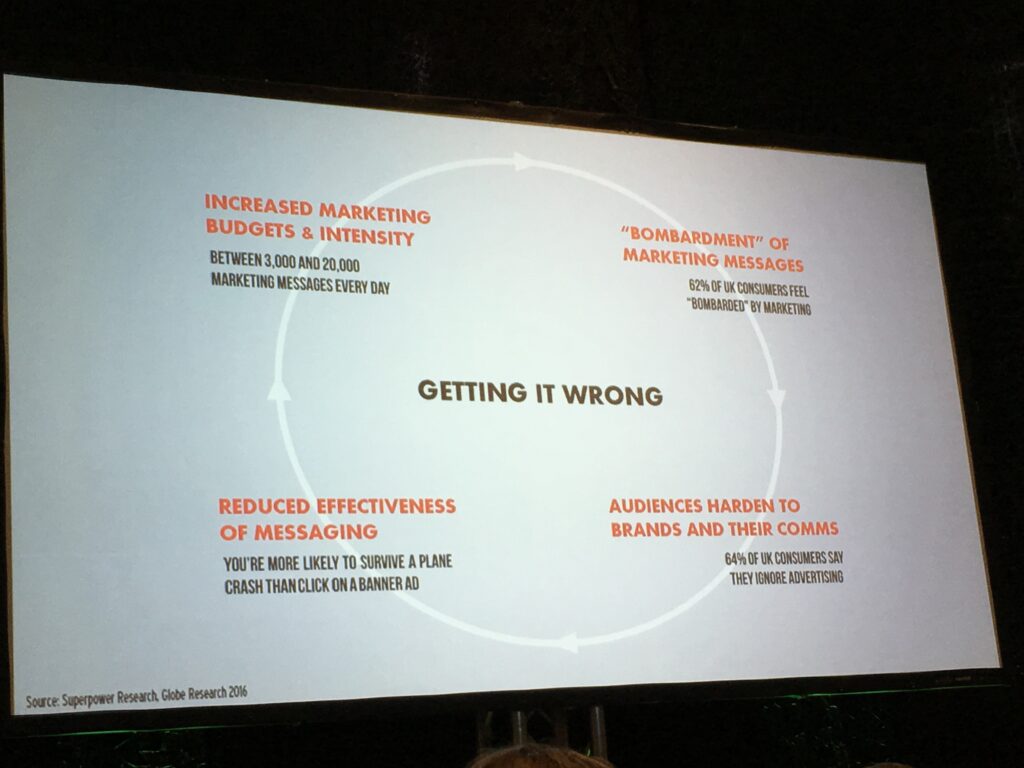
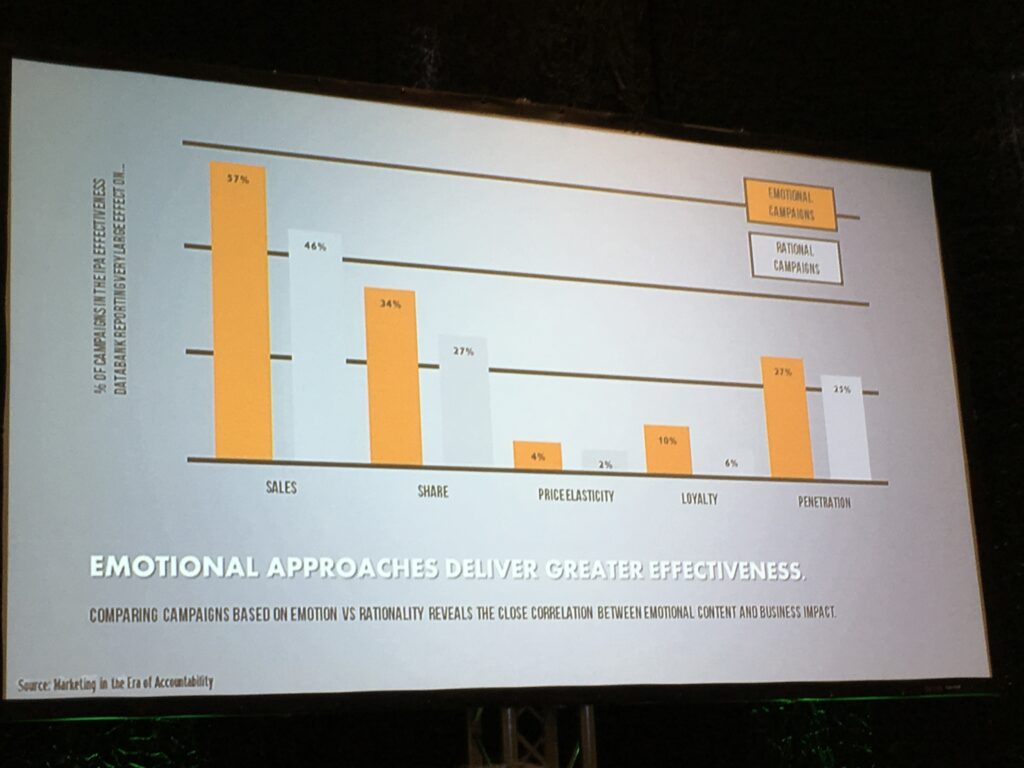
Session Three: Emotional or Rational.
Jennifer Hills from Universal Music took us on a whistle stop tour of how and why emotion works better than information or rational argument
Session Two What is Sponsorship all about? Purpose Pays
Lesa Ukman
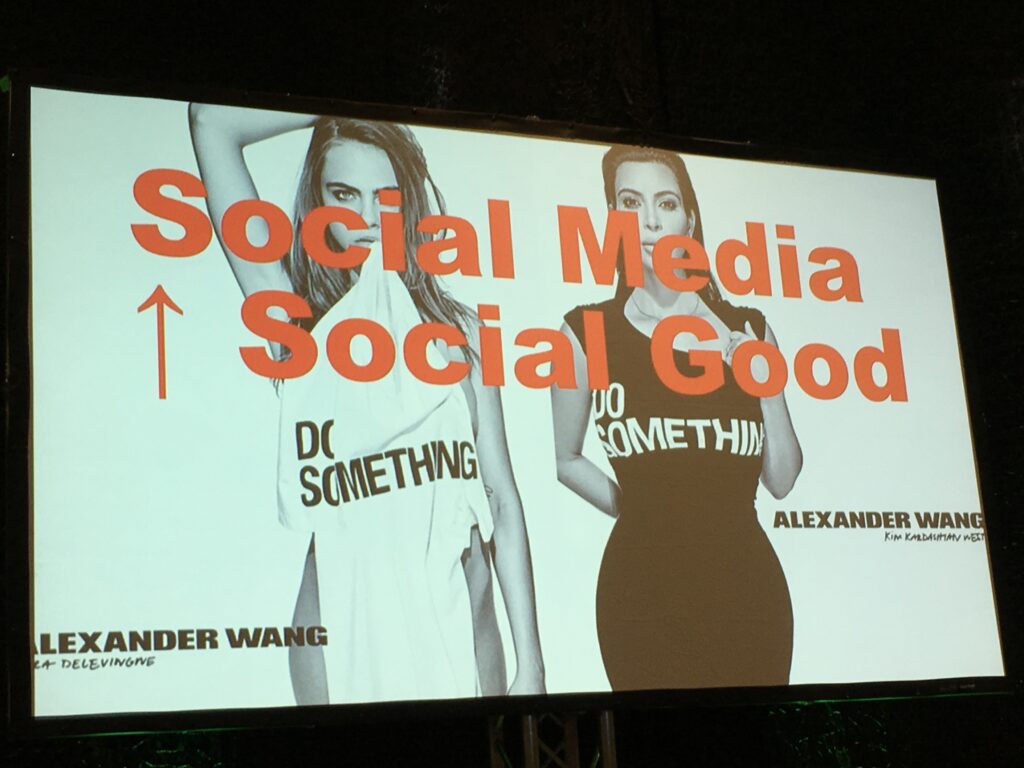
“Moving from 1980’s dawn of social good via Amex helping to renovate the Statue of Liberty, to the dawn of social media bringing audience into the equation.”
“Neurological research into how we behave highlighted emotional impact of giving rather than getting.”
“Story of Barcelona paying $1.5 million to Unicef as first shirt sponsor and increasing long term value of what eventual sale of commercial sponsorship of ‘more than a club’ could be worth.”
“Hublot and Unite against racism and Allianz with Paralympics proving that apart from doing good for wider society, purpose pays and here’s the proof in colder financial terms.”
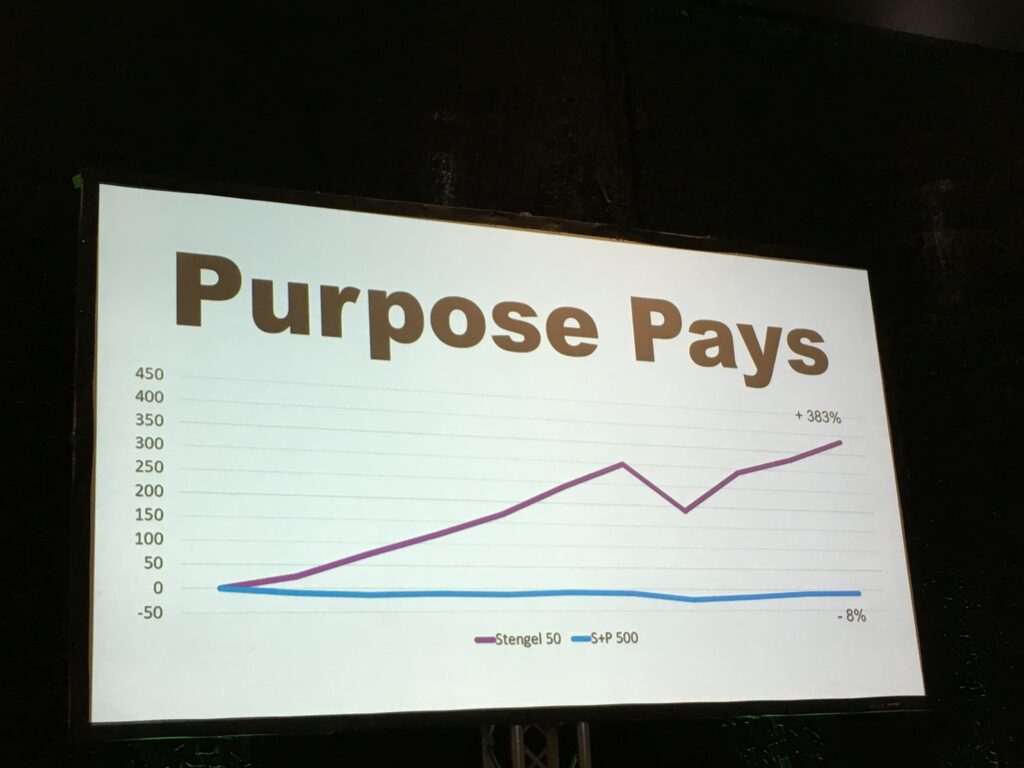
“But very important that causewashing or giving less than you spend saying how great you are for giving, is not good enough in an era of ‘radical transparency'”
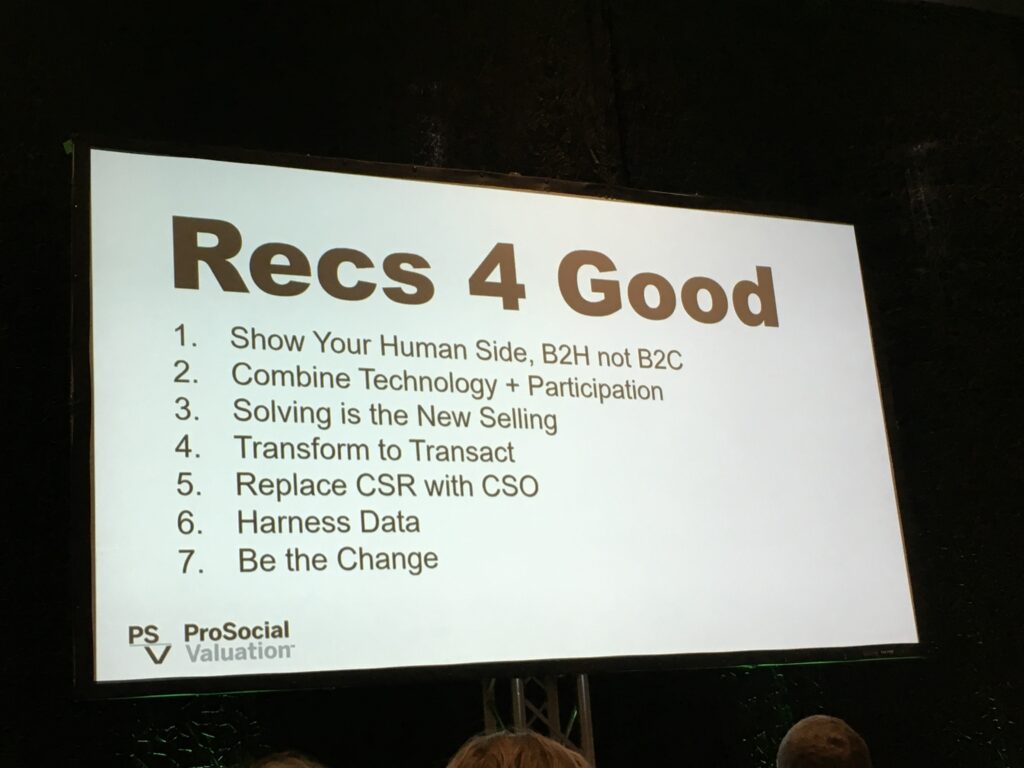
“Now it has to deeper through concept of ProSocial.”
“‘Good is the new cool’ and campaigns have now switched from buying something to doing something.”
“Lady Gaga teamed with Absolut Vodka Customers won chance to sit on stage with star not by buying drink but by volunteering at local shelters.”
How though would Finance Director measure that return?
Can we measure where people’s hearts are?
Session one Storytelling
We are live now with Gavin Collins of Wavemaker MEC on stage telling stories about telling stories.
Average attention span to catch somebody’s eye is now 5.2 seconds and many of the most popular media, like Netflix are ad free.
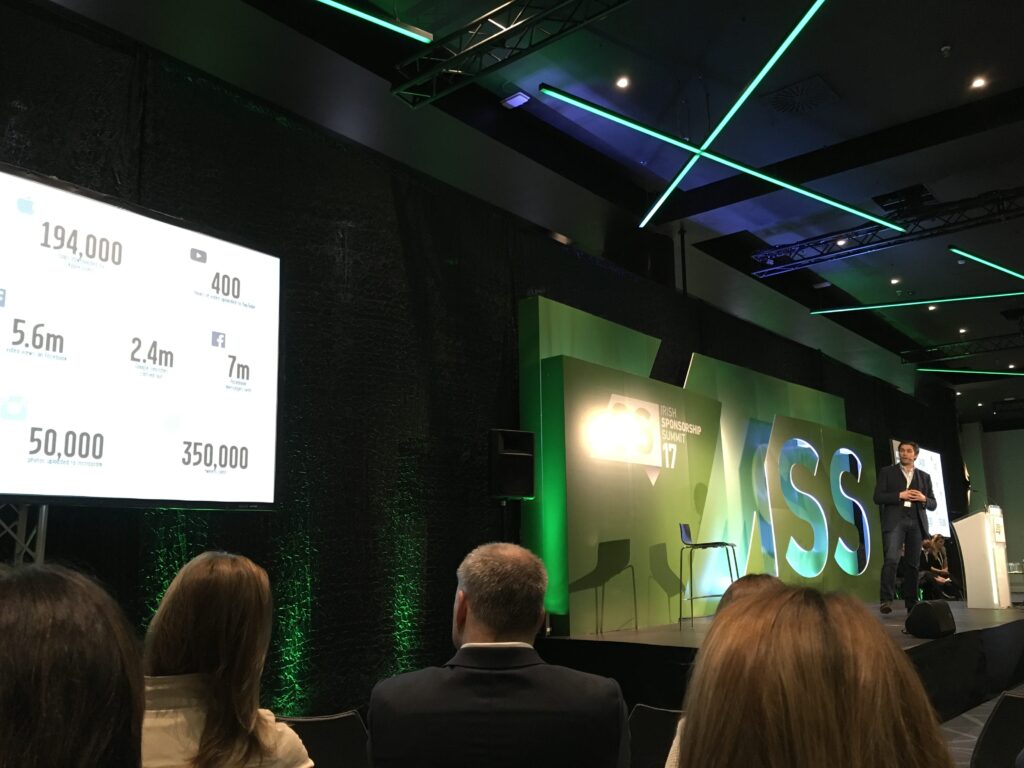
Colm O’Regan talks about how we can construct a story from a split second moment. Just like the O’Donovan Brothers’ mammy saying that fans would have to go through her first.
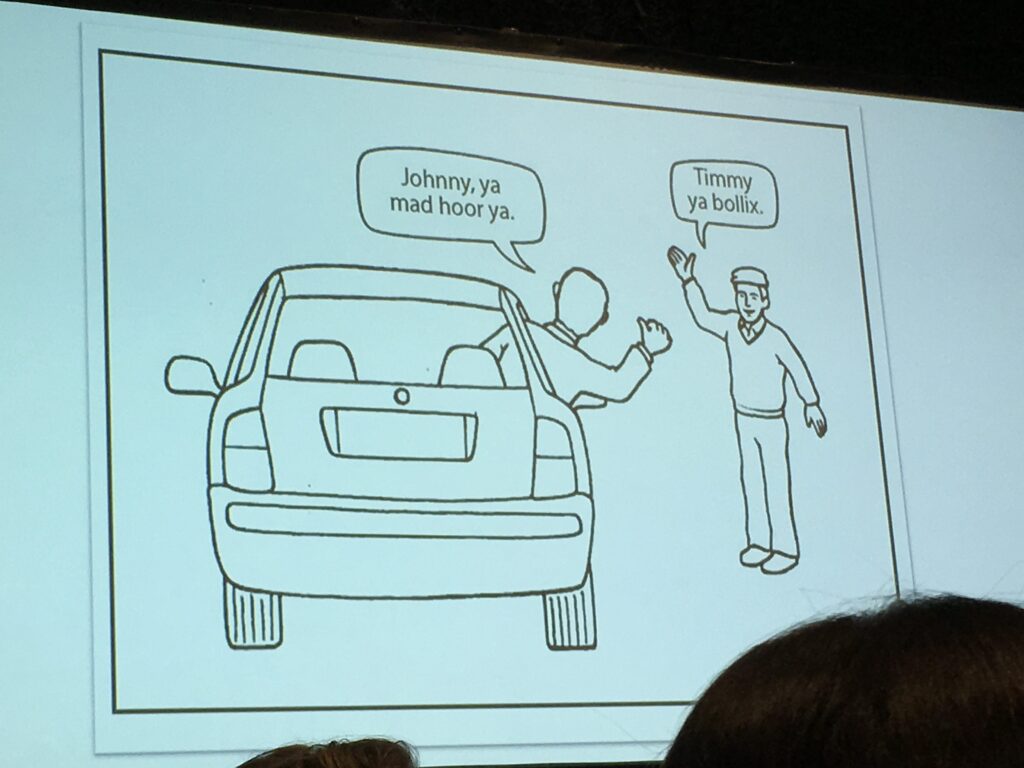
Importance of codifying something already there but hidden in plain sight just like breaking down the different stages of the country drivers salute
Colleen Savage now looking at how Evian created Wimblewatch.
Insight that young women in particular wanted to see the tennis but also to see the celebs in the stand
Created a studio at Wimbledon and invited celebrities in to share a moment of what they were seeing, building a connection to what they were watching and what the wider audience were watching, with Evian in the background.
Key things to decide upon before commencing your storytelling journey.
- Who is your audience
- Make sure to engage with a story.
- Take your audience on a journey
- Your brand is not the story
- Create the right point of view, be that a fan, a community, a mother
- Decide on your style of storytelling
- Decide on who to collaborate with.
“Take the power of the big, the spirit if the small and you can use that make your brand central to lives, even if only for a moment.”
Insight there from Gráinne Galvin on how Yoplait created their love your age campaign

Contact us today and let’s see how Sport for Business and your organisation might work best together
[contact-form-7 id=”24759″ title=”Sport for Business Membership”]