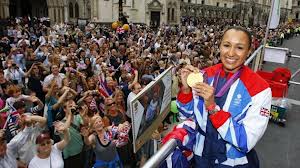
 British sport is to benefit financially from the success of the London Olympics and Paralympic Games with an increase in high performance funding of 5% in Olympic Sport and 43% in Paralympic events.
In total the amount of money to be invested in the Rio Cycle over the next three and a half years will be £347 million (€427 million). This figure is guaranteed over the time period as opposed to the year by year funding arrangements currently in place in Ireland and gives a greater sense of certainty in planning and development for athletes, coaches and administrators alike.
This funding is additional to the £493 million (€606 million) aimed at fostering greater participation in sport through grassroots which was announced earlier in the week.
Apart from the multi annual nature of the money, a key component has been the accountability which comes with it. Performance investment is aimed squarely at improving performance and when a sport does not hit its targets, there is a financial penalty the next time around.
Merit based
This idea of merit based funding means that rowing, cycling and athletics have all done well while other sports have lost all their funding for Rio because of their underperformance in London and lack of prospects four years hence of making the required improvement.
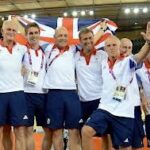 Cycling was set a target of 6-10 medals in London and exceeded that with a haul of 12. Its funding over the next four years has increased from £26 million to more than £30 million as a result.
Basketball on the other hand was funded with £8 million in the run up to London but now, alongside Handball, Table Tennis and Wrestling in having no funding at all for four years in terms of high performance.
The goal at this level is to improve again and to bring back more medals from Rio than were won in London. That was achieved by Australia in Athens after the Sydney Games in 2000 but since then Australian performance sport has tailed off and Britain is looking to learn lessons from that through this greater emphasis on making sport accountable.
Twin-track
It is following a twin track approach though as well with equal accountability and sometimes marked differences in result applying to the funding aimed at increased participation.
Here Cycling comes out top again and Handball also benefits from a big increase because of the four fold increase in players to 12,000 since 2009 and the 40% increase in schools entering competitions. In that way the money is being driven towards building a base that will hopefully deliver a better foundation for high performance in 2020.
”At UK Sport we take our responsibility for the strategic investment of public and National Lottery funds very seriously,” said Baroness Sue Campbell, Chair of UK Sport. “The achievements in London simply would not have been possible without this unparalleled support and our ‘no compromise’ approach to investment.”
“London 2012 was just the beginning, not the end, for Olympic and Paralympic sport in this country, and we plan to continue to make this funding work as hard as it can to help our best athletes achieve medal success at the highest level, and to inspire the next generation.”
All the funding at high performance level for the Rio cycle can be seen here at the UK Sport website.
Considerations
There are a number of considerations for how Irish sport is managed and governed arising out of this approach.
The first is to decide whether this greater emphasis on merit is the right way to go. With a smaller base of sports we would be much more prone to ‘accidental’ underperformance through injury at the wrong time to a key member of the team. One pulled hamstring may reduce funding for an entire sport over a four year period.
Secondly, the link between accountability and participation is much more obviously of benefit. As in any business the setting and achieving of planned targets is the key driver of profitability and further investment. Sports participation is already high in Ireland but increased frequency and a raising of performance within that will have multiple benefits in terms of health as well as reputation. Programmes aimed at increasing these factors should be identified within sports, targets should be set and rewarded with funding increases where they are met.
That is of course the easier part of the equation but it can only be achieved when the flip side of reducing funding from those who do not achieve their targets is applied with equal rigour. The argument from those who have lost out in Britain, and they include Rugby Union, Cricket and Tennis, is that you are potentially wasting initial investment by not following through, and creating a circle of decline that may be difficult to break.
Competitive
Sport is by its nature competitive though and rewarding those that are producing the most effective methods of getting more people involved presents a more compelling case when financial investment is a finite resource.
Thirdly, we need to be conscious of the additional draw this may create for sporting stars from northern Ireland to switch allegiance to GB rather than Ireland. Leaving aside social or political connections, if the facilities offered by one association are substantially better for an individual than those offered by another, then that must become a consideration.
Key take away for Sport: Performance and participation are the two criteria against which all investment should be judged. Government funding needs to work on behalf of all the people and those sports and programmes that deliver best will naturally be favoured.
Key Take away for Business: This Government funding is never distributed lightly. It should be seen as the equivalent of due diligence on the sports with whom you might consider a commercial partnership.
A portion of this content would normally be reserved for members of the Sport for Business community. You can join us and sign up for membership straight away to stand alongside the many leaders in business and sport that have already committed to wanting to learn more about the ways in which sport and business can work closely together.
Among those already on board are The Irish Sports Council, PwC, Sports Revolution, Accenture, Inpho Photography, Ulster Bank, the GAA, KPMG, Horse Racing Ireland, Mason Hayes & Curran, Myclubfinances.com, the FAI, JGA Sports, Paralympics Ireland, Microsoft, Tennis Ireland, Teamer.net, Triathlon Ireland, Bank of Ireland, The Gaelic Players Association, Sigmar Recruitment, Badminton Ireland, Murray Consultants, Athlone Institute of Technology, the Irish Sailing Association, The Irish Geyhound Board, Tickets.ie, Dublin Institute of Technology, Special Olympics Ireland and the UCD Smurfit Business School.
Lessons to be learned from funding