In this second of a three part series looking at some of the key issues for the commercial world of Irish sport in 2013, we turn our eye to the world’s of horse racing, women’s sport and the move towards mobile.
 4. Who will benefit from the tax on online betting?
The Government confirmed in December that legislation to impose tax on online betting would be published in the early months of this year. It also warned though, that the financial yield was not certain to be bound for the sports of horse and greyhound racing, as has traditionally been the case.
Online betting tax will not be ring fenced in the way that tax raised through betting shops has been. An estimate by PwC in May 2012 suggested the overall value of the new tax would be as much as €50 million in the first three years, a sum greater than the overall Government funding of sport over the next twelve months.
In straitened economic times, this money will most likely be absorbed into the general tax take but the main sports governing bodies ought to have an eye on the longer term with a view to seeking some potential funding from bets placed on their own sports.
Horse and Greyhound Racing will need to use the additional revenue being generated primarily through an exercise in which they are centrally involved as additional leverage to ensure state funding remains at or above the level it has been in recent years.
 5. Can this be a breakthrough year for women’s sport?
The Olympics was a major boost for women’s sport in Ireland and around the world. Katie Taylor led the way here while Jessica Ennis and plenty more became household names. Commercial support on the women’s side of sport though remains a small fraction of that which goes into men’s sport.
In a year where there is no major international tournament to soak up the coverage, two events in particular stand out as being in the vanguard of attempts to move women’s sport to a more central stage. The European Soccer Championships will be televised live on mainstream BBC TV in the summer. Sadly the Republic of Ireland missed out but this exposure is bound to have an impact on the game for players, supporters and sponsors.
Ireland will be represented, alongside England, France, New Zealand and Australia in the Women’s Sevens Rugby World Cup in Moscow this year. The team qualified having not existed twelve months ago and with the prospect of an Olympic berth for the team at Rio 1916, this is a great opportunity to grab attention while Ireland’s star men players are on the other side of the world wearing the red shirts of the British and Irish Lions.
 6. What strategy does your sport have to cater for a mobile audience?
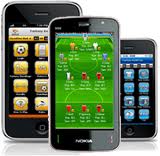
It is estimated that 2013 will be the last year in which more internet material is viewed on desk top or lap top than on mobile devices. That is for social media that is such a key part of any sports’ marketing and communication, as well as the more traditional routes of sports following through established media, sports and team websites.
At last month’s Sport for Business Round Table on Social Media and Sport, WeRGaming, one of the key suppliers to Gillette’s multi million investment in online sports activation, revealed that they developed first now for mobile, and only then for desktop.
The pace at which Irish and global consumers have adopted and adapted to smartphone usage is electric and any sport or business that does not know what it’s strategy this year is for mobile users will find itself being left behind.
As many as 50% of those who came to this article through the Sport for Business Daily Digest will have done so through a mobile device. It’s the future and it’s here right now.
Join us again tomorrow when we complete our look ahead with three more issues for 2013 concerning soccer, cycling and Europe.
Issues for 2013 (Part 2)