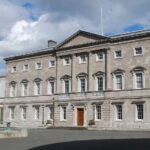
 The Irish Presidency of the European Union and the Irish Sports Council hosted a major EU Conference on Sport at Dublin Castle on Thursday, March 7th. All this week we will look at different aspects of what was discussed and consider the long term implications for how sport is organised and sold.
The Conference kicked off with welcome presentations from Minister for Sport Michael Ring, TD and Irish Sports Council CEO John Treacy. They welcomed the opportunity to greet so many of the sports policy formers from around Europe and highlighted areas in which Ireland had delivered on Sport in recent years.
Key to this was the priority given to sport with the first Government policy on sport, the first EU country to give sport a place at the cabinet table and the Irish Sports Council Act all serving to build towards a strong commitment to sport from the state.
Rates of participation are increasing year on year with a corresponding decline in sedentarism.
“Even in harsh economic times, sport can never be left behind,” said Ring. “Spending on sport is a wise investment that returns greater dividend than is apparent in the short term through improved well being and lower overall health costs down the line.”
“We hope that the EU Sports Budget to come into force from next year will quickly filter through to grassroots where the greatest impact can be felt.”
John Treacy highlighted the importance of sport to Ireland with 2% of consumer spending generated by sporting activity, the massive part it plays in tourism from international events to golf, walking and angling tourism and the many tens of thousands of jobs it accounts for.
While also highlighting the importance of grassroots and participation, he also drew attention to the right infrastructure and planning being able to deliver at high performance level as well.
“The Institute of Sport is helping our athletes to prepare for competition at home rather than having to travel overseas so much and this has played a part in raising our number of ‘podium’ appearances from 54 in the Beijing Olympic cycle to 164 in advance of London.”
Different approaches to sustainable funding models for sport:
Derek McGrath, CEO, European Rugby Cup
“Rugby as a professional sport is still young though much has been learnt and achieved in 18 years.”
“Our role as sporting administrators is to organise and govern tournaments and to generate finance through revenue and brand value.”
“Much of what we do is to seek the right balance between different interests and to steer a path that is acceptable to all.”
“As with any development and improvement in sport or in business you first have to create a space and then make the right decision to exploit it once it has been created.”
“In 1995 European Cup Rugby created space between the top level of domestic club competition and the international series’ that had been rugby’s greatest asset.”
“Our aim was to build capacity within and around the sport; to broaden our influence and to increase revenue through a stronger ‘brand’.”
“In all the key metrics these have been achieved. We have moved from 50 to 179 broadcast events in the last 12 years alone.”
“A total of 322,000 fans watched the Heineken Cup matches leading up to the first Dublin final in 1999. That figure was 1.1 million last season.”
“Our revenues have climbed from €9 million in 1996 to what will be over €50 million in 2013.”
“68% of this revenue is from broadcast rights, 22% from sponsorship and 10% from match fees through the centrally organised games from the semi finals on.”
“Sky Sports have played a critical role in building the brand values that are so important now to the sport and the clubs.”
It is notable that even with the income generated by European Rugby, that expenses exceeded income in the aggregate figures for each of the RaboDirect Pro12 across Ireland, Scotland and Wales; the Aviva Premiership in England and the Top 14 in France.
Discover more of our recent comment and analysis of Sports Governance including Munster Rugby’s new Commercial Board, Domestic Soccer getting back in the black and how GAA Revenues have continued to rise.

Your membership of Sport for Business entitles you to free participation in our programme of Round Table events, the next of which takes place in London on March 21st and which will cover the role of Sport and the Irish Abroad.