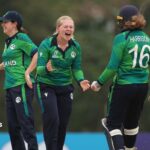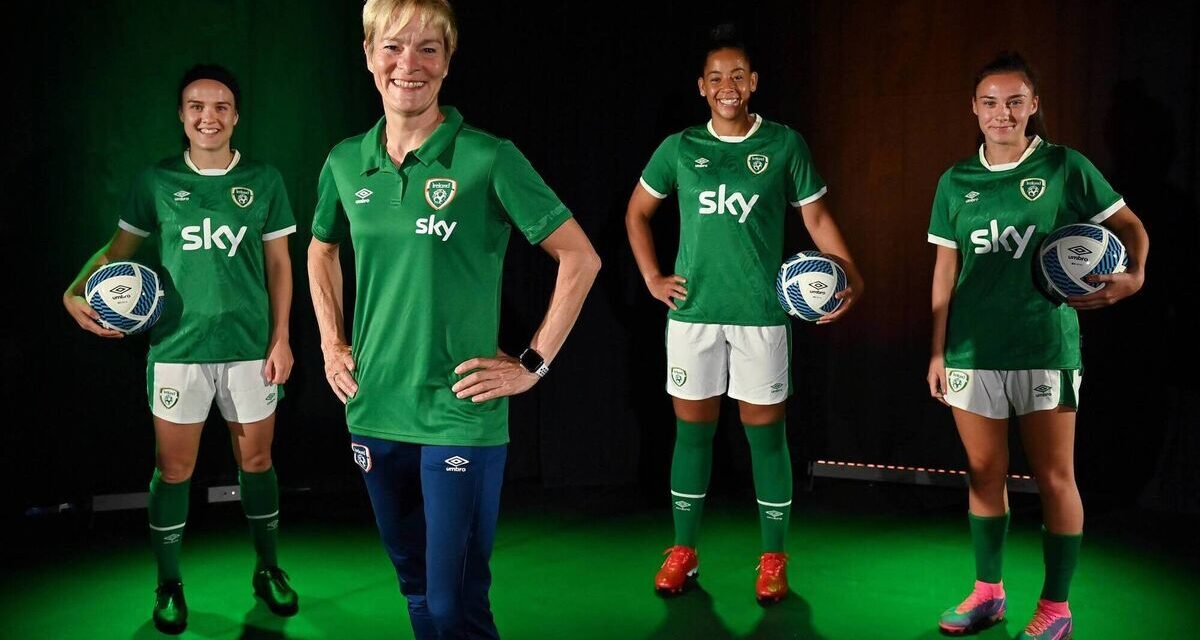
The Board of the FAI will meet today to consider a formal review of the Republic of Ireland Women’s team’s World Cup odyssey and the immediate future of manager Vera Pauw.
Support for the team across the widest possible audience reached higher levels in the run up to the World Cup than could have been seen as possible a few short years ago.
The first qualification for a major tournament was as big an achievement as Italia ’90 for the men’s team under Jack Charlton and the similarities did not end there.
An overseas manager, with an uncompromising style and a way of playing that was not to everyone’s taste but delivered results is where we were 30 years ago and where we are again in 2023.
Charlton was carried forward on a wave of popular acclaim and delivered the trick again in USA 1994 before finally stepping away on an emotional night in Liverpool in 1996, after losing a Euro ’96 qualifier to the Netherlands.
Pauw has had the added complication of living in a time when media became social, when every twitch was monitored and pored over, where everybody has a platform to voice their opinion and where more than a few have no regard for the consequence of speaking in haste.
We have had the pleasure to interview the manager on stage on three occasions. The first at an event alongside Stuart Lancaster, Mick Bohan and others at the offices of William Fry, the other two at our 2022 Women in Sport Conference and our 2023 Sporting Year Ahead event.
The first was in her early days as manager and she came across as being very ‘Dutch’, straight and to the point, respected but not going out of her way to win friends as such.
Highlights
The second two were among the highlights of all the many events that Sport for Business has conducted over the past 12 years.
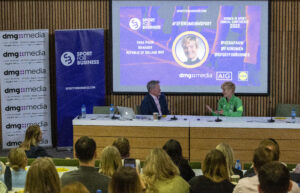
Warm, engaging, open to discussing areas of tactics and strategy in how she managed, and willing to give insight on the decisions that transformed the team from nearly there to a World Cup Finals.
She took time to meet and talk with those present and nobody went away feeling as though they had not been witness to a really great event.
They were also taking place against a background of personal and professional challenges that would have broken many a person.
Events from early in her career in the Netherlands broke last summer before qualification had been secured and then stories from a report into historic culture and abuse in the United States, particularly at Houston Dash where she took charge of the team for a year when they were in a swirl of abuse allegations from a previous coach would not go away.
Pauw herself admitted they were a shadow and a stain on her character but that she was willing to fight, just as she had to expose the period when she herself had been the abused.
She is a straight talker. She is scientific and forthright in her views on physical preparation and injury prevention. She thinks about the game and all of the aspects that go into it in the same manner as many of the modern coaches coming though in the sport, all the way up to the likes of Pep Guardiola and well ahead of the curve of many that are still in the game at the highest levels.
Leadership
But what is seen as strong leadership in the men’s game is viewed differently in the Women’s.
Anyone who has coached both genders with their eyes and ears open know that the best results will arise from taking a different approach. It is the same pitch, the same ball and the same rules but the ways of coaching and the ways that players adapt and adopt a coaches thoughts and tactics can be different.
We have witnessed in Spain over the last two weeks that behaviour is much more in the spotlight in the Women’s than the Men’s game. Luis Rubiales’s actions after the Spain victory were rightly condemned and have opened up a debate about the way in which actions need to be considered from all sides.
Emilio Martinez’s course behaviour and commentary after Argentina’s win had no similar physical victim but they were passed off as being the rude actions of a single player and he continues to line out for Aston Villa in the Premier League.
Back to Pauw’s future and the ‘noise’ that now exists beyond the football pitch is what the FAI board will be weighing up against the outstanding football achievement as well as the creation of an appeal within this team that has crossed over into national support.
Could it have happened without Vera Pauw? Who can tell? The players will say yes and their voices have been loud enough, if for the most part behind a cupped hand since before and during the World Cup campaign.
Much of the furore about their not backing the manager when asked at press conferences was something of a media construct. Long tournaments demand space to be filled and when a player refuses to sing and dance in support of the manager, it is perhaps construed as something more.
Tension
And yet there is undoubted tension in the camp. But is that not always the case? It was not apparent when the team was beating Australia at Tallaght Stadium and Scotland at in Glasgow.
Winning is a great cure for all ills and has a thousand parents. Defeat and failure to progress is an orphan.
The thing about sport is that there is always the next game, the next tournament, the next step up the hill or down the other side.
The Republic of Ireland will play against Northern Ireland in the Aviva Stadium in the first game back after the World Cup journey on September 23rd. Whether Vera Pauw will still be the manager is likely to be determined today off the back of the review by the FAI Director of Football Marc Cranham and the discussion of the Board.
It will likely not be a unanimous decision but when it is made it will be a punctuation mark.
If it is a decision to continue with Pauw for at least the next two years then the players will need to get behind that decision and work within it. No manager is a hero to all the players when they are the one that has to pick just 11.
Football has a horrible habit of dumping managers too quickly when the benefits of a longer-term strategy have plenty of evidence to support holding the nerve and allowing a group to be built together.
The public fans who went to Tallaght Stadium and the homecoming in Dublin would find it hard to understand why the most successful manager in the Irish Women’s game’s history here would be cast aside.
On personal experience, so would we.