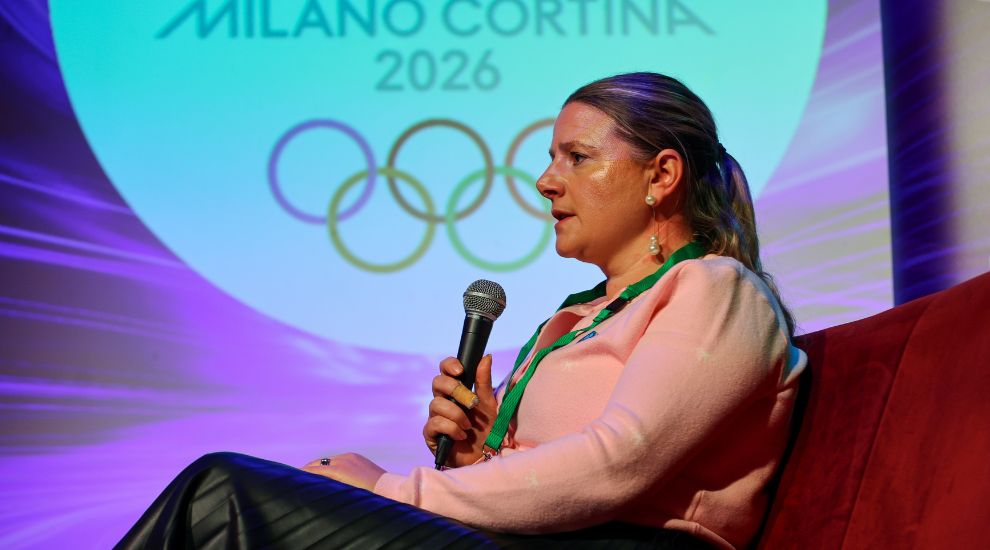
The Sporting Year Ahead moved from parish rivalries to mountain passes for its next element, as Nancy Chillingworth, Chef de Mission for Team Ireland at the Milan-Cortina Winter Olympics, outlined the scale of the operational job behind a team that may number only four to six athletes.
Her description of the Chef de Mission role was practical. It is, she said, “project management,” pulling together logistics, accreditation, athlete services, and performance supports — and then, once on the ground, becoming whatever the team needs in the moment. “You become… the general dog’s body, driving, carrying kit, whatever needs to be done.”
Milan-Cortina, she explained, is a sign of the Olympics shifting toward sustainability and the reuse of existing venues rather than building single-use infrastructure.
The trade-off is complexity. There will be five separate athlete villages spread across northern Italy — from Milan up into the Alps, and the Dolomites, and even close to Austria — with the closing ceremony staged in Verona.
For large teams, dispersion is manageable. For small teams, it creates a genuine challenge: how do you build a “Team Ireland” culture when athletes may be the only Irish competitor in their village?
Chillingworth emphasised that this matters particularly in Winter Olympic sport, where many athletes have Irish heritage through the diaspora and train in systems outside Ireland. That can amplify pride — but it can also mean athletes arrive at the Games used to operating in isolation. The Olympic Federation of Ireland’s job is to ensure the Olympic experience supports performance and belonging, regardless of team size.
In terms of likely Irish representation, Chillingworth spoke about the areas where Ireland expects to feature: one male and one female alpine skier, a male freestyle halfpipe skier, and cross-country skier Thomas Maloney Westgaard — named as a likely certainty and described as a “phenomenal athlete” now operating within a professional team structure.
On performance, Chillingworth was clear-eyed: medals are unlikely, but meaningful targets exist. A top-10 finish for Westgaard in the 50km cross-country event was identified as a realistic stretch ambition — a result that would resonate in Ireland, given the relative scale of winter sport participation and infrastructure at home.
One of the most telling moments came when she described how small nations solve resource constraints at the Games. Ireland has entered collaboration with Denmark and Iceland to provide consistent physio support across dispersed villages. “We don’t have a helicopter to fly [a physio] around,” she said, outlining how shared services can protect athlete support standards in a way that budgets alone cannot.
Chillingworth also pointed toward the longer game: the need for domestic infrastructure to expand winter sport participation, with specific reference to the proposed Cherrywood ice arena development and its potential to build pathways for sports like speed skating, ice hockey, and curling.
Read More: Opening Comments from Rob Hartnett
Read More: Jarlath Burns in Conversation
Read More: Teneo Delivers Rich Insights
Read More: Launch of the AIG Access Tennis Programme by Tennis Ireland
Read More: Boxing Ireland’s Built Different Rebrand
Read More: Special Olympics Ireland National Games
Image Credit: Sport for Business, Ryan Byrne, Inpho.ie
Secure your place for our next event
Upcoming Sport for Business events


SPORT FOR BUSINESS
Sport for Business is Ireland’s leading platform focused on the commercial, strategic and societal impact of sport. It connects decision-makers across governing bodies, clubs, brands, agencies and public institutions through high-quality journalism, events and insight. Sport for Business explores how sport drives economic value, participation, inclusion and national identity, while holding organisations to account on governance and sustainability.
Through analysis, storytelling and convening the sector, it helps leaders understand trends, share best practice and make better-informed decisions. Its work positions sport not just as entertainment, but as a vital contributor to Ireland’s social and economic fabric.
Find out more about becoming a member today.
Or sign up for our twice-daily bulletins to get a flavour of the material we cover.
Sign up for our News Bulletins here.