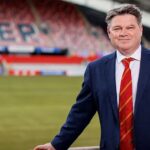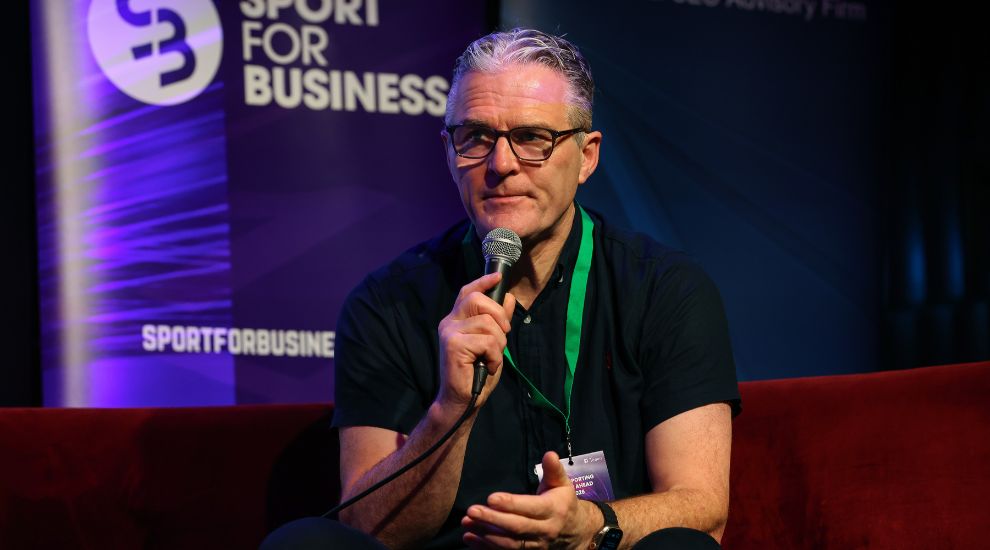
Rob Hartnett’s interview with Jarlath Burns, Uachtarán of the GAA, brought the Sporting Year Ahead into perhaps its most consequential territory: what the organisation is responsible for protecting, what it is being asked to change, and how it should respond when sport is pulled into wider social, political and commercial debate.
Burns began by reframing what the presidency can be. “It can be as busy or as slack as you want it to be,” he said, suggesting the role can be defined narrowly — chairing meetings, opening facilities, attending dinners — or used as a platform to pursue change.
Burns made clear he chose the latter. “I was very clear that I wanted to change… particular things… that I felt needed to be changed in the GAA,” he said, acknowledging that change can be “controversial” and can “create obstacles,” but arguing that leaders have to enter that reality with eyes open.
That statement mattered because it positioned the rest of the conversation: Burns wasn’t in the room to be a ceremonial figurehead. He was there to argue for intentional leadership at a time when the GAA is being challenged from multiple directions — on demographics, integration, competition for space, and the heightened scrutiny of commercial relationships.
Sponsorship pressure and the Allianz debate
Hartnett raised the “moral complexity” now attached to sponsorship, noting the intense public focus on Allianz and the GAA relationship. Burns responded by beginning where many in the country would expect him to begin, given his background in South Armagh: with a direct expression of solidarity with Palestinians.
“It’s very important for us… that we do send out our best wishes to people of Palestine because there has been a genocide in Palestine,” said Burns, adding that he had issued a statement and donation, which he described as the first time the GAA had issued a statement on geopolitics outside Ireland.
From there, Burns stressed the importance of process and responsibility. “I would never approach anything from the back of the envelope or read something on Facebook, and that becomes your opinion,” he said, describing the association’s decision to commission a deep dive by an “eminent group of people” to examine the relationship with Allianz in full context, including the knock-on effects any decision would have on units across the country.
For the Sport for Business audience, what landed was less the specific outcome than the governing principle: the GAA understands it operates inside a commercial ecosystem, but it is also accountable to a membership that expects values and credibility. Burns’ framing suggested that the answer cannot be performative — it must be defensible, properly examined, and rooted in the realities of how local sport is funded and delivered.
Community as the GAA’s core asset
The interview’s centre of gravity was community — not as a slogan, but as the organisation’s operating system.
“How important is this concept of community to us… in the year 2026?” Burns asked, describing Ireland’s “love of place” — townland, parish, club, county — as almost uniquely Irish in its depth and persistence. He added, with characteristic honesty, that it also contains “hatred of the next place across the hill,” an acknowledgement that tribalism can be both bonding and combustible.
But Burns’ deeper point was about volunteerism as a form of social infrastructure. He painted the archetype: the person lining the pitch, cutting grass, cleaning changing rooms, running the bar, taking teams. “Put all of those together… look at all those volunteer hours and see what impact that has… it’s absolutely massive,” he said, arguing that part of the GAA’s job is to reassure its own members that their small acts of service add up to something transformational.
That is a crucial message for commercial partners too. The GAA’s brand strength is often discussed in terms of reach, attendance, broadcast, and participation. Burns argued that its real differentiation lies in the social fabric it sustains — and that this fabric is not guaranteed.
A warning from Wales, and the fear behind the demographics
Burns reached for a comparative story to illustrate what happens when community anchors collapse. He pointed to Welsh mining communities and the impact of deindustrialisation, describing how the closure of mines dismantled local identity and weakened rugby communities that had functioned in a club-like way. He framed Margaret Thatcher’s politics as “the antithesis of community,” quoting her infamous line about there being “no such thing as society.”
The caution was clear: when institutions disappear, community hollows out. And Burns suggested the GAA is now confronting a scenario where, in some rural areas, it is the last remaining anchor.
From there, he moved into numbers that carried the weight of an existential warning. “A third of the population is living little more than one hour of Dublin along that eastern seaboard,” he said, before adding that “78% of our GAA clubs are in areas of declining population.”
He highlighted a concentration challenge too: a significant share of children living within a small geography served by a limited number of clubs — while many rural clubs face the opposite reality, fighting to sustain teams and structures.
Burns’ conclusion was stark: the GAA cannot solve demographic reality on its own — but it must name it and force society to look at it.
The Sport for Business angle here is direct. Participation is not simply a sporting concern; it is a pipeline issue for audiences, volunteers, and future commercial value. If population shifts mean fewer viable clubs in vast geographic areas, the cost of maintaining the national footprint rises, and the community promise — the thing brands often want to associate with — becomes harder to deliver.
The GAA’s right to be at the table
Hartnett asked how important it is that the GAA continues to have a voice in these debates, especially when the old cliché of “sport and politics shouldn’t mix” is still thrown around.
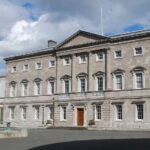
Burns did not accept the premise. He described heading from the event back to Croke Park to change into a suit, and then on to Leinster House to meet the Tánaiste about precisely these issues. He also referenced engagement with the IFA, credit unions and political leaders, presenting the GAA as one of the few all-island organisations with both reach and legitimacy across communities.
“We should be right at the heart of government… not… in an arrogant manner,” said Burns, framing it instead as responsibility. He argued the association has a duty to advocate for the conditions that allow clubs to survive — facilities, planning, population balance, investment — because if clubs collapse, something irreplaceable goes with them.
He also bolstered this argument with a financial legitimacy point: the GAA returns 83 percent of what it takes in back to its units, including funding for coaching in schools and infrastructure investment. The message was: this isn’t an organisation extracting value from communities; it’s designed to recycle value back into them.
Integration: progress, but only if it’s done with respect
On integration of LGFA and camogie structures with the GAA, Burns described it as a “bus already running” under Mary McAleese’s stewardship — one he “jumped on.” But he also signalled that the 2027 deadline is under review as the association listens to those who will have to administer integration at county and high-performance level.
His most important point was about respect for what has been built outside the GAA’s historic structures.
“We have to be so careful that we are not seen coming in… and we’re going to solve all your problems,” said Burns, pointing to LGFA’s development as a strong independent brand over 50 years — and warning that integration cannot be experienced as a takeover.
In commercial terms, this matters a lot. Integration decisions will shape brand architecture, sponsorship assets, and governance — but they will also shape trust. If volunteers in LGFA or camogie feel diminished by the process, the short-term organisational “efficiency” could come at the cost of participation and goodwill.
A personal ending that reinforced the values message
Burns closed by talking about returning to his role as a school principal after his term ends, describing the school as “all of human life,” and speaking about education as values-led, compassionate, and child-centred. He gave a longer reflection on meeting children’s needs — including neurodiversity and identity questions — and emphasised that leadership requires being “comfortable feeling uncomfortable.”
It was a striking way to end a sporting interview: Burns placed the GAA’s values — compassion, inclusion, responsibility — alongside the responsibilities of education and community leadership.
For everyone in the room, it left a clear impression. Sponsorship, governance, integration and demographic pressures are not separate files; they are connected. The GAA’s commercial story will increasingly be judged through the lens Burns described: what is the organisation doing to hold communities together — and how credible is it when it speaks about values?
That is the landscape the GAA — and its partners — are operating in for 2026.
It was a powerful conversation with a leader who knows what he is aiming for, and how to bring people along with him.
Read More: Opening Comments from Rob Hartnett
Read More: Jarlath Burns in Conversation
Read More: Teneo Delivers Rich Insights
Read More: Launch of the AIG Access Tennis Programme by Tennis Ireland
Read More: Boxing Ireland’s Built Different Rebrand
Read More: Special Olympics Ireland National Games
Image Credit: Sport for Business, Ryan Byrne, Inpho.ie
Secure your place for our next event
Upcoming Sport for Business events


SPORT FOR BUSINESS
Sport for Business is Ireland’s leading platform focused on the commercial, strategic and societal impact of sport. It connects decision-makers across governing bodies, clubs, brands, agencies and public institutions through high-quality journalism, events and insight. Sport for Business explores how sport drives economic value, participation, inclusion and national identity, while holding organisations to account on governance and sustainability.
Through analysis, storytelling and convening the sector, it helps leaders understand trends, share best practice and make better-informed decisions. Its work positions sport not just as entertainment, but as a vital contributor to Ireland’s social and economic fabric.
Find out more about becoming a member today.
Or sign up for our twice-daily bulletins to get a flavour of the material we cover.
Sign up for our News Bulletins here.