The Republic of Ireland’s UEFA Nations League meeting with Israel was always destined to be about more than football. The tension between sporting obligation and public conscience is impossible to ignore.
The game — scheduled for October 4th, days after an away fixture almost certainly to be scheduled in Hungary — forms part of the UEFA Nations League calendar. That means the Football Association of Ireland is bound by the rules of UEFA to fulfil the tie or face sanctions.
On paper, the position is straightforward. In practice, it is anything but.
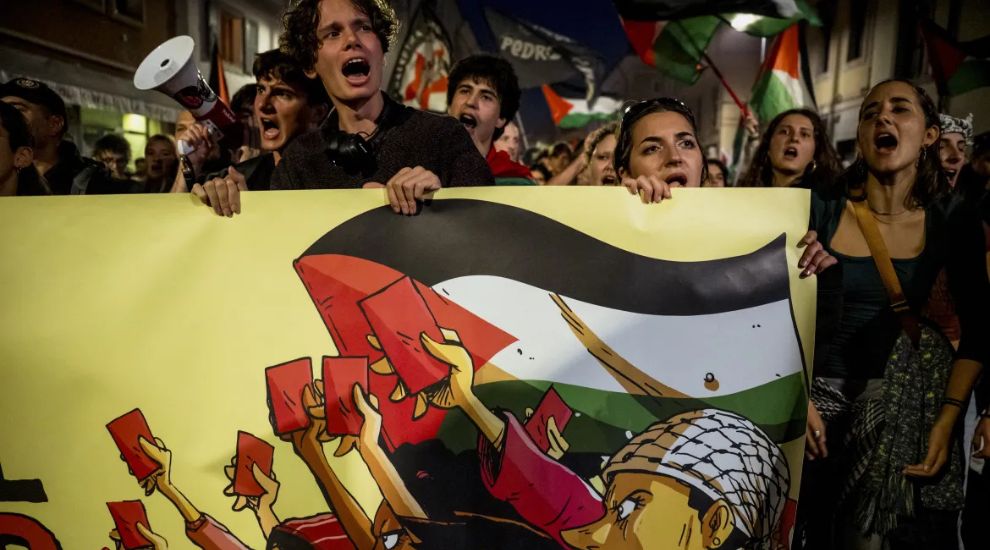
The Government has insisted that the matter rests with the FAI as an autonomous sporting body. Both Micheál Martin and Simon Harris have said they believe the fixture should proceed. Harris has warned that refusing to play would effectively give “Ireland the red card,” disadvantaging Irish players without influencing events in Gaza.
There is logic in that argument. UEFA rules are explicit. A boycott would almost certainly result in fines, forfeiture or worse. The players, not policymakers, would pay the price.
The same issue has been faced by Italy (twice), France, Belgium, Kosovo, Estonia, Moldova and Norway since the October 7th massacre in 2023 that sparked the Israeli invasion of Gaza and subsequent murder of 75,000 Palestinians.
There were riots and a protest of more people than attended the game in Udine in Italy the last time. Norway hosted the game but donated all profits to Medecins Sans Frontiers to support humanitarian work. Belgium played their home game in Hungary, the same venue as Israel have used for their home fixtures.
No country has yet failed to fulfil their fixture in protest, despite the fact that Israel is clearly in breach of obvious humanitarian realities, but also of UEFA statutes through having Israeli League clubs play in occupied territories against the wishes of the Palestinian FA, a fact highlighted by a Bohemians led call and vote at a UEFA EGM last year.
Ireland’s public response to events in Gaza has been intense and sustained. Protests have drawn large crowds. Political leaders across parties have voiced condemnation of Israel’s actions. An Garda Síochána is understood to have raised concerns about the policing burden such a fixture would impose.
This is made even more intense by the fact that Ireland will be hosting the Presidency of the European Union at the same time, and the game would come only weeks after the Amgen Irish Open is hosted at Trump Doonbeg Golf resort in Clare, and event likely to spark additional political protest.
The match in Dublin would not be a routine sporting occasion. It would be a flashpoint.
Some sources close to Government circles have suggested that while no final decision has been made, the expectation is that the October 4th game will be played at a neutral venue. That outcome would represent a compromise of honouring UEFA obligations while recognising domestic sensitivities.
It is also the only responsible course.
The fixture should not take place in Ireland.
That is not an argument for boycotting the tie altogether. Nor is it a call for the FAI to breach its statutory commitments. The association’s duty is to its players and to the integrity of competition. Refusal to play would damage Irish football more than it would affect Israeli policy.
But hosting the match here would send a message — intentional or not — that Ireland can compartmentalise outrage at events in Gaza from the symbolic weight of international sport. For many of us, that separation simply does not exist.
We rejected the call that the GAA should boycott Allianz over tenuous links between a linked entity of the global multinational to Israeli war bonds, and continue to do so. Linking the two is a patent stretch of the reality of how we organise ourselves as a society. This case is a direct one involving those representing the state which has so obviously and incontrovertibly been engaged in acts of state genocide.
Minister of State Marian Harkin gave voice to that discomfort when she said, in a personal capacity, that she would not agree with the fixture going ahead. Mary Lou McDonald went further, urging the FAI to refuse to play entirely.
A full boycott would be reckless. But ignoring the political temperature at home would be naïve.
A neutral venue does not resolve the moral debate. It does, however, acknowledge it. It allows the Republic of Ireland team to compete without turning Dublin into a stage for confrontation. It reduces security strain. It lowers the risk of scenes that would overshadow the sport itself.
Most importantly, it recognises that football, while governed by statutes, exists within society — and society in Ireland is deeply affected by what is unfolding in Gaza.
UEFA may insist that politics and sport be decoupled. It insists that National Football Associations be free from political pressure in their home country, an issue that was very obvious here during the financial crisis that engulfed the FAI in 2019.
In theory, that is a right position to adopt. In practice, it is rarely so simple.
The FAI’s priority must be to protect its players and its competitive standing. But it also has a responsibility to the communities it represents. On October 4th, those responsibilities collide.
The best and right path is that Israel should be suspended from UEFA and FIFA competition so long as it is conducting its aggressive war, as is Russia and Belarus. But until that happens, the game may have to be played, as it was in Basketball, and at U17 Women’s Football already.
It does not have to be played here.
Image Credit: Social media
Upcoming Events

SPORT FOR BUSINESS
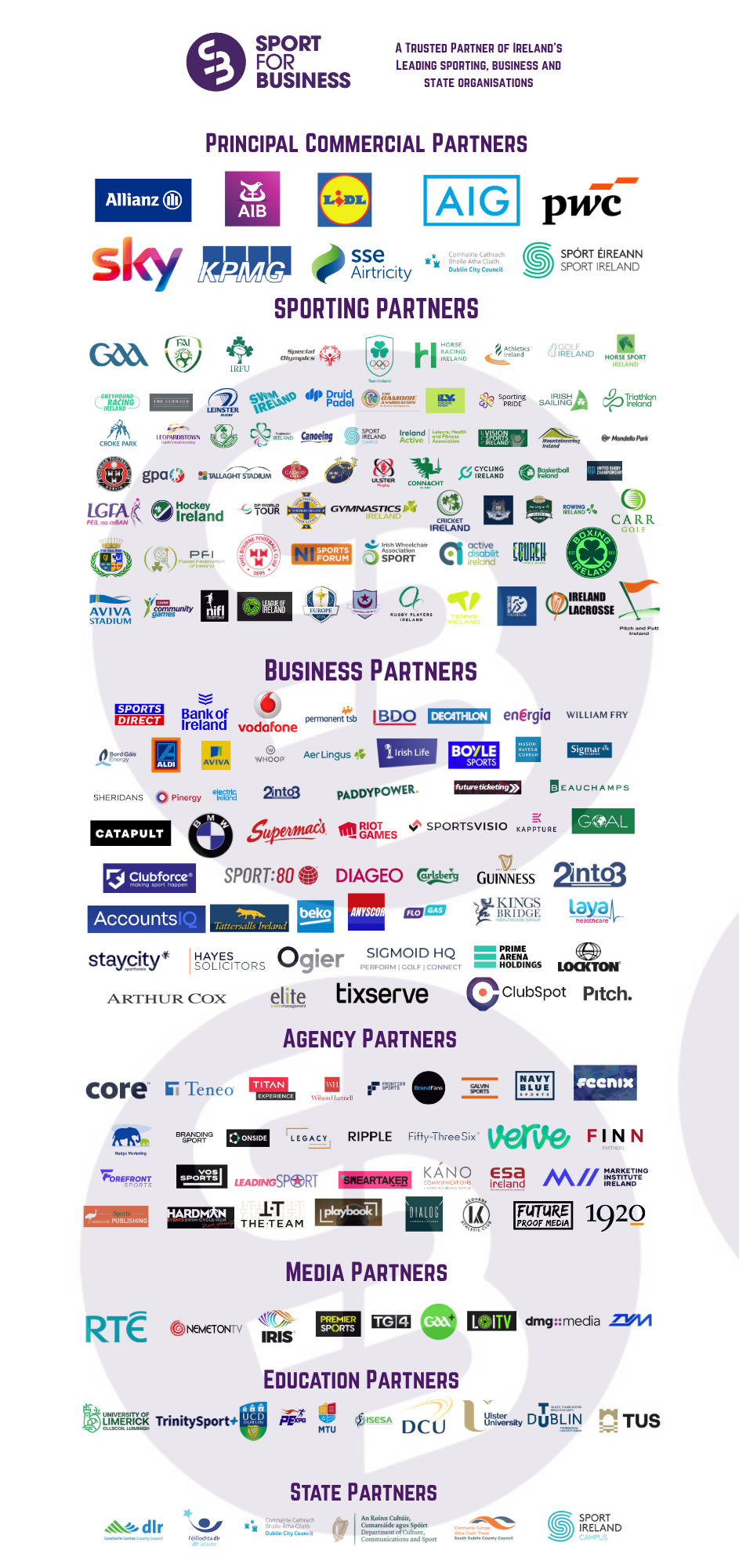
Sport for Business is Ireland’s leading platform focused on the commercial, strategic and societal impact of sport. It connects decision-makers across governing bodies, clubs, brands, agencies and public institutions through high-quality content, events and insight. Sport for Business explores how sport drives economic value, participation, inclusion and national identity, and how your story can be part of ours.
Through analysis, storytelling and convening the sector, it helps leaders understand trends, share best practice and make better-informed decisions. Its work positions sport not just as entertainment, but as a vital contributor to Ireland’s social and economic fabric.
Find out more about becoming a member today.
Or sign up for our twice-daily bulletins to get a flavour of the material we cover.
Sign up for our News Bulletins here.