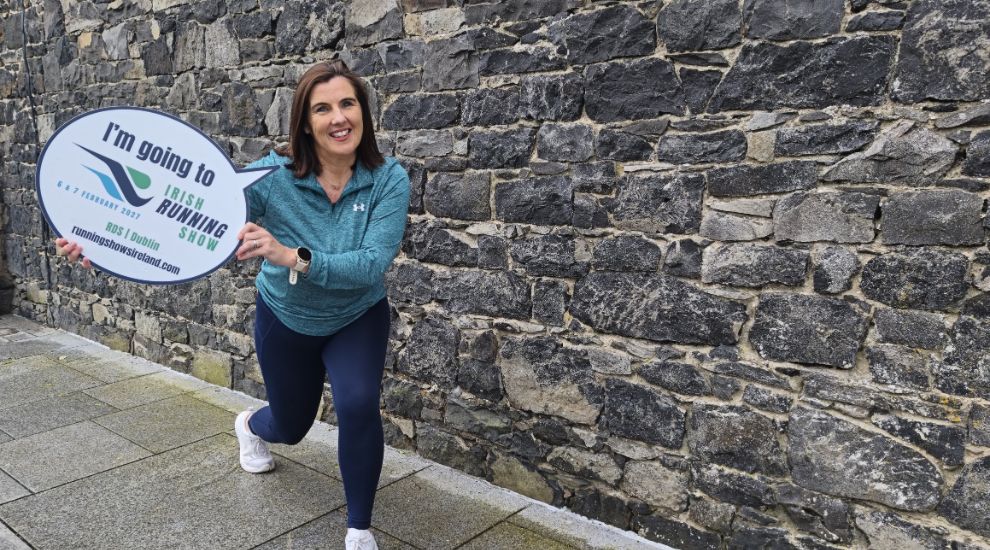
The scale of Ireland’s running boom will be brought under one roof at the RDS next year when the first Irish Running Show takes place in Dublin on February 6 and 7, 2027.
The two-day event will bring running brands, event organisers, clubs, coaches and participants together for what is being billed as a celebration of running, created by runners for runners.
It follows the launch of the NI Running Show in Belfast in February 2026 and represents the next stage in the development of an all-island event series led by runner and Event Director Oonagh Cattigan, pictured above.
More than 100 brands are expected to feature on the exhibition floor, alongside representatives from running clubs, races and organised events. Visitors will also have access to interactive zones, Pilates and yoga sessions, food vendors and a programme of talks involving athletes, coaches and other figures from across the running community.
The latest Irish Sports Monitor from Sport Ireland found that more than 2.12 million people aged 16 and over took part in sport each week during 2025, the highest absolute number recorded by the research programme.
Running was the third most popular individual sporting activity, with seven per cent of adults participating weekly. It ranked behind personal exercise, which includes gym work and fitness classes, at 20 per cent, and swimming at eight per cent.
Participation has also grown by between five and seven percentage points across almost every age group since 2017, although significant gaps remain between different socioeconomic groups and between people with and without disabilities.
Dublin Marathon Demand Reaches New Level
The clearest indication of the demand for organised running came with the ballot for the 2026 Irish Life Dublin Marathon.
More than 47,000 applications were received for 17,200 general-entry places, the largest number of applications in the history of the event. The overall race capacity for the October marathon has been agreed at 22,500, with the remaining places allocated through charity entries, elite and Good for Age categories, international tour operators, sponsors and community participation initiatives.
The numbers mean that fewer than four in ten applicants received a general ballot place.
The new system produced an almost even split between first-time marathon runners and returning participants. Organisers had previously found that approximately 70 per cent of places were being secured by former participants, limiting access for newcomers and contributing to a field in which women accounted for only 36 per cent of runners.
Dublin Marathon organisers also estimate that participants collectively raise approximately €9 million for charities each year.
Long described as one of Europe’s largest marathons, the event has grown from 2,100 runners at its first staging in 1980 to a major international participation occasion and an important part of Dublin’s annual sporting and tourism calendar.
The Irish Life Race Series has extended that engagement across the summer through the Fingal 10K, Frank Duffy 10 Mile and Dublin Half Marathon, creating a pathway towards the full marathon while giving runners several organised targets during the year.
The Dublin Marathon Group’s not-for-profit structure also means that some of the income generated by the event is reinvested into the wider sport. This includes Marathon Kids, community participation programmes, the Jerry Kiernan Foundation and Marathon Mission, which supports Athletics Ireland’s endurance structures and national championship prize funds.
The Group says more than €350,000 has been invested in Irish endurance athletes through Marathon Mission since 2009.
Vhi parkrun Builds a Nationwide Community
At a more accessible level, the growth of Vhi parkrun has given Ireland’s running community a free weekly meeting point.
More than 500,000 people across the Republic are now registered for parkrun, equivalent to approximately one in every ten people in the country.
The free weekly events allow people to walk, jog, run, volunteer or spectate, with no time limit and no requirement to belong to a traditional athletics club. The standard five-kilometre events take place on Saturday mornings, while junior parkruns provide two-kilometre events for children on Sundays.
Supported by presenting partner Vhi, parkrun has developed from an organised running initiative into a significant community activity movement, delivered by volunteers in parks, towns and communities around the country.
Its appeal spans experienced runners, families, walkers, first-time participants and people who attend primarily for the social connection that surrounds the event.
The scale of the movement also demonstrates why running has become increasingly attractive to commercial partners.
Unlike many sports, it allows brands to engage directly with participants rather than only through audiences watching elite competition. Footwear, apparel, nutrition, wearable technology, physiotherapy, recovery, travel and event-entry businesses all sit within a growing running economy.
The community is also highly active throughout the year. A runner preparing for Dublin may take part in several shorter races, attend parkrun each week, join a club or informal running group and invest in equipment, coaching and recovery services over several months.
Organisers of the Irish Running Show also point to industry research suggesting that more than half of runners participated in at least one organised event during the previous year, rising to almost seven in ten among Gen Z runners.
That younger audience is helping to reshape the culture of the sport. Traditional athletics clubs remain central to Irish running, but they are now joined by social running groups, workplace challenges, charity teams, digital training communities and informal clubs built around coffee, friendship and shared experience.
The Irish Running Show therefore arrives at an opportune moment.
The popularity of the Irish Life Dublin Marathon demonstrates the demand for major organised events, while the reach of Vhi parkrun shows the power of a free and inclusive weekly model.
Bringing those different parts of the community together at the RDS will give runners a dedicated national gathering while providing brands, race organisers and clubs with direct access to one of the fastest-growing and most engaged participation audiences in Irish sport.
We can only see it as being a great success and look forward to being involved in the run-up and at the event.

 The Irish Running Show, Irish Life and the Dublin Marathon Group are full members of Sport for Business. Sport for Business coverage of Athletics is supported by 123.ie and of Community Sport by Dublin City Council.
If you would like to be part of the Sport for Business community and see your organisation in our content, on our stages, and in the conversation happening every day around the commercial world of Irish Sport, email us today and let’s see what is possible.
Image Credit: Irish Running Show
ABOUT SPORT FOR BUSINESS
Sport for Business is Ireland’s leading platform focused on the commercial, strategic and societal impact of sport. It connects decision-makers across governing bodies, clubs, brands, agencies, and public institutions through high-quality content, events, and insights.
Sport for Business explores how sport drives economic value, participation, inclusion and national identity, and how your story can be part of ours.
Through analysis, storytelling and convening the sector, it helps leaders understand trends, share best practices, and make better-informed decisions. It positions sport not just as entertainment but as a vital contributor to Ireland’s social and economic fabric.
Find out more about becoming a member today.
Or sign up for our Daily Sport for Business Snapshot email bulletins to get a flavour of the material we cover.
Sign up for our News Bulletins here.