From the race for the next FIFA World Cup rights to the changing shape of the Commonwealth Games, this week’s international media stories all point in the same direction. Broadcasters are no longer simply buying rights; they are building ecosystems designed to keep fans engaged year-round. It’s a trend we have seen reflected in several Irish stories over the past week as well.
The biggest story came from FIFA, which has already begun laying the groundwork for the sale of media rights to the 2030 and 2034 FIFA World Cups. Following record audiences for the tournament in North America, rights experts expect the next cycle to attract unprecedented interest from traditional broadcasters alongside streaming platforms including Netflix, Amazon, YouTube and DAZN.
The story resonates strongly in Ireland after RTÉ confirmed it has already secured the exclusive free-to-air Irish rights to the 2030 FIFA World Cup, extending one of the broadcaster’s most valuable sports properties.
Combined with the record streaming figures generated by the 2026 Final, it underlines that premium football rights remain one of the few genuinely mass-audience propositions for broadcasters.
The audience story continued in Britain, where the BBC confirmed some of its strongest sporting audiences since Euro 2020. But perhaps more interesting was how those audiences were built. BBC Sport treated television, iPlayer, YouTube and social platforms as complementary rather than competing products, creating content tailored for each audience.
That multi-platform approach mirrors developments at home. RTÉ Player recorded its biggest-ever single-event audience during the World Cup Final, while Virgin Media and RTÉ increasingly package television, streaming, radio, podcasts and digital coverage as one integrated offer rather than separate services.
The next major test of that strategy comes with the Glasgow 2026 Commonwealth Games. Warner Bros. Discovery will provide comprehensive live coverage across TNT Sports and HBO Max, while Channel 5 in Britain will ensure key moments remain available free-to-air. It is another example of rights holders seeking a balance between subscription revenue and mass reach rather than treating them as mutually exclusive.
DAZN and FIFA+
One of the week’s more significant strategic developments came from DAZN. Rather than announcing another major rights acquisition, the company continued building its long-term football ecosystem through the integration of FIFA+, bringing more than 8,500 live matches from around 100 national associations together with documentaries, archive footage and original programming onto a single platform. The objective is increasingly clear: become football’s everyday destination, not simply the place viewers visit on match day.
That strategy has parallels with Ireland as well. We have reported this week on EA SPORTS FC 27’s increasing investment in year-round football engagement, using digital content, gaming and mobile platforms to keep supporters connected outside live competition. While operating in different sectors, both businesses are competing for the same scarce commodity—fans’ daily attention.
YouTube also continued its quiet emergence as one of sport’s most influential distribution platforms. Throughout the World Cup, broadcasters increasingly commissioned original YouTube-first programming rather than simply uploading clips after transmission. Live watch-alongs, tactical analysis, creator collaborations and short-form highlights became central to audience growth, particularly among younger viewers.
That trend is also evident in Ireland. Our updated Guide to Sport on TV and Streaming now routinely includes TG4’s YouTube coverage alongside traditional television listings, recognising that international athletics, GAA, underage competitions and niche sports increasingly find substantial audiences beyond linear television. For many younger fans, YouTube has become an entry point to live sport rather than an extension of it.
Sport for Business Perspective
Taken together, these stories suggest the next battle in sports media will not simply be fought over who owns the rights. It will be won by those organisations that can build year-round relationships with supporters across multiple platforms.
That has been a recurring theme in our own coverage this week—from RTÉ’s World Cup rights and record Player audiences to EA SPORTS FC’s digital football strategy and the continuing expansion of Irish sport across streaming and YouTube. Rights still matter, but increasingly they are only the beginning of the conversation. For sports organisations in Ireland, the opportunity lies in thinking like media businesses between events, not just during them.
Three Things We’re Watching Through an Irish Lens
FIFA’s next rights process – Will a global streamer finally enter top-tier football rights?
Glasgow 2026 audiences – Can the hybrid pay-per-view-first model provide a template for future multi-sport events?
DAZN’s FIFA+ integration – Does a year-round football platform become the default for global football fans?

 The GAA, LGFA, Camogie Association and the Department of Culture, Communications and Sport are full members of Sport for Business.
If you would like to be part of the Sport for Business community and see your organisation in our content, on our stages, and in the conversation happening every day around the commercial world of Irish Sport, email us today and let’s see what is possible.
Image Credit: GAA and Shauna Clinton, Sportsfile. France Players Celebrate after victory over San Francisco at Walsh Park, Waterford
ABOUT SPORT FOR BUSINESS
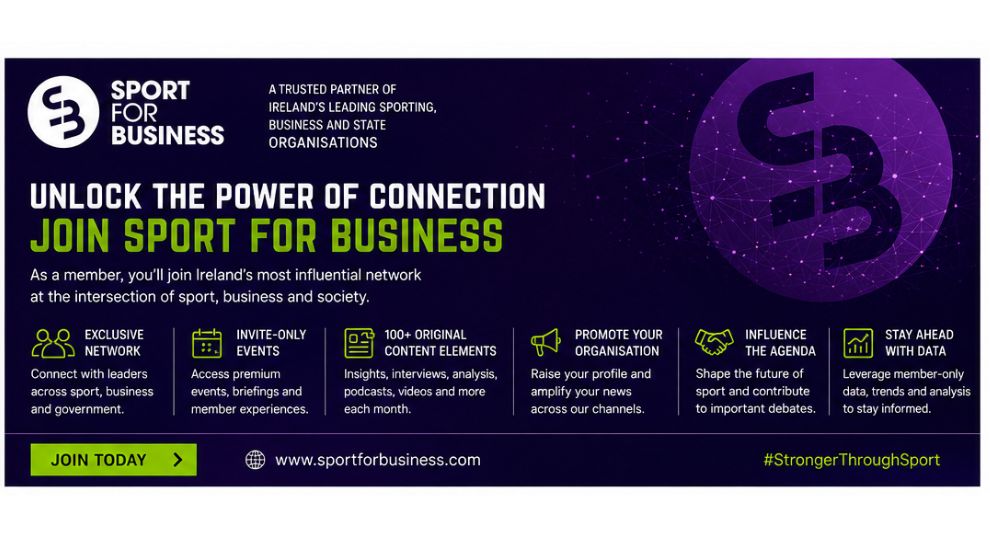
Sport for Business is Ireland’s leading platform focused on the commercial, strategic and societal impact of sport. It connects decision-makers across governing bodies, clubs, brands, agencies, and public institutions through high-quality content, events, and insights.
Sport for Business explores how sport drives economic value, participation, inclusion and national identity, and how your story can be part of ours.
Through analysis, storytelling and convening the sector, it helps leaders understand trends, share best practices, and make better-informed decisions. It positions sport not just as entertainment but as a vital contributor to Ireland’s social and economic fabric.
Find out more about becoming a member today.
Or sign up for our Daily Sport for Business Snapshot email bulletins to get a flavour of the material we cover.
Sign up for our News Bulletins here.