The Camogie Association has proposed January 2028 as a new target date for the GAA to become the single National Governing Body for Gaelic games, alongside a new professionally resourced structure to deliver integration.
Camogie Association President Brian Molloy made the proposal in a letter circulated to county boards, and reported in the Irish Examiner today, after the previous timetable broke down and former President Mary McAleese resigned earlier this month as chair of the Steering Group on Integration.
The original plan had envisaged Special Congresses taking place in October 2026 as part of a pathway towards integration in 2027.
Molloy has acknowledged that timetable will not now be achieved and has accepted that Camogie, as one of the three partners in the process, must shoulder its share of responsibility for the delay.
The Association believes the outstanding issues identified around structures and finances can be resolved over the next 12 months and is advocating January 2028 as a revised delivery date for the GAA to become the single NGB for Gaelic games.
Central to the proposal is a significant change in how the integration process is managed.
Camogie wants the Steering Group on Integration to establish a dedicated implementation subcommittee to drive the operational work required to bring the three organisations together.
The Steering Group comprises the Presidents and Directors General of the GAA, LGFA and Camogie Association.
Molloy’s letter argues that this group does not have the capacity to manage the detailed work now required on organisational structures, rule and process changes, and the phased delivery of different elements of integration.
Camogie is proposing that the new implementation body should be adequately resourced and led by an externally recruited, experienced and results-focused programme manager.
The Association has also committed to providing its share of the funding required.
The proposal comes as the Steering Group begins resetting integration following McAleese’s departure.
A new independent chair to succeed her is expected to be announced on October 5.
Amid the recent uncertainty, the Camogie Association, as well as the GAA and the Ladies Gaelic Football Association, has maintained its commitment to the principle of a single organisation governing Gaelic games.
In its statement following McAleese’s resignation, it reiterated its support for the ambition of “One Club, One County, One Province, One Congress, One Association.”
Sport for Business Perspective
This recognises that this is a complex organisational merger and that integration must be managed as a substantial professional change programme.
Three organisations are coming together, each with its own governance structures, employees, finances, competitions, rules, membership systems, and commercial relationships.
Significant questions also remain about the future funding of men’s and women’s inter-county teams and how equality will be achieved over time.
There are areas where the three organisations can continue aligning in advance of a final structure. Coach development is one example, with the LGFA and Camogie Association working together this year to train new Coach Developers as part of the wider Gaelic Games Coach and Player Pathway.
Other areas could potentially include procurement, technology, data, facilities, communications and elements of commercial planning.
Three separate organisations currently take different properties and rights to market. A single governing body would eventually create a very different commercial proposition encompassing men’s and women’s Gaelic football, hurling and camogie within one organisation.
How and when that transition begins should be part of the implementation work, not left until the end.
January 2028 is later than originally intended, and importantly it is still only Camogie’s proposed target rather than an agreed deadline.
The immediate test is therefore what happens next: whether the other two Associations support the proposed delivery model, who is appointed to succeed Mary McAleese, and whether a properly resourced implementation structure is put in place.
A credible plan, named responsibility and measurable milestones would do more to restore confidence in integration than another aspirational deadline on its own.

 The Camogie Association, the Ladies Gaelic Football Association and the GAA are full members of Sport for Business. AIB is our Official Gaelic Games Partner
If you would like to be part of the Sport for Business community and see your organisation in our content, on our stages, and in the conversation happening every day around the commercial world of Irish Sport, email us today and let’s see what is possible.
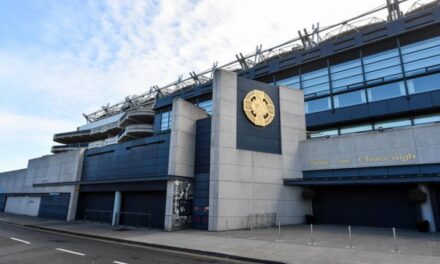
Image Credit: GAA
ABOUT SPORT FOR BUSINESS
Sport for Business is Ireland’s leading platform focused on the commercial, strategic and societal impact of sport. It connects decision-makers across governing bodies, clubs, brands, agencies, and public institutions through high-quality content, events, and insights.
Sport for Business explores how sport drives economic value, participation, inclusion and national identity, and how your story can be part of ours.
Through analysis, storytelling and convening the sector, it helps leaders understand trends, share best practices, and make better-informed decisions. It positions sport not just as entertainment but as a vital contributor to Ireland’s social and economic fabric.
Find out more about becoming a member today.
Or sign up for our Daily Sport for Business Snapshot email bulletins to get a flavour of the material we cover.
Sign up for our News Bulletins here.