The visit to Dublin this week of a high-powered delegation from Washington, DC, hosted by World Trade Centre Dublin and Ireland Gateway to Europe, felt very much like something substantial across our worlds of sport and business.
The delegation brought together political, business, education and economic development leaders from the US capital as part of a five-day mission to London and Dublin, led by the DC Chamber of Commerce and designed explicitly to create new commercial relationships and international opportunities.
At National College of Ireland on Wednesday, sport was given a prominent place in that conversation.
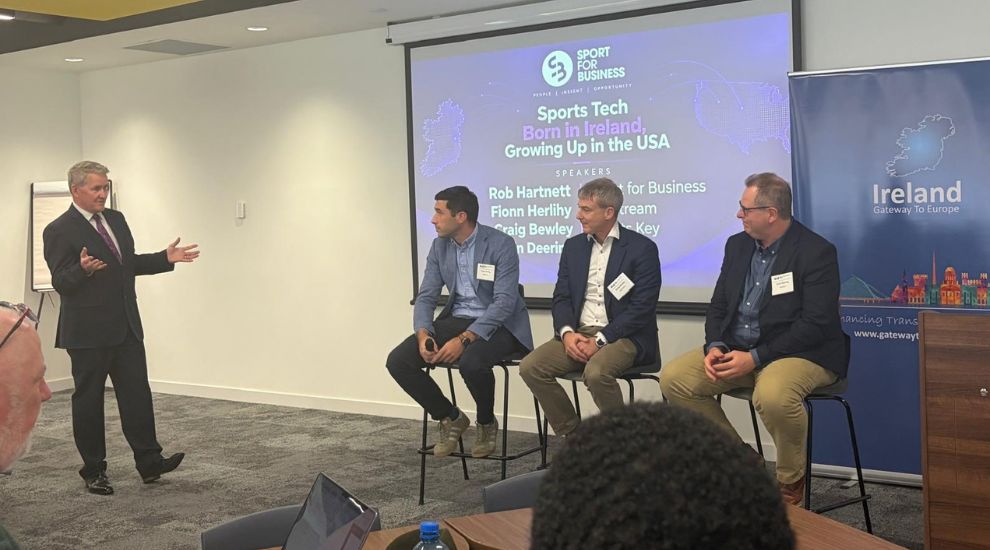
Sport for Business was delighted to curate and host two sessions on Irish sports technology companies building in America and, from a different perspective, how Ireland builds its sports economy.
Sport as an Economic Driver
Deputy Mayor for Planning and Economic Development Nina Albert set the tone by placing sport firmly within Washington’s strategy for how a modern city competes.
Her description of professional sport as the centre of an economic dartboard was particularly striking.
The teams themselves may attract the attention, but the real economic opportunity also lies in the rings around them: technology, services, hospitality, entertainment, facilities, retail, media and the many businesses that support the sporting economy.
Washington, she noted, has eight professional sports teams within its 69 square miles as well as a major university sports sector. Sport and entertainment are therefore being viewed as important generators of experience, employment and wider economic activity.
Sport is in many ways primarily about participation, performance and social benefit, but it is also a vibrant industry.
It creates technology companies, jobs, intellectual property, tourism, investment opportunities and businesses capable of selling internationally.
Irish Born Technology Growing Up in America
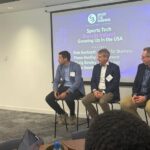
Our first panel brought together three very different Irish companies with one increasingly important thing in common: each sees the United States as central to its future.
Fionn Herlihy of WiiStream, Craig Bewley of SportsKey and Colin Deering of Anyscor told three stories of Irish entrepreneurship that resonated strongly with those in the room.
There were mistakes, wrong turns, early products that did not quite work, and lessons learned the expensive way; that is the nature of any business. But there was also ambition, the willingness to walk into a room and tell your story, and the relentless progress of closing one deal after another.
WiiStream is building streaming and digital content platforms for sporting organisations.
SportsKey provides technology to manage sports facilities, covering everything from scheduling and bookings to membership, payments and access.
Anyscor grew from the simple frustration of standing on a sideline and nobody knowing the score, developing technology that enables teams and clubs to capture, communicate and potentially monetise what is happening on the field.
All three demonstrated the truth that the best ideas start by solving a very ordinary sporting problem.
We then turned to the question of how you turn a good Irish product into an international business.
America offers extraordinary scale, but scale itself can become intimidating.
Herlihy spoke about the need to identify repeatable opportunities rather than attempting to attack the whole US market at once.
Bewley described learning that putting somebody on the ground in America before the business was ready did not automatically solve the problem. His company has increasingly pursued partnerships as a route into the market instead.
Deering offered perhaps the clearest illustration of the difference in scale. A sporting organisation covering only part of Pennsylvania could represent hundreds of clubs. That alone can dwarf the size of an entire sporting market in Ireland.
The conversations with our Washington visitors quickly moved from theory into practical offers of introductions, partnerships and market access. That is precisely where events such as this earn their value.
Enterprise Ireland’s Sports Tech Story
The second discussion widened the lens.
Keith Brock of Enterprise Ireland outlined both the scale of state backing available to ambitious Irish companies and, more importantly, the international network surrounding that investment.
Enterprise Ireland does not merely hand out grants. It can invest for equity, follow companies through later funding rounds and connect them through a network of 44 international offices.
Brock told the audience that Enterprise Ireland had invested around €48 million across 79 start-ups last year and expected that figure to reach about €55 million across 85 companies this year. He also highlighted the agency’s growing SportsTech portfolio and the importance of helping businesses internationalise.
For an American audience accustomed to a largely private venture capital ecosystem, the model generated genuine curiosity.
Questions came quickly around how the investment works, whether returns are recycled and whether companies could share resources as they seek the expensive first foothold in markets such as Washington.
Building Something Bigger
Dermot Rigley of Prime Arena Holdings then brought the conversation firmly into the physical world.
The proposed Dublin Arena has grown from an initial idea around professional ice hockey into a €250 million multi-purpose venue concept covering sport, concerts, conferences and entertainment.
Rigley spoke about the journey of building political and community support, assembling an international consortium and working through a project that sits somewhere between private enterprise and public economic development.
The discussion resonated strongly with the Washington delegation for obvious reasons.
Washington itself is in the midst of a major conversation around sport, infrastructure and the redevelopment of the RFK Stadium site, while Council members Wendell Felder and Brooke Pinto were among the political leaders represented in Dublin.
The two cities and their projects differ substantially, but there was clear value in sharing how major sporting infrastructure can reshape parts of a city.
During the conversation, we spontaneously suggested that Dublin and Washington might develop a sporting twin-city relationship.
The Washington side suggested that thinking may already be moving in that direction.
That would be an intriguing next chapter. Sport for Business USA had me dreaming of springtime on the Potomac late into the evening.
The Dublin visit builds on a Memorandum of Understanding agreed between the District of Columbia and World Trade Centre Dublin in 2025, while National College of Ireland and the University of the District of Columbia are also developing a partnership around student mobility, AI and digital transformation and institutional exchange.
Ireland Gateway to Europe has spent 15 years building relationships of this nature, taking Irish businesses to North America and increasingly bringing potential partners back in the other direction.
Matt Mohan described the process neatly during his welcome as not simply fundraising but “friend raising”.
There was plenty of that in the room yesterday.
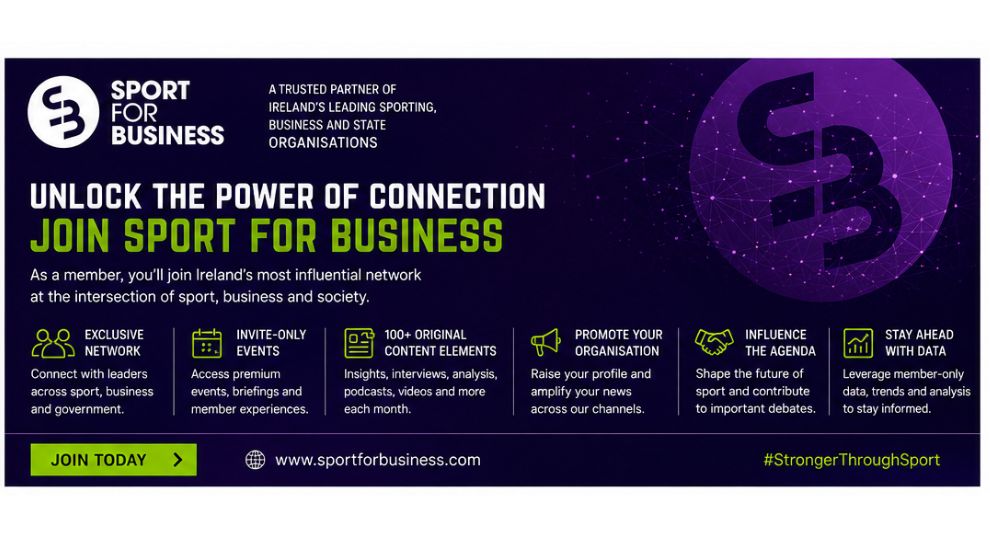
 The Department of Culture, Communications and Sport, Sport Ireland, the Federation of Irish Sport, the FAI, GAA, and the Gaelic Players Association are among the many sporting organisations that see the value of a Sport for Business membership. If you would like to join them and see your organisation in our content, on our stages, and in the conversation happening every day around the commercial world of Irish Sport, email us today and let’s see what is possible, or sign up straight away from the link below.
Image Credit: Fiona Mohan, Gateway to Europe
ABOUT SPORT FOR BUSINESS
Sport for Business is Ireland’s leading platform focused on the commercial, strategic and societal impact of sport. It connects decision-makers across governing bodies, clubs, brands, agencies, and public institutions through high-quality content, events, and insights.
Sport for Business explores how sport drives economic value, participation, inclusion and national identity, and how your story can be part of ours.
Through analysis, storytelling and convening the sector, it helps leaders understand trends, share best practices, and make better-informed decisions. It positions sport not just as entertainment but as a vital contributor to Ireland’s social and economic fabric.
Find out more about becoming a member today.
Or sign up for our Daily Sport for Business Snapshot email bulletins to get a flavour of the material we cover.
Sign up for our News Bulletins here.