The GAA, LGFA and Camogie Association have reaffirmed their commitment to integration at an Oireachtas hearing, but left without an agreed replacement for the abandoned 2027 timetable.
The clearest immediate development was confirmation that the Steering Group on Integration has unanimously agreed on a nominee to succeed Dr Mary McAleese as chair. The appointment remained subject to ratification by the three associations, with an announcement expected today or tomorrow.
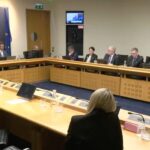
Wednesday’s appearance before the Joint Committee on Arts, Media, Communications, Culture and Sport brought the focus back to how one association’s ambition for Gaelic games will be delivered.
GAA Director General Tom Ryan said full integration would take “a number of years”. GAA President Jarlath Burns expressed hopes for progress in 2028, but the hearing agreed no new completion date.
Committee chair Alan Kelly said the bodies would be invited back in December, when members would expect greater clarity on the revised timetable.
The hearing followed McAleese’s resignation last month after the GAA indicated that it could no longer commit to the 2027 target. The three associations announced that date in February 2024.
In a joint opening statement, the associations said they remained committed to creating a single organisation and ensuring its benefits were shared by all participants.
Burns credited McAleese with bringing the organisations substantially closer to that goal. He acknowledged differences emerging through consultation over the shape of the future organisation.
Ryan said the GAA would set out the required steps and a timeline at its next Congress. That is scheduled for February 2027. That makes the coming months important for translating the renewed commitment into proposals that members can assess and approve.
Jarlath Burns spoke of a likely need for three congresses across all three associations, one on structures, one on membership and one to formally approve the integration of three into one. It is complex, but that idea of nine individual congresses, any one of which could throw the moves back again, was causing frustration among the politicians, and in the wider Gaelic games family.
LGFA Chief Executive Lyn Savage defended the decision to move away from the original deadline, arguing that getting the process right was essential. Burns also stressed the need for a structure that members would support in a vote.
The Camogie Association had previously proposed January 2028 as the date for the GAA to become the single national governing body. Wednesday’s hearing did not establish that as an agreed deadline across all three organisations. It remains to be seen whether they will press that with the new Chair, and whether they will follow through on their call for greater external expertise in change management.
Senator Alison Comyn raised concerns about women’s influence in senior decision-making. Burns rejected suggestions of gender bias in the GAA’s administrative structures and pointed to women’s existing influence within the organisation.
He also highlighted financial and administrative support for camogie, including a €500,000 grant, the payment of rent and utilities for its current offices, and a €2 million commitment towards new accommodation at Croke Park.
Senator Evanne Ní Chuilinn argued that positive discrimination towards girls should be central to implementing integration, pointing to the historic advantage enjoyed by boys in accessing public funding and facilities.
“How we get there is positively discriminating towards girls, because boys have had a birthright to access in public funding and facilities,” she said.
“So actually positive discrimination is how implementation happens.”
Ní Chuilinn urged the associations to draw on outside expertise in change management and equality, alongside a clearer timetable.
“Clarity will bring reassurance,” she said. “Timelines will bring clarity. External help will certainly bring expertise and clarity.”
She said she had spoken that morning to an integration subcommittee chair in Connacht, who identified “wishy-washy messaging” as a problem. She urged the leadership to engage with integration committees that wanted to get the process over the line.
Despite her criticism, she emphasised the scale of the opportunity facing the associations.
“It is still the most important and the most exciting thing that will happen to Irish sport in a hundred years,” she said.
“And it’s a privilege that you get to lead on it.”
Sport for Business Perspective
Integration is a major governance and organisational change project. It involves the rules, resources and relationships through which clubs and counties deliver Gaelic games.
Our view is that the next phase needs measurable milestones alongside the overall ambition. Players and volunteers should be able to see what will improve, who is responsible and when delivery can be expected. The Associations are urging patience to get it absolutely right, which is fair, but you have to listen to the room as well; clearer deadlines and timetables are needed to restore confidence that this is, as we genuinely believe, the will of all parties.
Fair access to facilities, representation in decisions, player support and manageable administration are practical tests of progress.
Appointing a new chair will be an important step. Rebuilding confidence will depend on the programme that follows, and December’s return to the committee provides an early opportunity to demonstrate it.


 The Department of Culture, Communications and Sport, the GAA, LGFA, Camogie Association and the Gaelic Players Association are among the many sporting organisations that see the value of a Sport for Business membership. If you would like to join them and see your organisation in our content, on our stages, and in the conversation happening every day around the commercial world of Irish Sport, email us today and let’s see what is possible, or sign up straight away from the link below.
Image Credit: Sport for Business
ABOUT SPORT FOR BUSINESS
Sport for Business is Ireland’s leading platform focused on the commercial, strategic and societal impact of sport. It connects decision-makers across governing bodies, clubs, brands, agencies, and public institutions through high-quality content, events, and insights.
Sport for Business explores how sport drives economic value, participation, inclusion and national identity, and how your story can be part of ours.
Through analysis, storytelling and convening the sector, it helps leaders understand trends, share best practices, and make better-informed decisions. It positions sport not just as entertainment but as a vital contributor to Ireland’s social and economic fabric.
Find out more about becoming a member today.
Or sign up for our Daily Sport for Business Snapshot email bulletins to get a flavour of the material we cover.
Sign up for our News Bulletins here.