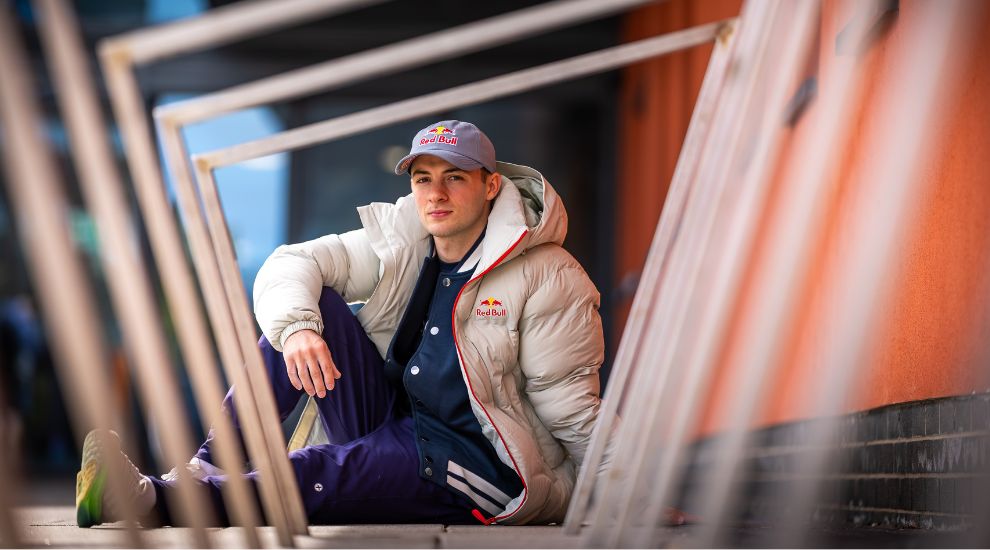
Rhys McClenaghan has grown accustomed to being at the heart of the action when the world’s best gymnasts come together, but the World Championships in Rotterdam gave the Olympic Champion a different perspective on the sport he has helped transform in Ireland.
After missing out on the pommel horse final, McClenaghan remained in the Netherlands as second reserve, knowing two withdrawals were unlikely but recognising there was still something to gain from being around the competition.
Speaking at a Red Bull Media Day on Tuesday, he was thoughtful about a season that hadn’t delivered the medals he had hoped for, while equally determined that the experience would become part of the process of building towards his defence of the Olympic title in Los Angeles in 2028.
“When I’m in the competition mindset, I don’t really watch other competitors,” he explained. “My job is to do my routine.”
Without that immediate responsibility, he found himself watching and learning from the athletes who made the final, something he admitted wouldn’t normally happen when he was preparing to compete.
“You almost get the luxury, making the best of a bad situation, of being a reserve and being able to be out there in a training mindset, look around me and learn from the other guys.”
The temptation to leave Rotterdam as soon as his own involvement appeared to be over was certainly there, but when he considered what would ultimately be most beneficial for his gymnastics, staying made more sense.
It was a small decision that reflected a wider theme throughout the conversation, with McClenaghan increasingly seeing individual competitions as part of a longer journey rather than letting each result shape his outlook.
That is not to say the disappointment has been easily dismissed.
“It would be naive of me to say that I’m entirely not concerned about these results. At the end of the day, I was coming into 2026 wanting to get major titles, major medals, and that didn’t happen.”
The difference, he believes, is what happens next, with those scores and performances now providing information that can help him adapt to a sport that is changing around him.
A Changing Landscape on Pommel Horse
McClenaghan considers the current standard on pommel horse to be at an all-time high, with a new generation of gymnasts emerging into senior competition and revised rules narrowing the margins between the leading performers.
One of the most influential changes has been reducing the number of counting skills in a senior routine from ten to eight, bringing the requirements in line with those junior competitors already know.
For younger athletes, it has removed what was previously a difficult transition into senior gymnastics, where they would have needed to add another 20 per cent of difficult skills to their routines.
“They never had to go through that difficult transition,” McClenaghan explained. “That’s why all of a sudden you saw 17-year-olds then getting results as 18-year-olds.”
The changes have also shifted the competitive balance for established specialists like McClenaghan, whose ability to incorporate highly valued skills into a longer routine had previously been an advantage.
He is not inclined to complain, however, and sees the rules’ evolution as part of what makes gymnastics compelling.
“I like playing by the rules. I’m never one to complain about rule changes. I think it makes the sport more exciting. We’ve seen that at Worlds, the competition was so close together.”
Another change is underway that could affect not just the gymnasts, but how spectators understand the sport.
A new electronic judging system was trialled during the apparatus finals in Rotterdam, allowing judges to record deductions as they occur rather than relying on the traditional written assessment of a completed routine.
McClenaghan believes the approach makes judging more accountable and potentially more accurate, although he would like to take it further by making individual assessments publicly available.
“I’d love for, even on that day after the routine, the judges’ scores coming up and saying this judge took this deduction, this judge took a 0.3 when nobody else took a 0.3.”
For a discipline where a general audience may find it hard to spot the difference between a medal and missing the final, that transparency could help make elite gymnastics more accessible.
“It would make it more exciting, and it would make it more transparent.”
Finding the Right Formula
As the rules evolve, so too must McClenaghan’s approach to constructing the routine that he hopes will take him back to the top of the podium.
He revealed that he has changed his routine three times in 2026, experimenting with different skill combinations to figure out what the judges are rewarding under the revised scoring system.
The challenge is that increased difficulty doesn’t necessarily mean a better result when the risk of a fall or a major deduction also rises.
“It’s figuring out this jigsaw puzzle of a routine,” he said. “Hopefully I’m just putting the pieces in the right places and inevitably having the finished product for the LA Olympics.”
Working alongside his coaches, including long-time mentor Luke Carson, he engages in a continual process of video analysis and assessment after major competitions, though McClenaghan believes much of the responsibility rests with the gymnast himself.
The physical sensation of performing a particular skill, and the confidence required to reproduce it under competitive pressure, can’t be entirely dictated from outside.
He is also conscious of the danger of changing a routine simply because it didn’t deliver the desired score on one occasion.
“If you don’t get the right result, it doesn’t always mean you need to change the routine. Maybe it means you need to do that routine a little bit better.”
He describes that balance between trusting the work already done and being willing to adapt as “constantly doubting yourself, but in a productive way.”
The Challenge of Life After Olympic Gold
McClenaghan’s position also has an interesting psychological dimension, as this is his first sustained period of competitive gymnastics since achieving the ambition that drove so much of his career.
He had considered what life after an Olympic gold medal might look like even before winning in Paris and recognised that success would not provide any immunity from the familiar frustrations of elite sport.
“I even then acknowledged that it wouldn’t be all sunshine and rainbows, that injuries would still occur, that competitions would still be failures. But at the same time, success is still worth working towards.”
The physical challenge has been substantial, with a shoulder injury causing pain throughout 2025 before surgery and a lengthy rehabilitation process interrupting his normal training routine.
“I was going to sleep in pain, waking up in pain,” he recalled.
Even as his shoulder began to recover, the effects of being unable to train at his usual intensity for an extended period showed elsewhere, particularly in his wrists and elbows as he returned to a full workload.
He now feels that his body is beginning to adapt once again, raising hopes that 2027 can be a considerably more productive and less painful year.
He has also received occasional reminders that not everyone views his prospects with the same optimism.
McClenaghan spoke about a public social media comment from a former Olympic medallist suggesting the younger generation was taking over, an assessment he rejected as an unnecessarily negative way to view an athlete’s career.
“I’m the current Olympic champion, and I should remember that. I’ve built my way to the top before, I’ve gone through disappointment.”
The contrasting experiences of Tokyo and Paris have taught him how small the margins can be, and how little sense it makes to allow one mistake to define a much longer period of work.
The Road to Los Angeles
Although McClenaghan is already looking toward another Olympic Games, he is acutely aware that simply reaching Los Angeles will be a formidable challenge.
Unlike athletes in some other sports, his status as reigning Olympic Champion offers no automatic qualification or preferential entry into the next Games.
With only three places available for pommel horse specialists outside the gymnasts who qualify through their national teams, the pathway is particularly demanding for an athlete representing a country without a qualified men’s team.
“I would love it if they gave a ticket to the next Olympic Games to the previous Olympic Champion. That would be class, but that’s not the case.”
He recalled that winning the 2023 World Championship effectively secured his place in Paris, and he expects another exceptionally competitive qualification process over the next two years.
“I need to maintain standard; I need to be one of the best in the world, undoubtedly, to even just get my ticket to the Olympics.”
That process begins in earnest with the World Cup circuit in 2027 and continues toward the World Championships in Chengdu, China, with McClenaghan hoping to reach that stage with a routine capable of challenging for major honours once again.
He shows little sign of viewing Olympic gold as the natural conclusion to his competitive career, even if the path to another title has become more complicated than he might have anticipated.
Instead, Rotterdam has reinforced both how much work lies ahead and how much he still believes he can achieve.
“I’m only seeing the positives and only seeing the pathway to becoming the best in the world again.”
Sport for Business Perspective
The next chapter of Rhys McClenaghan’s career offers a different kind of sporting story from the one which carried him to Olympic gold in Paris.
Having already achieved the ultimate prize, he now faces the challenge of sustaining excellence in a discipline where the rules have changed, competition has intensified, and physical resilience matters as much as technical brilliance.
His willingness to discuss the uncertainty involved is also instructive, from experimenting with routines and adapting to new judging standards to recognising that the Olympic qualification system offers no concessions for past achievement.
For Red Bull, whose association with McClenaghan provides a platform to tell the story beyond individual competition results, the journey to Los Angeles adds another dimension of perseverance, innovation, and the pursuit of marginal gains.
Rotterdam may not have produced the outcome McClenaghan wanted, but his determination to stay, observe, and learn from those who reached the final suggests the competitive instincts that brought him to the top of the world remain intact.
The next two years will determine whether those instincts, combined with a healthier body and a newly refined routine, can carry him back there.

 Red Bull, Gymnastics Ireland and the Olympic Federation of Ireland are full members of the Sport for Business community of sporting, business and state organisations.
If you would like to join the Sport for Business community and see your organisation in our content, on our stages, and in the daily conversation around the commercial world of Irish Sport, email us today and let’s see what is possible.
Image Credit: Red Bull Ireland
ABOUT SPORT FOR BUSINESS
Sport for Business is Ireland’s leading platform focused on the commercial, strategic and societal impact of sport. It connects decision-makers across governing bodies, clubs, brands, agencies, and public institutions through high-quality content, events, and insights.
Sport for Business explores how sport drives economic value, participation, inclusion and national identity, and how your story can be part of ours.
Through analysis, storytelling and convening the sector, it helps leaders understand trends, share best practices, and make better-informed decisions. It positions sport not just as entertainment but as a vital contributor to Ireland’s social and economic fabric.
Find out more about becoming a member today.
Or sign up for our Daily Sport for Business Snapshot email bulletins to get a flavour of the material we cover.
Sign up for our News Bulletins here.