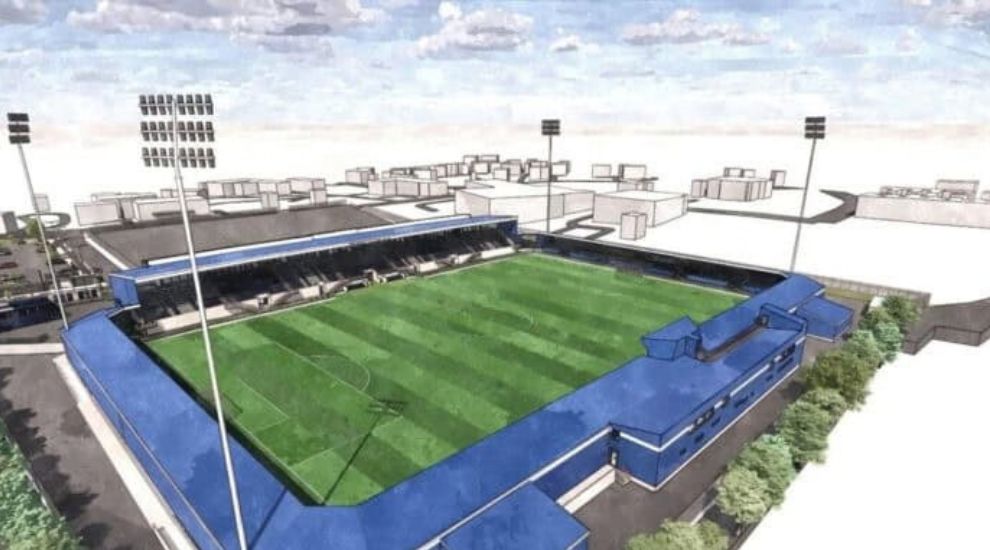
Finn Harps Academy has received conditional approval for €8.4 million in funding towards the development of a new Centre of Excellence, providing potentially transformative investment in football infrastructure in Donegal and the wider north-west.
The funding has been approved under the Government’s Immigrant Investor Programme and, subject to the conditions attached to that approval being satisfied in full, will enable Finn Harps Academy CLG to develop a substantial new training and development facility.
Plans include new pitches alongside a gym, classrooms, meeting rooms, offices, changing rooms, canteen and physiotherapy facilities. The Academy CLG has said further details will be provided as the process progresses, with the conditional nature of the approval an important element at this stage.
The development sits within a much wider period of change at the Donegal club.
Earlier this year it set out plans for outside investment and the development of a new stadium, against a backdrop in which the financial requirements of competing in an increasingly ambitious League of Ireland have risen substantially.
Finn Harps has said that its shareholder base increased from around 700 to almost 2,000 as supporters responded to efforts to strengthen the club financially, but that the money raised was still short of what would be required to professionalise operations and deliver the infrastructure required for the future.
Finn Harps Academy CLG is a separate, community-owned company limited by guarantee, with no shareholders and no distribution of profit. It was established in part to enable access to funding streams available to community organisations and is not part of the proposed change of ownership and control of the senior football club.
The club has previously said that the Academy CLG was pursuing funding for a Centre of Excellence, making yesterday’s €8.4 million conditional approval an important milestone in that strategy.
Sport for Business Perspective
This is potentially one of the most significant investments in football development infrastructure outside Ireland’s major population centres.
It is also another indication of how quickly the economic landscape surrounding the League of Ireland is changing.
For many years, investment in Irish football was concentrated overwhelmingly on keeping senior teams competitive from one season to the next. Now, the conversation is about stadiums, academies, training grounds, player development, and creating assets capable of generating long-term value.
Finn Harps now has potentially significant projects on both sides of that equation.
The proposed new stadium is intended to improve supporter facilities, accessibility, hospitality, broadcasting and commercial opportunities. The club has specifically highlighted its potential to generate revenue seven days a week rather than solely on match nights.
The Centre of Excellence serves a different but complementary purpose.
An academy with high-quality pitches, strength and conditioning facilities, medical support and education spaces provides a much stronger environment in which to identify, retain and develop young players.
Geography inevitably influences the development pathway available to talented young footballers. Providing a genuinely high-quality environment closer to home can help Finn Harps retain players within its system for longer.
Player development is increasingly part of the business model of professional football.
League of Ireland clubs have become more conscious of the potential value created through developing players capable of progressing into first-team football and subsequently moving into larger leagues.
The €8.4 million investment should therefore not simply be viewed as expenditure on sporting facilities. Done well, it can become part of the productive infrastructure of the club and of football across the north-west.
Separating the community-owned Academy CLG from the ownership of the professional football operation creates the possibility of combining private investment in the senior club with longer-term community protection around development infrastructure.
Conditional approval is not the same as €8.4 million being immediately available for construction, and the Academy has yet to publish a detailed timetable, final project cost, or the conditions that remain to be fulfilled.
Those will be important next steps to watch.

 Allianz, the Olympic Federation of Ireland and the PExpo are among the many sporting organisations who see the value of a Sport for Business membership. If you would like to join them and see your organisation in our content, on our stages, and in the conversation happening every day around the commercial world of Irish Sport, email us today and let’s see what is possible, or sign up straight away from the link below.
Image Credit: Sport for Business

ABOUT SPORT FOR BUSINESS
Sport for Business is Ireland’s leading platform focused on the commercial, strategic and societal impact of sport. It connects decision-makers across governing bodies, clubs, brands, agencies, and public institutions through high-quality content, events, and insights.
Sport for Business explores how sport drives economic value, participation, inclusion and national identity, and how your story can be part of ours.
Through analysis, storytelling and convening the sector, it helps leaders understand trends, share best practices, and make better-informed decisions. It positions sport not just as entertainment but as a vital contributor to Ireland’s social and economic fabric.
Find out more about becoming a member today.
Or sign up for our Daily Sport for Business Snapshot email bulletins to get a flavour of the material we cover.
Sign up for our News Bulletins here.