The GAA has begun live trials of 24 proposed changes to hurling’s playing rules
The first competitive test came on Tuesday evening, when UCD faced Maynooth University in the Electric Ireland Higher Education Hurling League Division One at Belfield, with further fixtures scheduled over the coming weeks.
The trials follow an extensive review undertaken by the Hurling Expert Advisory Group, chaired by former Cork and Wexford manager John Meyler, and represent one of the most substantial examinations of hurling’s playing rules in recent years.
The proposals include awarding two points for a sideline cut struck cleanly over the crossbar; increasing the number of steps a player can take while carrying the sliotar from four to six; prohibiting consecutive handpasses; and introducing new restrictions on puc-outs.
Players would also be prevented from using their arms to hold opponents in tackles, while line umpires would be given additional responsibilities to assist referees.
The advisory group is testing the changes together because it believes different elements of the game are closely connected.
Allowing players additional steps, for example, could help them escape congested areas and move into open space. Stricter enforcement of tackling and handpassing rules could also reduce the number of rucks that have become increasingly common in modern hurling.
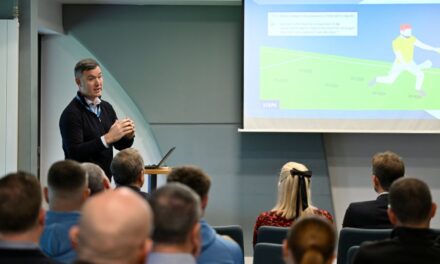
Speaking at Croke Park on Tuesday, Meyler said the review had reached the stage where proposals needed to be examined in competitive conditions.
“The analysis has been done, our recommendations have been made, and the next element of our strategy is implementation, and that’s where the hard work starts,” he said.
The objective, he explained, was to encourage a game that moves more freely from one end of the field to the other, supported by greater consistency in refereeing decisions.
Meyler acknowledged that some proposals might ultimately be rejected, stressing that the trials aimed to establish what genuinely improves the game rather than justify decisions already made.
The approach reflects lessons from the GAA’s recent review of Gaelic football, where it tested experimental rules before introducing them into the championship structure.
The Association’s Games Intelligence Unit is supporting the hurling process and has established a statistical baseline against which the trials can be assessed.
The unit expects to analyse twelve matches over three weeks, using video footage and performance data to examine how players and officials respond to the changes.
National Head of Hurling William Maher said the objective was to move away from subjective arguments about how the game should be played.
“The overall message is very much to get away from opinion and subjectivity and instead try to get into a process where hurling has a baseline,” he said.
That evidence-led approach is vital, given the strong opinions around some of the proposals.
The two-point sideline cut has already sparked debate, with Maher saying former Kilkenny manager Brian Cody advised against introducing it.
Other stakeholders believe the additional reward could encourage one of hurling’s most distinctive skills and provide an extra attacking opportunity.
The proposed puc-out changes are equally significant.
Under the trial rules, puc-outs must travel at least 45 metres, and at least three players from each team must remain between the 20-metre and 45-metre lines.
The intention is to create more opportunities for contested possession and reduce the reliance on short passing sequences.
A further proposal would require 65-metre frees to be taken from the 65-metre line nearest the taker’s own goal, increasing the distance and difficulty of scoring.
Maher pointed out that analysis showed approximately 85 per cent of existing 65-metre frees were converted, suggesting there was merit in testing a more demanding version of the score.
The advisory group has also examined the role of match officials.
Referee Chris Mooney explained that line umpires already provide valuable assistance, but the proposed changes would allow them to contribute more actively during play.
The trials also have a growing broadcast dimension.
Meyler confirmed that discussions are underway with RTÉ about staging an interprovincial exhibition match at the end of November, potentially at Semple Stadium in Thurles.
The proposed event would let a wider television audience see the rules while allowing leading inter-county players to experience the changes.
Meyler has suggested that the fixture could take place on 27 or 28 November, with gate receipts supporting the Dillon Quirke Foundation.
No final broadcast agreement or event confirmation has been announced yet.
Former Wexford camogie player Ursula Jacob, who serves on the advisory group, has emphasised the importance of giving supporters an opportunity to see the proposals in practice before reaching conclusions.
The group hopes that public engagement, player feedback and match analysis will help identify which changes merit further consideration.
The review comes at a time when hurling continues to deliver some of our most compelling sporting occasions, but faces questions about congestion, tackling, refereeing consistency and the balance between possession-based tactics and traditional striking skills.
The GAA’s challenge is to improve those aspects without undermining the speed, physicality and skill that distinguish the game.
Any recommendations emerging from the trials would still need to progress through the Association’s formal decision-making structures before becoming permanent rules.
For now, the emphasis is on testing, observation and evidence.
The outcome could influence how hurling is played and presented for years to come.
Sport for Business Perspective
How a sport is played fundamentally shapes the experience it offers spectators, broadcasters, sponsors, and participants.
Hurling has a powerful identity built around speed, skill, physical commitment and dramatic scoring. Protecting those qualities while improving the flow of play is an important consideration for the GAA as it seeks to sustain and grow audiences.
The proposed two-point sideline cut illustrates the connection between sporting rules and entertainment.
It could create new scoring possibilities and potentially change teams’ tactical decisions. It could also alter the balance of competition in ways that are not immediately apparent.
That uncertainty reinforces the value of controlled trials.
Changes to tackling, handpassing and puck-outs would require significant communication and education across referees, coaches, players and clubs.
The GAA has already demonstrated through its football review that successful rule changes depend on more than securing formal approval.
They require consistent interpretation and an understanding of how the changes affect the game at every level.
The most encouraging aspect of the process is the willingness to test ideas without assuming that every proposal must ultimately be adopted.
The objective should be to preserve what makes the sport distinctive while improving aspects of the modern game.
If the trials achieve that balance, their impact could extend from grassroots participation to the presentation of hurling’s biggest championship occasions.



 The GAA, Electric Ireland and RTÉ are full members of Sport for Business.
If you would like to join the Sport for Business community and see your organisation in our content, on our stages, and in the daily conversation around the commercial world of Irish Sport, email us today and let’s see what is possible.
Image Credit: GAA and Sportsfile
ABOUT SPORT FOR BUSINESS
Sport for Business is Ireland’s leading platform focused on the commercial, strategic and societal impact of sport. It connects decision-makers across governing bodies, clubs, brands, agencies, and public institutions through high-quality content, events, and insights.
Sport for Business explores how sport drives economic value, participation, inclusion and national identity, and how your story can be part of ours.
Through analysis, storytelling and convening the sector, it helps leaders understand trends, share best practices, and make better-informed decisions. It positions sport not just as entertainment but as a vital contributor to Ireland’s social and economic fabric.
Find out more about becoming a member today.
Or sign up for our Daily Sport for Business Snapshot email bulletins to get a flavour of the material we cover.
Sign up for our News Bulletins here.