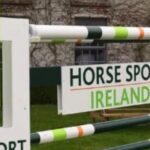
The Irish sporting community’s focus has turned to the future of equestrian sport following yesterday’s High Court order to wind up Horse Sport Ireland, ending efforts to secure the National Governing Body’s survival through examinership.
Around 40 jobs are being lost, while urgent questions remain over the delivery of sporting services, international representation, high-performance programmes and the governance of a sport in which Ireland has enjoyed considerable international success.
The High Court appointed examiner Joseph Walsh as liquidator on Thursday, November 26th.
There has been strong, consistent sympathy for the staff affected from across the sporting sector, alongside calls for clarity on what happens next.
Federation of Irish Sport
“The Federation of Irish Sport is deeply concerned at the loss of jobs arising from the liquidation of Horse Sport Ireland.”
“Our thoughts are first and foremost with the employees affected, and with their families, at what will be an extremely difficult and uncertain time.”
“We also recognise the wider concern across Irish equestrian sport and hope that arrangements can be put in place quickly to provide certainty and continuity for the sector.”
Sport Ireland
Sport Ireland, which will now have a central role in determining the future structure of the sport, issued the following statement:
“Sport Ireland regrets that it has not been possible to secure the survival of Horse Sport Ireland (HSI) as a going concern. Our thoughts are first and foremost with HSI staff and their families at this very difficult time, as well as those who rely on HSI for essential services.”
“Throughout the examinership process, Sport Ireland’s focus has been on the continuity of the sporting functions delivered by HSI and on protecting the ability of Irish equestrian sport to operate nationally and internationally.”
“Following confirmation of the Examiner’s recommendation, Sport Ireland is engaging with the International Equestrian Federation (FEI) and will work with the Department of Culture, Communications and Sport and stakeholders across the equestrian sporting sector on the next steps.”
“We recognise the seriousness of this situation, which is without precedent. Given the complexity involved, it will take time to consider in full all relevant facts and implications.”
“Our immediate focus is on minimising disruption to sporting activity and ensuring a clear, credible pathway forward for equestrian sport.”
Olympic Federation of Ireland
The Olympic Federation of Ireland offered some reassurance about the potential implications for Irish participation at the Los Angeles Olympic Games in 2028.
Ireland’s showjumping and eventing teams secured Olympic qualification at the FEI World Championships in Aachen in August.
In a statement, the Olympic Federation expressed sympathy for those affected but added:
“We remain confident that this will not impact athletes’ and riders’ preparations for LA 2028 or their participation at the Olympic Games.”
That is an important message for athletes, coaches, horse owners and commercial supporters who have already committed considerable resources to the next Olympic cycle.
Government Response
Minister for Culture, Communications and Sport Peter Burke and Minister of State for Sport and Postal Policy Charlie McConalogue issued a joint statement yesterday, outlining the Government’s sporting priorities.
“Throughout this process the priority of the Ministers has been the continuation of the equestrian sporting services provided by Horse Sport Ireland.”
“This priority is shared by Sport Ireland, which has highlighted the importance of these services in its engagement with the examiner. It is important that a strong and ambitious future for the sector is secured, working with all stakeholders.”
The Ministers have asked Sport Ireland to engage urgently with the equestrian sporting sector and the international federation to minimise disruption and develop a roadmap for continued Irish participation in international competition.
Separately, Minister for Agriculture, Food and the Marine Martin Heydon expressed his disappointment at the outcome and acknowledged the dedication and professionalism of Horse Sport Ireland’s employees.
He confirmed that his Department had raised outstanding concerns about the proposed rescue package, including issues relating to procurement and State aid rules.
His Department has been developing contingency plans for national breeding services and the issuing of equine passports in recent months and will now engage with the liquidator and other stakeholders.
Wider Industry Concern
The Irish Farmers’ Association has called for greater urgency in setting out an alternative governance structure for the sector.
Conor O’Leary, Chair of the IFA Horse Project Team, highlighted concerns over outstanding payments to breeders, the registration of foals and the continuation of regulatory services.
“There is real concern amongst rank-and-file breeders and participants that the full consequences of Ireland’s Governing Body for equestrian sport going into liquidation have not been properly thought out,” he said.
The IFA also raised questions about the continuation of equine anti-doping programmes and the loss of experienced personnel from the sector in the weeks before Christmas.
There are also indications that individual equestrian disciplines may seek greater autonomy in any new governance structure, including responsibility for their own high-performance programmes.
How that might be reconciled with the need for a recognised national federation at international level will be one of the more complex elements of the discussions ahead.
Sport for Business Perspective
The immediate priority must be the welfare of those who have lost their jobs and, wherever possible, the retention of the considerable sporting and administrative expertise built up within Horse Sport Ireland over two decades.
Beyond that, the challenge extends from Olympic and Paralympic preparation to grassroots participation, safeguarding, Garda vetting, coaching, competition administration and the management of public funding.
There will also be a need to reassure commercial partners, horse owners and event organisers whose investment underpins much of the sport’s international success.
The involvement of two Government departments, reflecting the sector’s sporting and agricultural dimensions, adds complexity to finding a sustainable solution.
Sport Ireland’s description of the situation as unprecedented is particularly telling.
The liquidation of a National Governing Body of an Olympic and Paralympic sport represents a new challenge for the Irish sporting system. How the various agencies and sporting organisations respond will interest people well beyond the equestrian community.
The hope now is that the uncertainty surrounding the organisation does not translate into a prolonged period of uncertainty for the sport itself.
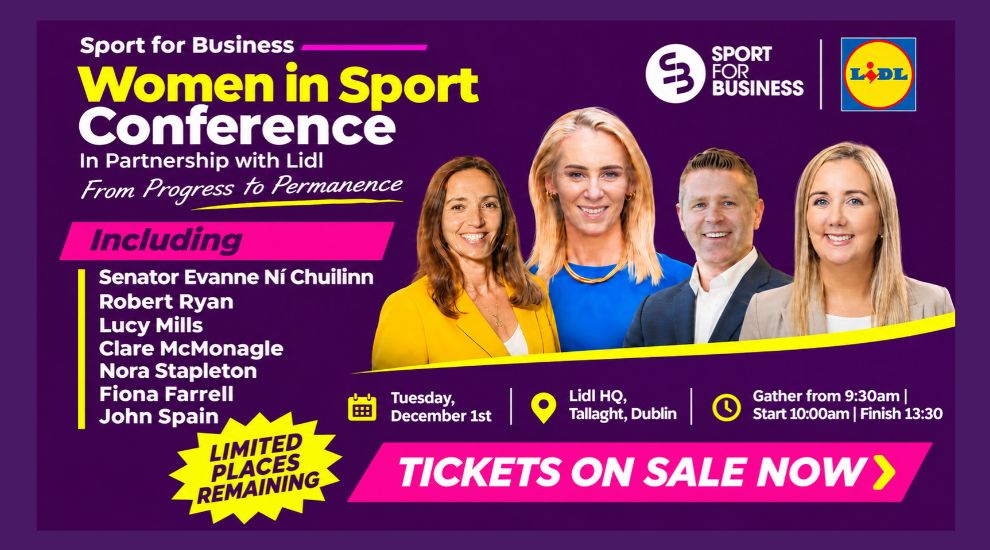

 Horse Sport Ireland are full members of the Sport for Business Community. If you would like to join them and see your organisation in our content, on our stages, and in the daily conversation around the commercial world of Irish Sport, email us today and let’s see what is possible.
Image Credit: Sport for Business
ABOUT SPORT FOR BUSINESS
Sport for Business is Ireland’s leading platform focused on the commercial, strategic and societal impact of sport. It connects decision-makers across governing bodies, clubs, brands, agencies, and public institutions through high-quality content, events, and insights.
Sport for Business explores how sport drives economic value, participation, inclusion and national identity, and how your story can be part of ours.
Through analysis, storytelling and convening the sector, it helps leaders understand trends, share best practices, and make better-informed decisions. It positions sport not just as entertainment but as a vital contributor to Ireland’s social and economic fabric.
Find out more about becoming a member today.
Or sign up for our Daily Sport for Business Snapshot email bulletins to get a flavour of the material we cover.
Sign up for our News Bulletins here.