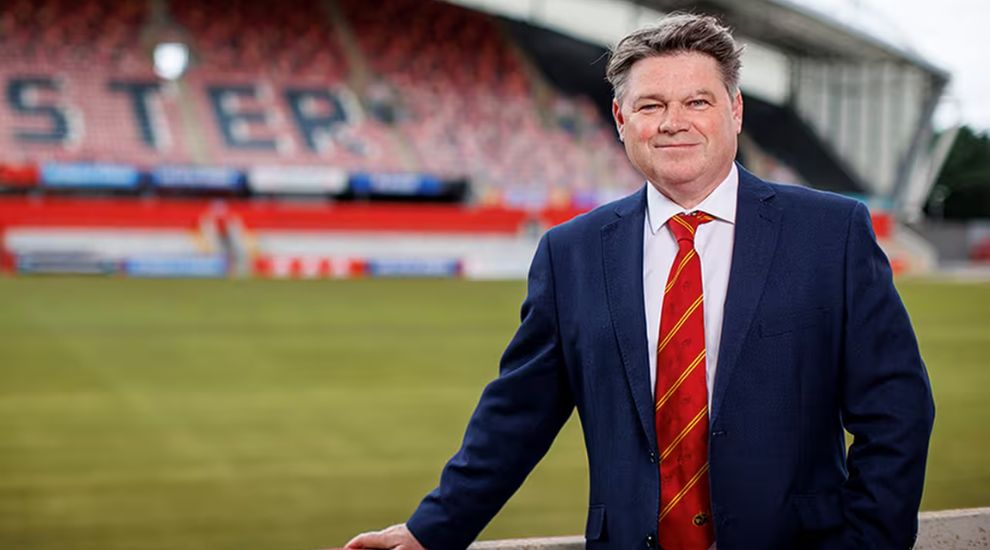
Ian Flanagan will step down as CEO of Munster Rugby at the end of October, ending seven years at the helm of one of Irish sport’s most demanding and high-profile organisations.
His departure comes at a difficult moment for the province. Munster commissioned an independent governance and organisational review earlier this year after controversy over the proposed appointment of Roger Randle as attack coach, while former players have also publicly questioned how the organisation has been run.
Those issues form part of the context in which Flanagan leaves, but they should not define the assessment of his seven years.
When he arrived in 2019, Flanagan brought more than two decades of senior international sports business experience. He had been Global Head of Football at Treble Group and, before that, Commercial Director at Leicester City during one of the most remarkable periods in that club’s history. Munster described him on appointment as having extensive experience in commercial and business strategy.
He then had to steer Munster through Covid, arguably the greatest operational and financial shock professional sport has faced in the modern era.
There were significant achievements as well.
Munster ended a 12-year wait for silverware by winning the United Rugby Championship in 2023, beating the Stormers in Cape Town in a victory which rekindled memories of the province at its very best.
There is also a substantial physical legacy. Munster Rugby Chair Ger Malone specifically highlighted Flanagan’s central role in developing and delivering the €7.3 million Centre of Excellence in Cork, an investment designed to serve player development and the wider game across the province for many years to come.
None of that removes the legitimate questions raised about governance, finances, or particular decisions made during his tenure. Flanagan himself accepted responsibility for the Randle appointment, saying earlier this year that as CEO the buck stopped with him. The independent review Munster commissioned is examining governance, leadership, culture, communications and organisational arrangements, and its findings will provide important context for what comes next.
But a broader point is worth considering.
The world of sports administration is becoming a tougher place in which to operate.
Chief executives have always been accountable. They should be. Supporters, sponsors, players, volunteers and public bodies are entitled to expect high standards from organisations carrying sporting identities that matter deeply to communities.
What has changed is the speed and intensity with which judgement is now delivered.
A decision can move from internal discussion to public controversy within hours. Social media provides an immediate platform for criticism, former players increasingly have significant media platforms of their own, and supporters rightly feel a sense of ownership over organisations that are much more than conventional businesses.
Increasingly, though, a protest-first mentality can become part of the public discourse.
The demand is frequently for somebody to resign, somebody to be removed, or a decision to be reversed before there has been much opportunity to understand how or why it was made.
That is not an argument for weaker accountability. Quite the opposite.
Good governance demands transparency, challenge and consequences when things go wrong. But good governance also requires perspective and an understanding that running a major sporting organisation involves hundreds of decisions, competing interests and circumstances that will rarely be visible from the outside.
Munster is perhaps an especially intense example.
It is a professional rugby organisation, a commercial enterprise, a sporting institution and an emotional part of the identity of hundreds of thousands of people. Its CEO has to balance elite performance, grassroots rugby, commercial partnerships, facilities, supporters, the IRFU, coaches, players, employees and volunteers.
Success on Saturday evening can transform the atmosphere around the organisation. Defeat can do the opposite.
That is the environment into which Munster will now recruit its next permanent chief executive.
The province has confirmed it will announce an interim CEO in the coming weeks before a recruitment process begins.
Whoever ultimately takes the role should arrive knowing that scrutiny will be intense and accountability absolute.
The Environment in Which Leaders are Operating
But Irish sport should also consider what kind of environment it is creating for the people prepared to take on these positions.
We need talented administrators with commercial experience, judgement and ambition. We need them to make difficult decisions. We need to challenge them when those decisions are wrong.
We should also retain the capacity to judge a period of leadership across its entirety rather than solely through its most difficult moments.
Ian Flanagan leaves Munster with questions asked and an independent review still providing an important backdrop.
He also leaves having brought significant international sporting experience home to Munster, helped steer the province through an unprecedented pandemic, seen the team lift its first trophy in 12 years, and helped deliver a €7.3 million Centre of Excellence that will remain long after his departure.
Both sides of that ledger deserve to be part of the story.
 Munster Rugby are among the many organisations who see the value of a Sport for Business membership. If you would like to join them and see your organisation in our content, on our stages, and in the conversation happening every day around the commercial world of Irish Sport, email us today and let’s see what is possible, or sign up straight away from the link below.
Image Credit: Munster Rugby
ABOUT SPORT FOR BUSINESS
Sport for Business is Ireland’s leading platform focused on the commercial, strategic and societal impact of sport. It connects decision-makers across governing bodies, clubs, brands, agencies, and public institutions through high-quality content, events, and insights.
Sport for Business explores how sport drives economic value, participation, inclusion and national identity, and how your story can be part of ours.
Through analysis, storytelling and convening the sector, it helps leaders understand trends, share best practices, and make better-informed decisions. It positions sport not just as entertainment but as a vital contributor to Ireland’s social and economic fabric.
Find out more about becoming a member today.
Or sign up for our Daily Sport for Business Snapshot email bulletins to get a flavour of the material we cover.
Sign up for our News Bulletins here.