The 2026 round of the Community Sport Facilities Fund will open on October 19th with higher grant ceilings, simpler application requirements and a new €750,000 funding tier designed to support larger shared sporting infrastructure.
For clubs, National Governing Bodies and Local Authorities, the changes represent more than a routine reopening of one of the most important funding streams in Irish sport.
They point to a stronger emphasis on collaboration, shared facilities, and projects capable of serving more than one sport or organisation.
The maximum grant for local projects is increasing from €200,000 to €250,000, while the existing regional grant ceiling rises from €500,000 to €550,000.
The biggest change, however, is the introduction of a new Regional Tier 2 with grants of up to €750,000.
This new category targets larger multi-sport projects and is open only to Local Authorities and National Governing Bodies.
Projects must involve shared use by at least two distinct sports, have 30 per cent match funding in place, and be eligible for support of up to 70 per cent of project costs.
Middle Ground
In practical terms, this creates a new middle ground in Irish sports infrastructure funding.
Until now, many projects have sat awkwardly between the traditional club-focused Community Sport Facilities Fund and the much larger Large Scale Sport Infrastructure Fund.
The new Tier 2 is intended to help bridge that gap.
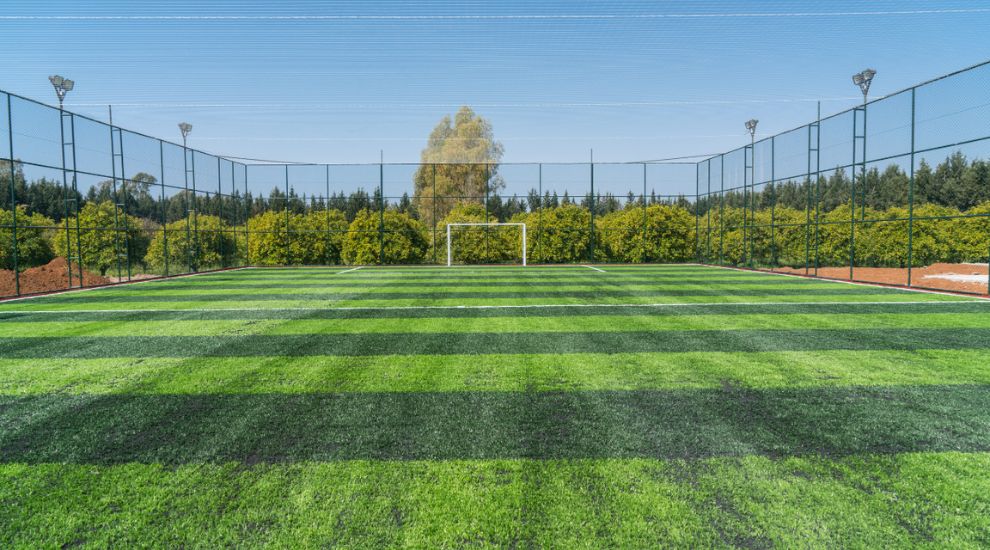
It should create opportunities for projects such as shared all-weather facilities, regional hubs and other developments where several sports can operate from the same site.
For years, one challenge in sports infrastructure has been duplicated facilities and the difficulty of bringing clubs, governing bodies and Local Authorities together on projects that serve a wider community.
The 2026 Fund now places a clear incentive behind that kind of collaboration.
Minister for Culture, Communications and Sport Patrick O’Donovan said the new tier was designed to encourage Local Authorities and National Governing Bodies to work together on facilities serving several sports and the wider community.
Clubs will also welcome practical changes.
The minimum lease term has been reduced from 15 years to ten years, and the mandatory requirement for a registered lease has been removed.
That should remove one of the barriers that has made it difficult for clubs to invest in land or facilities they do not own outright.
Schools and Sports Clubs
The government is also pushing for stronger partnerships between schools and sports clubs.
Where a school project is being developed with a club, the requirement for a formal lease can now be replaced by a minimum ten-year licence-sharing agreement.
Those agreements must provide meaningful access for the club, including an expectation of at least 20 hours per week, with no charges beyond reasonable maintenance costs.
This could prove an important change.
Ireland has a substantial stock of school sporting facilities that are heavily used during school hours but can be under-utilised at other times.
Some years back, I helped write a Space to Play report for Dun Laoghaire-Rathdown County Council that highlighted this benefit of a three-way approach between schools, clubs, and local authorities. It has led to substantial opening up of facilities across one of the parts of the country that has the biggest need and the smallest available land bank for new developments.
Creating a clearer pathway for clubs to invest in and access facilities could unlock capacity without always requiring entirely new developments.
The emphasis on inclusion also remains firmly embedded in the programme.
Projects will be supported only where access is guaranteed to men and women on equal terms, and applicants must also demonstrate a genuine commitment to a “sport for all” approach.
For most clubs, the Local Grants category will remain the main route to funding.
The increased €250,000 ceiling gives those organisations greater scope to tackle projects whose costs have risen substantially in recent years.
Larger Projects
Regional Tier 1 will continue to support larger collaborative developments, with applications generally coming through NGBs, Local Authorities, or two or more clubs or organisations working together.
Individual applications may still be accepted in specific cases, including synthetic running tracks, NGB regional centres of excellence and League of Ireland clubs.
Minister of State for Sport and Postal Policy Charlie McConalogue also highlighted the role volunteers play in developing and maintaining sporting facilities.
The Community Sport Facilities Fund has traditionally been one of the areas where voluntary effort and public investment meet most directly, with clubs often required to assemble planning, governance, fundraising and match-funding packages before they can even submit an application.
For that reason, this week’s longer timetable is important.
Applications open on October 19th, 2026 and close on February 26th, 2027.
The new SPRAOI grants management system is already live.
Around 8,000 organisations previously registered on the OSCAR system have been transferred automatically, while first-time applicants can now register.
Clubs would be well advised not to regard February as the real deadline.
Stronger applications are likely to be those where planning, costings, permissions, partnerships, and match funding are being worked through now.
For NGBs and Local Authorities in particular, the new €750,000 Tier 2 creates an opportunity to think beyond individual facilities and towards regional or community infrastructure that can serve several sports.
That may ultimately prove to be the most significant development in this latest round.
The Community Sport Facilities Fund has long been central to the physical development of Irish sport.
The 2026 iteration suggests the next phase will focus not only on building more facilities, but on building them in a way that encourages sport to share them.


 The Department of Culture, Communications and Sport, Dublin City Council, South Dublin County Council, Fingal County Council and Dun Laoghaire-Rathdown County Council are among the many organisations that see the value of a Sport for Business membership. If you would like to join them and see your organisation in our content, on our stages, and in the conversation happening every day around the commercial world of Irish Sport, email us today and let’s see what is possible, or sign up straight away from the link below.
Image Credit: Sport for Business

ABOUT SPORT FOR BUSINESS
Sport for Business is Ireland’s leading platform focused on the commercial, strategic and societal impact of sport. It connects decision-makers across governing bodies, clubs, brands, agencies, and public institutions through high-quality content, events, and insights.
Sport for Business explores how sport drives economic value, participation, inclusion and national identity, and how your story can be part of ours.
Through analysis, storytelling and convening the sector, it helps leaders understand trends, share best practices, and make better-informed decisions. It positions sport not just as entertainment but as a vital contributor to Ireland’s social and economic fabric.
Find out more about becoming a member today.
Or sign up for our Daily Sport for Business Snapshot email bulletins to get a flavour of the material we cover.
Sign up for our News Bulletins here.