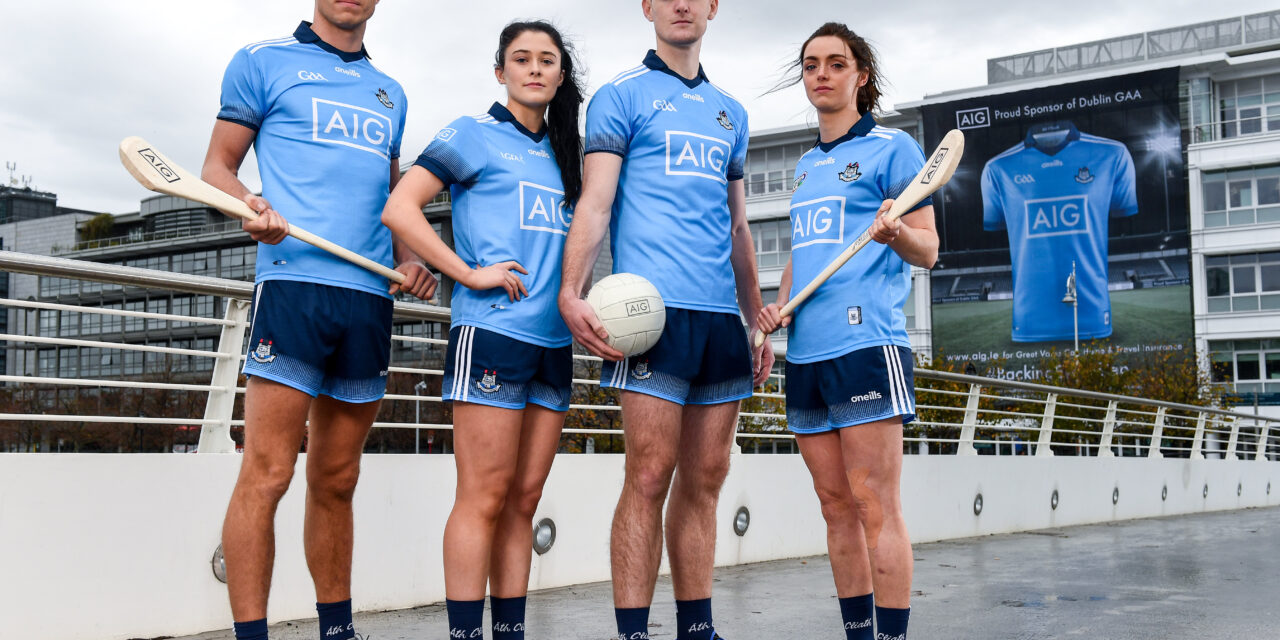
It was a weekend when the underdog bit back when Tipperary and Cavan ended provincial droughts of 85 and 23 years respectively and yet on this glorious example of sporting uncertainty, one of the dominant narratives has been the dominance of Dublin GAA and how unfair it is that they should get so much money.
We should not be surprised, it has come up every year for the past few years as the Dublin Men’s footballers laid waste to the Leinster Championships and secured a place in history winning five All Ireland Championships in a row.
It did not arise for the 16 years that preceded this period when the county team from the nation’s capital city, home to more than one in five of the people who live on the island of Ireland could not get near a Final in September for love nor money.
This year’s round of accusation over buying success was sparked by an open letter from former Westmeath footballer John Connellan who outlined what he saw as the death of Leinster football under the weight of financial support that Dublin has at its disposal.
It was fairly argued and he paid full respect to the team and management for being at an exceptional standard but how do the accusations stack up?
Here are ten points about the structure of Dublin’s GAA resources that add a layer of fact to that of the shaking of heads and fists or the shrugging of shoulders by others who give up because it lloks too unfair.
1. Games Development Funding
In 2018 Dublin GAA was in receipt of 22 per cent of the central GAA distribution for games development. This is a high percentage figure. In 2016, the year of the most recent census, Dublin had 1,345,402 residents. That represents 28 per cent of the population of the Republic of Ireland.
But the GAA is an island of Ireland body and funding is based on 32 counties so in fact the percentage of the population which the Dublin Games Development funding has to serve is actually just under 21 per cent.
The team which Dublin beat on Saturday night was Meath. Meath had a population in 2016 of 195,044, or just under 3 per cent of the population. They received 6 per cent of the available games development funding from the central GAA.
2 Cost Per Registered Player
One of the standout figures which John Connellan raised was the amount of money that goes to each county against the number of registered players they have.
The Dublin number was €270.70 per player, over ten times higher than was the case in Mayo (22.30), Tyrone (€21) and Kerry (€19). The figure has been seized on and used as empirical proof that Dublin is at an unfair advantage.
Looking through an alternative lens we ask the question of why that number is so high. The answer is that the cost of operating a club in Dublin is considerably higher than it is anywhere else in the country. Land is at a premium and setting a field aside for the development of a centre of excellence or a club All-Weather Training facility is impossible.
Clubs in Dublin are squeezed by facilities in terms of the number of players they can accommodate, and so the appeal of alternative sports and activities in a bustling city becomes harder to contend with.
There is less of a ‘parish’ mentality in Dublin and so the relative number of young adults choosing to stay with a club is smaller.
They tend to be the stronger players as well so even though they are less in number they feed into the competitive advantage of playing good opposition that we come to later.
Games development should be about developing players from the start of the journey. Take the number of five-year-olds in Dublin whose eyes can be opened to the wonder of the lifelong passion for Gaelic games and spend proportionately versus other counties there rather than at the end of the journey in terms of the number still playing at the age of 20.
3. The Cost of Facilities
My own club Cuala in South Dublin is one of the ‘super clubs’ that have grown up in Dublin and which have thousands of members involved in hundreds of teams. As a club in 2020, we have around 3,400 members. That is more than 10 per cent of the population of Leitrim. We do not own a single blade of grass and instead rely on the provision of six pitches from Dun Laoghaire Rathdown County Council and the rental of winter training facilities from other local schools and even clubs.
Over the past two years, Cuala has spent just over €200,000 on training facilities in order to field our teams. This does not come from any central GAA funding but from within the club and is paid for by fundraising activities that are many and varied.
We are only one club of the 200 in Dublin but if there is a club anywhere else in the country that pays out €200,000 in dead money over two years, then I would be surprised.
4. Buying Land to Save that Money
It’s always better to buy than rent so the story goes. In 2007 I was part of a committee set up by the club to look at potential land purchases. There was a school in our area that had closed and was selling off a patch of land that would have enabled the construction of a single pitch. No facilities around it, clubhouse or dressing rooms, just a pitch.
We enquired as to the possibility of a purchase and sounded out members about pledging money to go towards the purchase. When the answer came back the expected price of the land was €10 million. It went no further.
5. Investment in People
Dublin has approximately 70 Games Promotion Officers working in clubs around the county. They provide an invaluable resource to the army of volunteer coaches that takes session in Dublin in the same way as they do everywhere else. The GPO model was first put in place when Dublin appointed Kevin O’Shaughnessy to head up Games Development in the county back in 2005.
At that point, Dublin was ten years without an All Ireland Final appearance and still six years away from the next. That is the period that children come into the juvenile sections and emerge into the early stage of their adult Gaelic games lives.
The Games Promotion Officers are a mix of young men and women who work within clubs to develop programmes and best practice across all four codes of Men’s and Ladies Football, Hurling and Camogie.
It’s a system that is available to every county, operated in most but without yet the kind of impact which it has had in Dublin.
6. The Burning Impact of Competition
Dublin GAA’s strength lies in the depth of competition it provides. As an example in girls football, last year at U14 level there were eight divisions of eight teams each. That’s 64 teams with an average panel size of maybe 20 playing at a single year’s age group. 1,280 13 and 14-year-old girls playing matches every weekend against players of roughly equal ability in a competitive and well-organised structure.
That is the pipeline that generates 15 players each year to go out and represent all of the players at inter-county level.
Hard work will always beat talent if talent doesn’t work hard. In Dublin, you have to have the talent to make it to the top but you also have to work hard. Across the whole spectrum of Dublin GAA that is what players, coaches, children and clubs are doing.
7. 15 Vs 15
Sport is competitive. In professional sport, you gain advantage from money by buying in the best of talent. That does not apply to the GAA and at the start of every season, you have a panel of players that are equal in number that come together to represent their county.
No more, no less than 15 of them will take to the pitch and go toe to toe against the other players. There is always luck involved but if you prepare to take advantage of that luck better than your opponent has then you will take greater advantage and win more often than you lose.
Every now and again a group will come together that gel in as close to perfect fashion as sport will ever allow. Dublin is there at the moment in football across both the men’s and women’s games but even still that dominance has been won by single point margins and after replays.
Mayo, Kerry and Donegal have smaller populations and less resources than Leinster counties like Meath and Kildare but it is they who have come closest to taking down Dublin. Rather than looking at taking Dublin down, those counties might instead look to see what they can do to accelerate their next rise.
The 2010s were Dublin’s decade, winning seven All Ireland’s in the Men’s and four in the Women’s game. Surely this is evidence that they can never be beaten. Well not really.
In the 10 years between 2006 and 2015, Kilkenny won eight All Ireland’s Senior Hurling Championships. They haven’t won one since.
In the nine years between 1978 and 1986, Kerry won seven All Ireland Football titles, then went eleven years before getting back to a Final.
Between 2007 and 2011 Ballyboden St Enda’s won five consecutive Dublin Hurling Titles with an average winning margin in the finals of 10 points. In the nine Championships since their total dominance, they have made it to three finals.
Sporting dynasties come and go. They do not last forever. It is always said in the midst of such dominance that they are killing the game. The game survives. In fact, it thrives because of the standards being raised by one team doing things better and the others having to catch up.
8. It’s unfair that Dublin gets so much commercial support
In such a competitive world as sport, this one always amuses. There are regular calls that the GAA should somehow pool all the money that each county gets and distribute it equally among the 32 counties. Really?
In addition to the appointment of Kevin O’Shaughnessy on the Games development side, Dublin GAA CEO John Costello brought in Tomás Quinn to manage the commercial appeal of the best supported and most visible sports team in the country.
Arnotts were sponsors for many years, followed by Vodafone and then AIG for are now just over halfway through what will be a ten-year cycle.
Sponsors invest money but also activation which makes Dublin GAA, LGFA and Camogie look good and at the top of their game.
This money goes into the grassroots around the county and helps to create the steady pipeline outlined above. when the pipeline is sprinkled with the talent that Kerry, Kilkenny and Dublin have nurtured in the past 40 years, it becomes more than the sum of its part. When things are at a more ordinary level it keeps then in the hunt.
Dublin teams still have to fundraise in order to get the gear the players want. Sometimes that comes down to exactly the same kind of quiz night in a draughty hall in the dead of winter that everyone else does. It’s the GAA way, It is no different in Dublin.
Dublin GAA does not maintain a warehouse of glittering robes that players have access to with every whim.
They are investing in the ethos of a team and the reach it has to its fans. Other major brands choose competitions to spread their favour but there needs to be a line drawn between them.
Other counties get substantial support from a combination of local and national businesses. Some do it from a philanthropic perspective. Some generate millions, some the price of a set of jerseys.
Dublin GAA works hard on and off the pitch. Others can take a lead, and some are. Wexford,for example, appointed Eanna Martin to a similar role and have secured sponsorship from Chadwicks to sponsor the County Ground and from multinational insurer Zurich on the shirts of their jerseys.
There is a clear path if you want to get involved and a clear ambition to up their game to take on Dublin. Last year’s Leinster title in Hurling was not down to money but to an ethic of doing the right thing and working in the right areas.
9. Leadership
Talent on the pitch can only fulfil its full potential if it is led well. In Pat Gilroy, Jim Gavin, Dessie Farrell and Mick Bohan especially, Dublin have matched great team management with great players.
Off the field, those mentioned above from Costello to O’Shaughnessy and Quinn to the vast number of professional people who have given their time to the amateur game have ensured that Dublin GAA doesn’t get complacent and always tries to be at the top of its game.
10. Alternatives
By the time a full and workable alternative to the county structure that Dublin presently sits atop of has been created, the crown will have been taken. But what if the size of Dublin is as much an issue in the county as outside. How many players never get to wear the colours because the competition for places on a team of 15 is simply more intense in the city of 1,345,402.
If the long-mooted ‘split’ was to happen and Dublin became two, both still be more populous than any other county in the country so if that doesn’t work do you go to four? North, South, West and Coast has a geographic logic and that would make the four counties less in population than Cork and Down as well.
That won’t be enough so let’s double the number again and create eight units in Dublin. Then it would be 12, 13, 14 and 15 in terms of size. Still 20,000 more than Kerry and 40,000 more than.
Or maybe let’s let history do its work and see where the next rivals will come from. For come they will. So long as it is 15 vs 15 on the pitch.
Sport for Business Partners