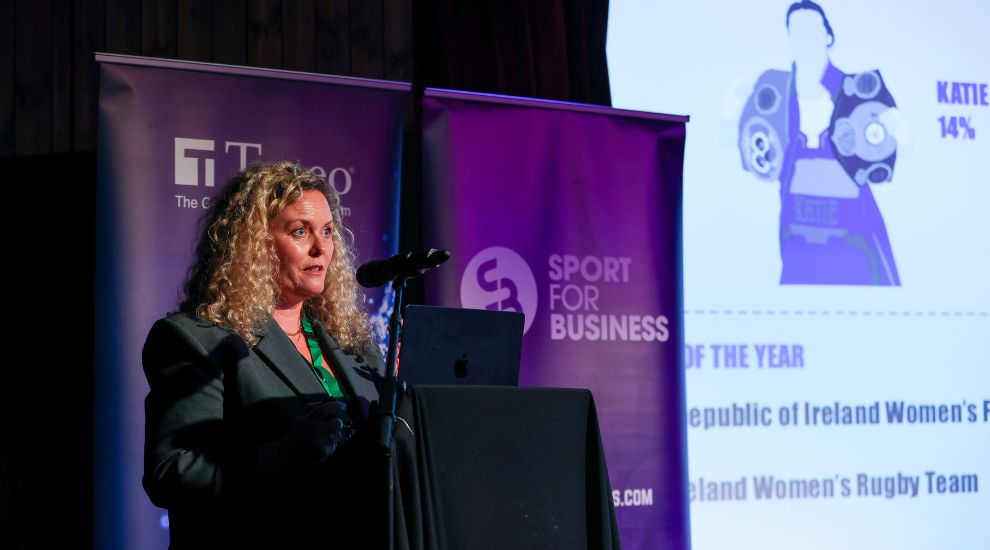
Ireland remains an active sporting nation, but structural challenges around volunteering, participation costs and converting interest into attendance remain issues, according to the latest findings from Teneo’s annual TSSI research.
Presented at The Sporting Year Ahead by Kelli O’Keeffe, Niall Leyden and Rob Pearson of Teneo, the research is based on a nationally representative survey of 1,000 adults conducted with iReach and now in its 16th year, providing long-term insight into participation, consumption and attitudes to sport in Ireland.
The data shows that 75% of adults participate in exercise in some form, driven primarily by health and wellbeing. However, participation in organised sport remains lower, with around 20% playing sport socially or competitively, highlighting a continued gap between casual physical activity and structured sport.
Walking remains the most popular activity for the 16th consecutive year, reflecting the appeal of flexible, low-barrier exercise. Soccer continues to stand out as the most common team-based sport, supported by the accessibility of five-a-side formats.
One of the more positive signals for future growth is openness to experimentation. A majority of respondents said they would be likely to try new or non-traditional forms of sport, rising to 65% among 25–34-year-olds, a cohort Teneo suggested may be transitioning away from traditional club structures and seeking more flexible participation models.
Club membership remains steady, though, with 20% of adults reporting membership of a sports club outside gyms. GAA, LGFA and Camogie continue to dominate, recording 6% growth year-on-year, while soccer also increased. Rugby and golf held firm in this research, while tennis emerged as a notable growth sport.
Volunteering continues to underpin Irish sport, with almost one quarter of adults saying they volunteer in some capacity. However, the average time commitment has fallen from almost 12 hours per month in 2024 to 10 hours in 2025, raising questions about post-pandemic pressures on time and availability.
The research identified clear demographic patterns. 45–54-year-olds are the most active volunteers, with 30% involved and contributing close to 10 hours per month. Gender gaps persist in both volunteering rates and hours committed, with Teneo noting that grassroots parity remains essential if gender balance at governance level is to be sustained long term.
Time and time commitment were the main barriers to volunteering, but two potentially addressable issues stood out: 13% of respondents said they lacked confidence, while 7% were unaware of opportunities, suggesting that clearer pathways and support could unlock additional capacity.
Women’s sport remains a core pillar of the research. 50% of respondents said they watched women’s sport on TV or online in 2025, rising to 55% who say they intend to do so in 2026. While 41% believe women’s sport receives sufficient media coverage, a widening perception gap has emerged between male and female respondents, despite three-quarters agreeing that coverage quality has improved.
Attendance remains a challenge. 18% attended a women’s sports event in 2025, compared to 26% who say they intend to attend in 2026, a conversion gap Teneo highlighted as critical to closing if matchday revenue is to become a sustainable pillar of the women’s sports economy.
Technology is playing an increasingly central role. Almost half of adults now use fitness trackers or apps, up from 27% in 2019, with 83% saying tracking motivates healthier behaviour. Consumption habits show TV remains dominant at 66%, while highlights viewing is increasing and streaming has dipped slightly.
Social media continues to act as a second screen, with 45% checking platforms while watching sport, though 28% admitted doing so due to boredom, a warning sign for rights holders around engagement and attention.
Artificial intelligence was included for the first time, with attitudes split: 35% comfortable, 46% uncomfortable, and 19% unsure. Faster officiating decisions and enhanced insights were the most accepted use cases, but Teneo cautioned against technology eroding the human element that underpins sport’s emotional appeal.
On commercial impact, sponsorship remains influential. 59% would choose a sponsoring brand over competitors if price and quality were equal, while over a third reported purchasing directly as a result of sponsorship exposure, underlining its continued value when aligned with audience interests and social values.
Teneo are happy to share the findings of the research. Reach out to Rob Pearson, rob.pearson@teneo.com for more information.
Read More: Opening Comments from Rob Hartnett
Read More: Jarlath Burns in Conversation
Read More: Teneo Delivers Rich Insights
Read More: Launch of the AIG Access Tennis Programme by Tennis Ireland
Read More: Boxing Ireland’s Built Different Rebrand
Read More: Special Olympics Ireland National Games
Image Credit: Sport for Business, Ryan Byrne, Inpho.ie
Secure your place for our next event

Upcoming Sport for Business events




SPORT FOR BUSINESS
Sport for Business is Ireland’s leading platform focused on the commercial, strategic and societal impact of sport. It connects decision-makers across governing bodies, clubs, brands, agencies and public institutions through high-quality journalism, events and insight. Sport for Business explores how sport drives economic value, participation, inclusion and national identity, while holding organisations to account on governance and sustainability.
Through analysis, storytelling and convening the sector, it helps leaders understand trends, share best practice and make better-informed decisions. Its work positions sport not just as entertainment, but as a vital contributor to Ireland’s social and economic fabric.
Find out more about becoming a member today.
Or sign up for our twice-daily bulletins to get a flavour of the material we cover.
Sign up for our News Bulletins here.