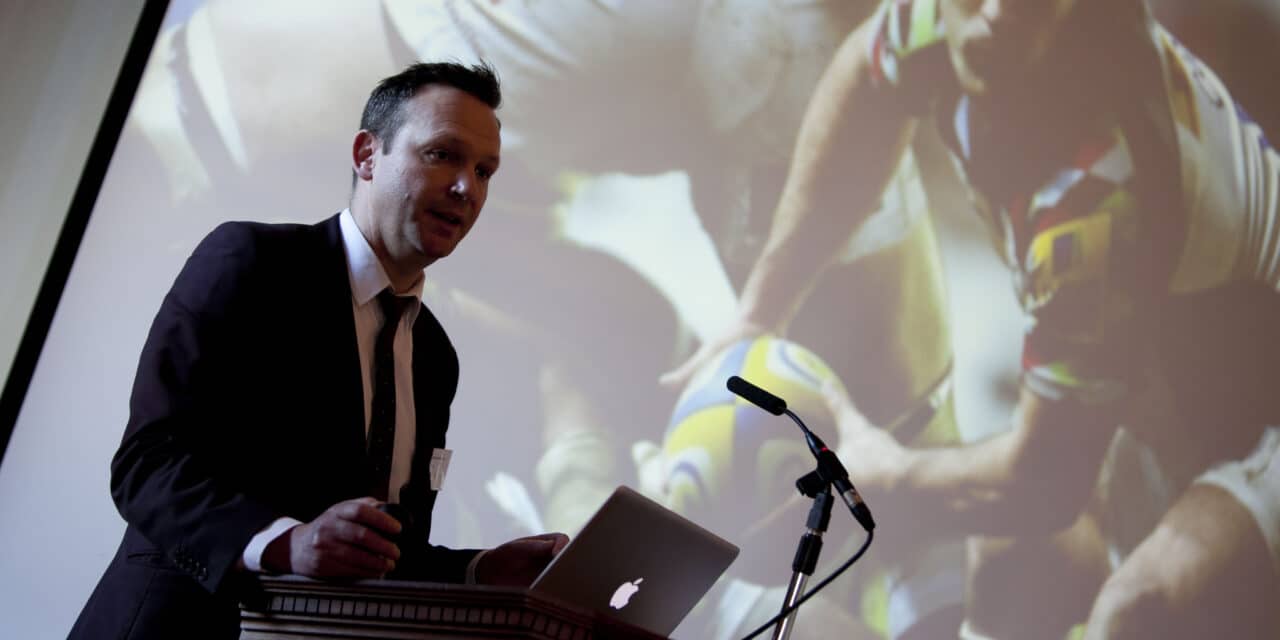
 1010 Pat Daly is the GAA Director of Games Development and Research. He is a former teacher with a passion for coaching the right elements to the right people at the right time in their cycle of development.
Pat’s presentation to the Conference covered the Coach 10 model, developed by the GAA to build a proper structure around effective coaching methods and hailed by Bryan McCullick of the University of Georgia as being “a thorough and thoughtful characterisation of coaching that has a depth and breadth rarely seen in other organisations” and by leading Australian coach David Parkin as being “up there among the best coaching models in the world.”
At the heart of the model is a concept of Motivation and Vocational Attributes which Daly sees as an important component of the structure needed to produce great coaches. Gone are the written examinations that may have daunted or failed to accredit some of the great coaches and in are the elements of understanding the what, why and how of effective coaching.
Identifying the right programme for players at each stage is also a critical element and is a major factor in keeping children playing sport through critical life transition phases. “Children play to learn. Youths learn to compete, and young adults compete to win,” said Daly. “Introducing one of those factors too early risks turning a child or youth off sport and failing in the overall duty of a coach to help them develop as people through sport.”
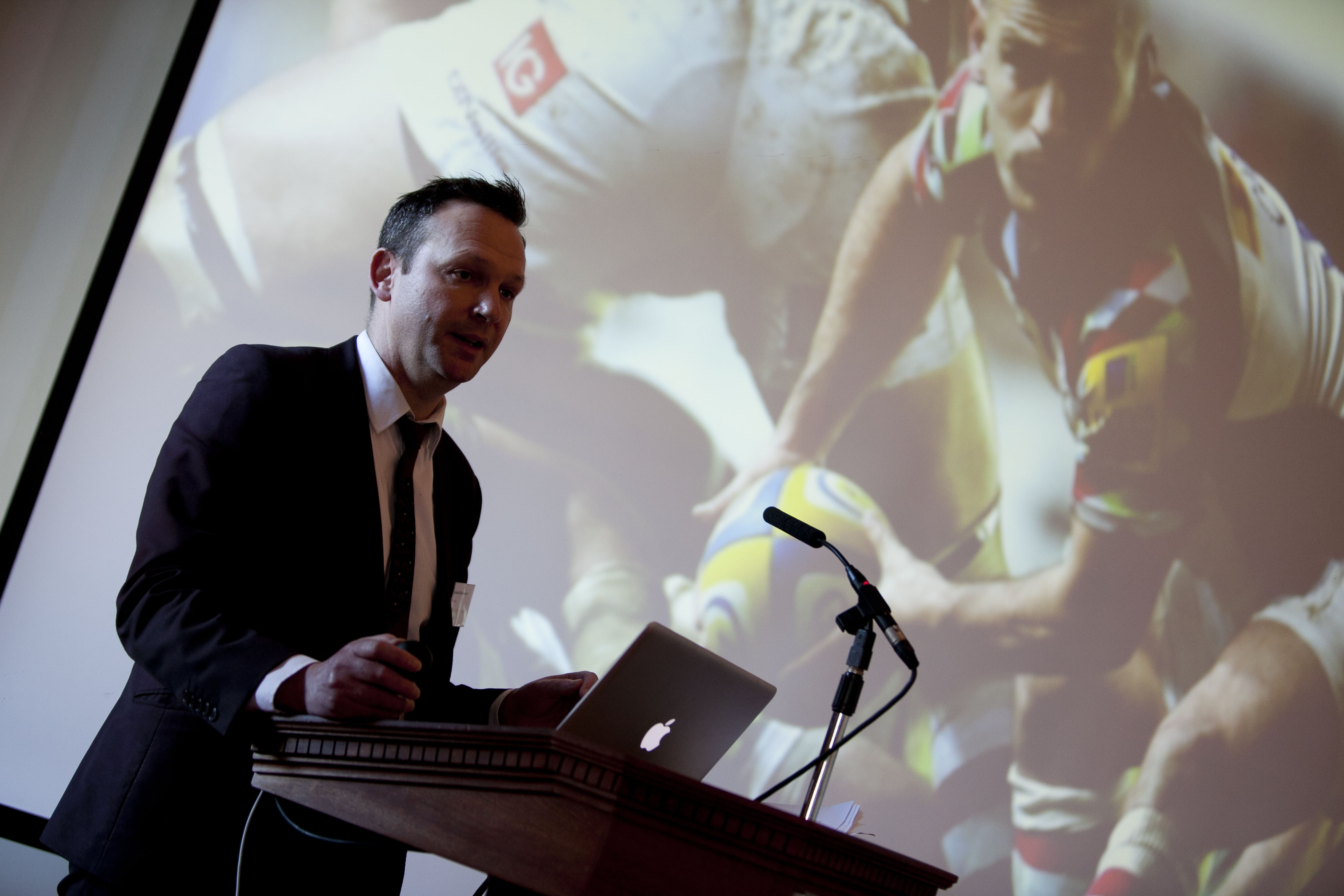 1120 Jamie Hindhaugh is Chief Operating Officer of BT Sport and the man responsible for building Europe’s largest television studios, and a suite of sports stations to fill them in the space of only 19 months. He delivered a powerful presentation on the way those challenges were analysed, faced and beaten.
“Even though they were ambitious, and way outside the parameters of what might have been done before, not one of our suppliers or partners ever baulked at the through of playing their part and delivering.”
“What we have as a result is a set up that changes the way broadcasting might be. We have a single L Shaped space that can accommodate three separate studios. This allows us to do things like not linking to another studio live but actually have the presenter of a soccer programme get up from his seat and walk into a live rugby programme on another channel to see what is happening in a big game there or join in a debate.”
“We use technology to provide a better customer experience.” “Second Screen is all the rage and we provide it in-screen on the main programme, where we think it adds value.”
“During a recent Man United home match where manager David Moyes was under pressure and the team was behind we had a camera in the corner of the screen trained on him and his reaction to every kick.”
“Sport is about more than the kick of a ball or the swing of a racquet.” We are developing a schedule that mixes the sublime with the irreverent. From the passion and intensity of the Premier League to Danny Baker and Danny Kelly forecasting matches with the help of an electric toaster.”
Hindhaugh made a compelling case as to why the investment of serious money in sports rights, like the €1.1 Billion on the Champions’ League was worthwhile with 150,000 new BT Broadband customers added since the station went live five months ago and an audience of 1.6 million for a Liverpool match over Christmas.”
He showed three great videos of the studio being built in time lapse and more but for those who weren’t there we will have to settle for this small insight on what BT Sport is all about.
The Business of Sports Science – Part 2