
Ireland has a new National Physical Activity Plan and the aim is to get 500,000 more of us active for at least 30 minutes a day as adults and twice that as children.
The plan is based around numbers and the aim is to make us a healthier nation. It will run over ten years and is divided into eight key action areas. Most importantly funding has been secured to provide a minimum of €5.5 million towards its implementation in year one.
Launching it at Dublin City Council’s Ballybough Health Centre yesterday Health Minister Leo Varadkar spoke of the fact that “we will never bend the curve of health spending and cost unless we improve our approach to preventative health.”
He was also realistic about fitness being firmly within the personal responsibility area but that people’s approach to it can be helped by Government.
This plan could have been launched last July but it required those who were responsible across numerous Government departments and state agencies to sign off on their own responsibilities first. There are 34 abbreviations for those bodies listed in an appendix at the back of the report indicating the wide range of collaboration that is and will be needed.
The eight areas that the plan is broken down into are:
- Public Awareness, Education and Communication
- Children and Young People
- Health
- Environment
- Workplaces
- Sport and physical activity in the community
- Research, Monitoring and Evaluation
- Implementation through partnership
We will look at each one of these area in detail over the coming days, highlighting areas which we believe will provide the greatest impact and also where some of the suggested implementation ideas could go further.
There are 60 key action areas in total, each with a lead responsibility that can be held to account for implementation and a year by which they will be delivered.
The target is to increase the number of people meeting the minimum activity guidelines by 1% each year. At present the numbers who do are 32% among adults, 19% among primary level schoolchildren and a shocking 12% in secondary schools.
It is clear that changing behaviour has to start early and that is where the greatest benefit will be gained in the early stages.
This is a bold and ambitious drawing together of strands that are out there but will be stronger by virtue of being seen as part of a lifetime commitment to our own health and wellbeing.
It was a day for politics yesterday, obviously with an election on the horizon but Minister Paschal O Donohue answered one important question by confirming that the detail of work that had gone into this plan at departmental level meant that new ministers, were that to be the case, from existing or potential new Government partners would be aligned to the same goals and means of reaching them.
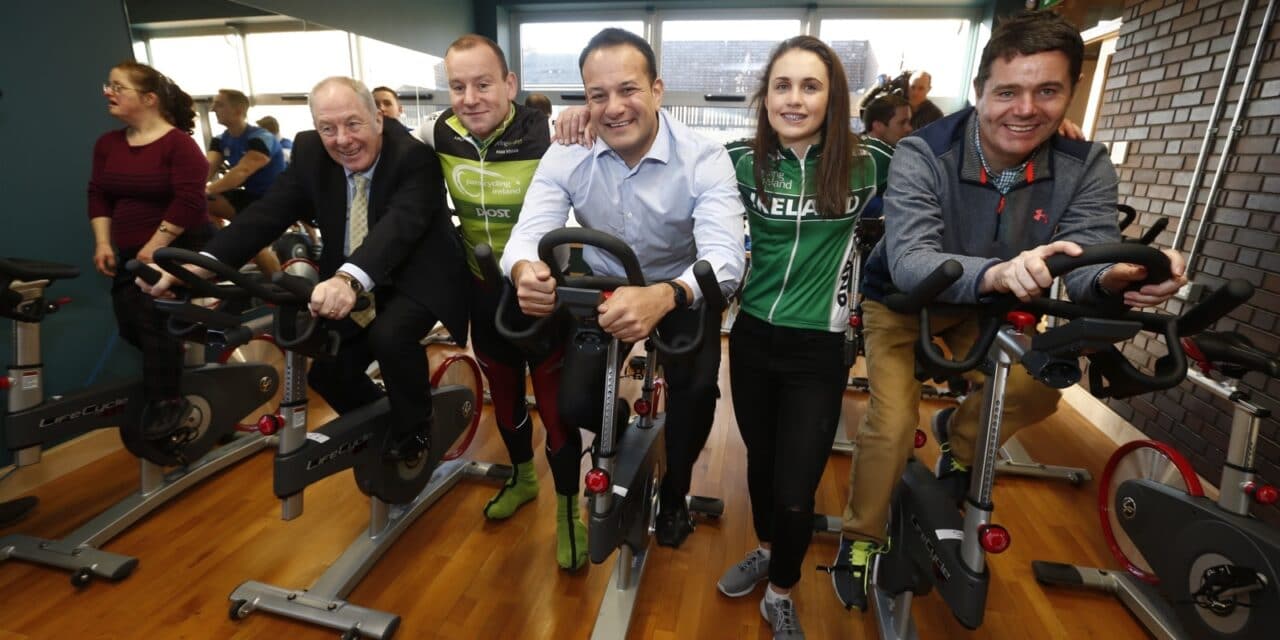
Health is a long term issue, longer than any single Government and it is to the credit of Ministers Varadkar, O Donohoe and Ring, all pictured above ‘turning words into action’, and Minister Kathleen Lynch, that this has been pushed through before the call of an election and the delay that would otherwise give rise to.
The two principal authors of the strategy Ronan Toomey at Health and Carol O’Reilly at the Department of Transport, Tourism and Sport were both present yesterday and determined to make this the start rather than the end of a body of work.
“Every passive verb has been turned active in the plan and that means we have set targets that will be monitored, measured and held to account over,” said Toomey.
From Monday we will begin the process of doing just that. It is a very good base from which to kickstart a better coordinated approach to the health of the nation. Sport will play a big part in that, so will business, so will Government, so will we all.