 “In failing to prepare we are preparing to fail.” That is a quote made famous by Benjamin Franklin and taken on by many in sport down the years from legendary Basketball coach John Wooden through our own Roy Keane.
Indeed if you asked people on the street at lunchtime a fair proportion would be adamant that it was Keane that said the words.
Indulge me if you will with another little pop psychology that “a little knowledge is a dangerous thing.” You’re familiar with the phrase, but who is attributed as the first to say it in public discourse? Find out at the bottom of this article as I need to get to the point before I lose you all.
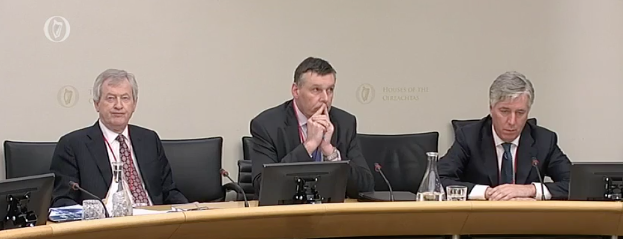
Yesterday the CEO’s of the IRFU, the FAI and the GAA sat before the Oireachtas Committee on Transport, Tourism and Sport to answer questions on Sport in Ireland: Challenges, Strategies and Governance.
Read Sport for Business’ Submission to Government on Governance
The timing was odd coming less than 48 hours after the closure of submissions to the new National Policy on Sport being conducted by the Department over which the committee ostensibly sits as a watchdog.
The nature of the two and a half hours was odd as well to anyone not versed in the Committee structure as played out in the Dáil and Seanad. The first 25 minutes were about the three sports making their opening statements and the remainder was taken up by individual questions from the members.
As an example Peter Fitzpatrick, TD for the Louth constituency opened up with some broad questions for all three sports on attitude towards concussion, access for people with special needs, what policies are in place to address issues of mental health, how robust are child protection measures, what is being done to address a ‘win at all costs’ attitude particularly at under age level.
He then added specific questions to John Delaney on elaboration of social initiatives and what is being done to combat obesity; to Philip Browne on why he thinks it will be difficult to find women candidates to fill board positions and whether he thought the success of the provinces had impacted on club rugby; to Paraic Duffy on the challenge in rural areas of getting enough players to play and in urban areas managing the large number of players.
From Little Women to Leadership Change
To be fair there is nothing wrong with the questions, albeit they are part of the natural discourse on sports administration and perhaps not exactly forensic in their ability to draw insight. “A little learning (to correctly repeat the oft misquoted line of Alexander Pope) is a dangerous thing.” There was merit in asking these and the questions of all seven members of the committee. Player burnout, election of board members, sudden adult death syndrome, the expansion of the World Cup, the Genesis report and much, much more are all areas for genuine debate.
This though was stretching the point of genuine debate. It’s the way that democracy works. In a sense the better behaviour engendered by being occasionally called to the headmaster office to account for your actions is not a bad way of keeping tabs on privately run organisations in receipt of public money.
After an hour John Delaney got to answer the wide variety of questions that had been thrown at him, as best he could read his own notes on what those questions were.
He had not been advised of them beforehand, he did not have an opportunity to do detailed research on specific points. He nonetheless answered those he could as best he could before having to leave early for a memorial service.
The same was true of Paraic Duffy and Philip Browne, both of whom gave good account of the many programmes which they run, the problems they are seeking to address in terms of things like women in leadership and more.
Sign up for our free Daily Headlines from the Commercial World of Irish Sport
The real value of public account though should lie in asking more challenging questions. We know the Euro’s were great craic, we know the GAA does great work for the young people of rural Ireland, we know that Munster and Leinster are playing great.
If everyone knew this was coming then everyone could have prepared a little better. That has to start with the committee. Why not at least submit half of the questions for analysis before so that there can be a better, more effective structure to how they are asked and how they are answered.
This is the first of three meetings on sport over the coming weeks. Will the new incoming President and Committee of the Olympic Council be invited? Well they are a private organisation so they could choose to reject an invitation, politely of course. We will see. The Rugby World Cup bid will be the subject of one and be prepared for questions on why each stadia in the country, or the constituency was eight rightly included on the list of proposed venues or shamefully omitted.
This is politics. It’s the way we conduct ourselves as a society. It’s not perfect but some scrutiny is better than none. It’s just frustrating that the scrutiny is not a little more detailed by being a little better prepared for. Roy Keane would understand that, as would Benjamin Franklin.
Now if you are sitting comfortably, here is how the whole session went…