Professor Peter Taylor is one of the world’s leading experts in the economics of sport. As co-director of the Sport Industry Research Centre at Sheffield Hallam University he has produced work that is instrumental in backing up and pointing towards best practice in how the relationship between society and sport can be nurtured for the good of all.
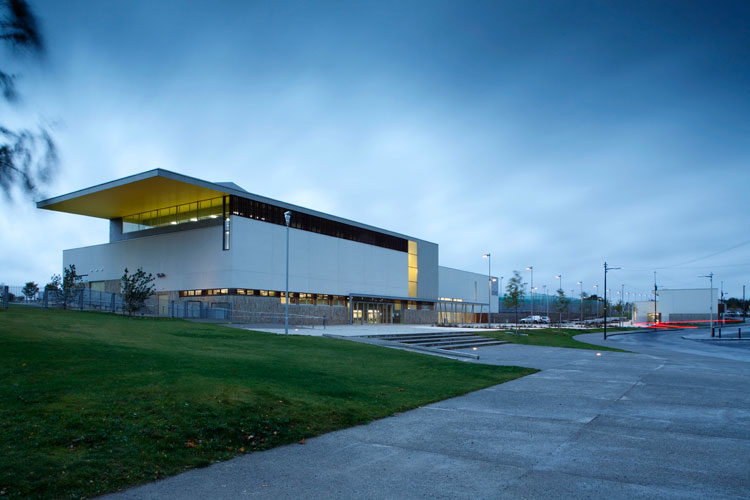
He is coming to Dublin next week as one of a number of senior international speakers at a major event looking at the future of sporting facilities as part of our societies.
In advance of his trip to Dublin Taylor took time out to look at a number of issues posed by Sport for Business on evidence based research, and the critical question for Government investment on how to quantify the real value of investing in sport.
Sport for Business: Is enough importance attached to sport as a conduit for social and economic good?
Peter Taylor: Yes, this argument has been promoted for a long time. However, the problems are twofold: first there has not been enough evidence, particularly at the local level, to support the claim; and second, pressures on government finances have led to an emphasis on financial performance, rather than wider considerations.
How do you approach questions on how to assign value to sporting infrastructure?
Research your customers. With the right questions, they will tell you what benefits they get from their participation and even give you clues as to the value of these benefits. Even without primary research of customers, there is enough evidence from academic studies to put a value of the social impact of sports facilities – at the Sport Industry Research Centre at Sheffield Hallam University we have done this recently for the Sheffield City Trust group of facilities, with positive results.
Has that changed over the time you have been involved in the world of sports economics?
The argument hasn’t changed much, but the evidence has improved significantly, as our work for the Uk Government’s CASE programme in England shows. This is particularly the case for health benefits.
Should facilities be planned to cater for existing demand or to prime it?
For potential demand rather than existing. If you just cater for existing demand you are just becoming a ‘club’, even if in principle it has open access. And the social benefits from sport would be underachieved. Only by intervention to stimulate demand will the full impact of social benefits be realised – so that should be the objective in planning facilities.
Where does the balance lie between the social and economic benefits and demands of sport?
They are not necessarily mutually exclusive. It is possible to be financially successful and promote the social benefits of sport with appropriate pricing and programming. In fact, in the current financial environment I think it is essential to aim for both simultaneously – financial success minimises dependency on government resources, whilst social success justifies sport’s place in government services. Even in the commercial sector, where financial success is paramount, social benefits will be realised and help demonstrate corporate social responsibility.
How can sport compete for public expenditure against the competing demands of education and healthcare?
By demonstrating that it contributes to social benefits such as health and education – and crime and social capital. In health and social care particularly, where so much is spent on mopping up problems, sport not only helps through properly designed remedial programmes but more importantly has a role in preventing the need for more health and social care expenditure.
Is this an area for national government, local government or others including private sporting interests and universities?
Most definitely all of them. Any level of government should be primarily concerned with social benefits and the evidence for sport is now much stronger than it used to be. Because the social benefits are stimulated by individual participation, and participants simultaneously generate private benefits for themselves, private sporting interests should be using social benefits as part of their marketing strategy.
Universities have a vital role in two ways: first, conducting research to add to the evidence of the social value of sport; and second, encouraging all students to be physically active and hopefully establish a lifetime interest in sport which simultaneously provides individual and social benefits in the future.

Join us on February 9th and 10th at the International Swimming Pool and Leisure Centre Conference to hear more insight from Professor Taylor as well as others including Marie Sallois Dembreville: Director Corporate Development, Brand and Sustainability with the International Olympic Committee who for the past two years has led the global consultation and stakeholder engagement to develop the IOCs ‘Framework for Sustainability and Legacy Planning’.
Aura Holohan Group, Dublin City Council and Dun Laoghaire Rathdown County Council are among more than 180 members of the Sport for Business community. If you would like to discuss the benefits of joining them as a member contact us today and let’s see what we might achieve together…
 Aura Holohan Group, Dublin City Council and Dun Laoghaire Rathdown County Council are among more than 180 members of the Sport for Business community. If you would like to discuss the benefits of joining them as a member