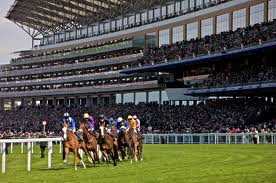
 The sport of horseracing is on a real high at the moment with three horses simultaneously being hailed as among the best there has ever been.
Frankel won his eleventh straight top class race at Royal Ascot on the opening event of this week’s meeting. Black Caviar travels from Australia to put his 21 race unbeaten streak as a sprinter on the line on Saturday. It is hoped that the Aidan O’Brien trained Camelot will take in the Dubai Duty Free Irish Derby en route to a tilt at the first British Triple Crown since Nijinsky more than 40 years ago.
Attendances at the major tracks in Britain are up and it is believed the sport has doubled its broadcast rights income through signing a four year deal with Channel 4 for the exclusive terrestrial broadcast rights to all of its major race days.
The deal comes into effect on January 1st 2013 and will mean the transfer to the commercial broadcaster of such national events as the five days of Royal Ascot and the Investec Epsom Derby in June as well as the John Smith’s Grand National in April. Each of these events as well as numerous other race days have traditionally been covered by the BBC.
There was a strong indication this week that the BBC has not given up on horse racing as it announced three new deals for BBC worldwide to broadcast the coverage from Royal Ascot to Channel Seven in Australia, Eurosport Asia and the BeIN Sport in France. This brings to 91 the number of countries to which it supplied coverage of the race meeting.
Domestically the deal to go exclusively with Channel 4 does raise questions over the deeper and more extensive coverage which the commercial broadcaster gives to racing versus the broader reach into the national consciousness delivered by the BBC.
Only a few years ago Channel 4 threatened to pull out of racing citing it as too expensive and not delivering enough advertising. Programme sponsorship by the Tote was seen as key to keeping the sport on air at that time and the Racing output is currently sponsored by Dubai. Ironically it was a change in the law to allow betting companies to advertise on TV that turned around the commercial picture to the point where it will now stand alone in terrestrial terms.
The BBC said it had put in as “competitive a bid as possible” to maintain the rights.
“We were disappointed to have lost the terrestrial rights in Britain,” said BBC Director of Sport Barbara Slater, “but we are pleased that all the races in the contract remain free to air.”
 This year’s Grand National on 14 April, together with the Derby as part of the Diamond Jubilee celebration, and Royal Ascot this week have been screened on the BBC. Next year they will each be on Channel 4.
The rapid growth of betting on soccer has displaced horse racing as the main staple of most online betting companies and it has had to find alternative ways to promote itself to a wider audience.
Ireland has always had a strong affinity with the sport and will benefit enormously from a recent deal to partner with the Chinese government in establishing racing in that country.
As with any sport though, there is nothing like a Champion to set the pulse racing quicker and on that score, racing is in good health.
Horse Racing Ireland is a member of the Sport for Business Community
Horse racing a winner in 2012