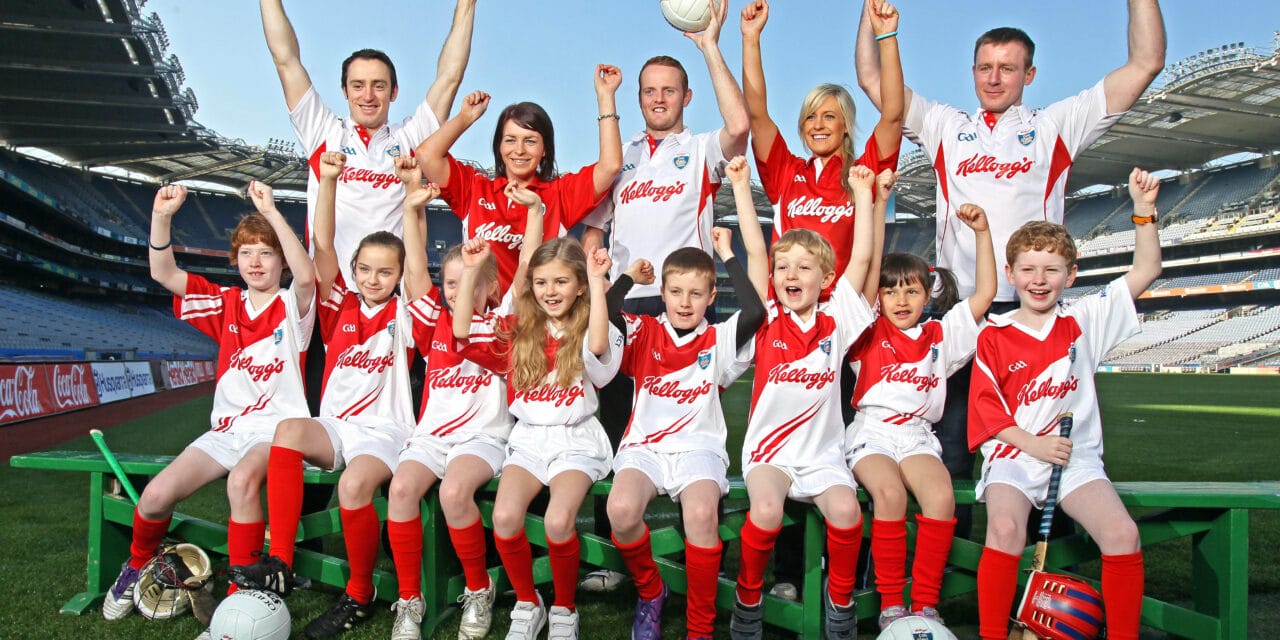
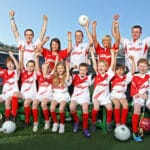
 On Thursday June 28th a group of sporting, business, government and other interested parties gathered for an open debate on how children’s engagement with sport in Ireland could be improved.
Those present included Kerry Clohessy from Sport against Racism in Ireland; Paul Dermody, Commercial Manager with the GAA; Scott Graham, Development Officer with Triathlon Ireland; Rob Hartnett, CEO Sport for Business; Sheena Horgan, specialist in Youth and Family Marketing; Noel Keating, a retired primary school principal with strong history in sports administration; Donagh Morgan, Assistant Secretary at the Department of Transport, Tourism and Sport; Elizabeth O’Ferrall from the National Canoe Slalom Technical Committee; and Peter Smyth, Research Manager at the Irish Sports Council.
In a wide ranging and at times passionate debate on a subject for which the stakes are remarkably high a number of key themes came into focus:
- The motivation for encouraging participation among children is different for sports and society. Sport is looking at players for the future and society – as represented by social policy – at the general improvement in wellbeing. The aims are not in conflict but they are different.
- Fun must be at the heart of sport for kids. A survey by the American Athletic Footwear Association showed that 20% play to learn new skills, 65% to be with their friends having fun. Of course to do both is even better but it may be that the coaching of skills is too dominant at too early an age.
- Competitive sport is driven more by adults than kids. The GAA is pushing back competitive leagues now to the under 13 age group. A high proportion of children who sign up to minority sports say they left team based sport because of a feeling of exclusion from coaches. The frame of reference for judging performance is too much based on more adult concepts of perceived talent and ability.
- Sports body involvement in schools is at a very high level with 85% of schools being called on by games promotion officers of the GAA as one example. The point was raised whether this was being used as a substitute for what the state education system should be offering to children by way of broader physical education.
- Our children are playing more sport than ever before but a greater number in real terms are dropping out and missing out on the benefits of sport. This is particularly so with reference to sport for girls. US surveys show that girls playing sport in high school are 92% less likely to take drugs, 80% less likely to become pregnant and 3 times more likely to graduate than those who do not.
- There are no formal guidelines governing the ways in which business can or should engage with schools. Everything at present is done on a one by one basis which places too great an onus on principals, too much effort on business and too little outcome in terms of effective partnership.
- The current PE curriculum is considered to be enlightened in encompassing a holistic approach based on more than pure fitness. Much good work is being done but it is not being well communicated and as a result is failing in its implementation. The addition of a fourth year to primary teaching courses will enable a greater emphasis on pre-service training.
- This good work extends to the Children First legislation currently being considered, in which sport has a role; and in the National Physical Activity Plan where a view from the business community, perhaps through Sport for Business might add value in facilitating longer term relationships with commercial supporters.
- The Tata Kids of Steel triathlon initiative and Cricket’s ‘Chance to Shine’ programme were considered as good models of how corporate support can encourage participation without competition and also engage a wider community of staff and community groups.
- It was considered that there is a serious disconnect between sport and kids in areas of urban disadvantage where parental volunteering and coaching is likely to be at a much lower level. The state needs to bear its responsibility here to an even greater extent.
There are three areas which Sport for Business will now seek to develop over the coming weeks before a second meeting of the same group in the autumn.
- To investigate whether the model of Cumman na nBunscoil in Gaelic Games might be replicated in other sports, involving teachers in a programme that could present an opportunity for a commercial partner to become involved.
- To seek to represent the views of the business community as part of the National Physical Activity Plan
- To look at ways in which a set of guidelines on commercial partnership around sport and schools might be implemented on a national scale.
If you wish to join thie debate on Children and Sport in Ireland, send your views to rob@sportsforbusiness2.ab6z.com and we will publish a selection of comments and submissions over the summer.
The next Sport for Business Round Table event is on Sport and Employment on Thursday, July 26th.
Recent main stories on Sport for Business
- Irish success from Royal Portrush
- Irish Derby Gamble pays off
- Take-aways from Children and Sport Round Table
- Irish Women secure World Cup Place
- Camogie to fore in Move Smart initiative
- Paralympics Ireland a model for sport and business
- Irish Open hangs up Sold Out signs
- Chevy looks to win over Man United Fans
- US Tour brings Digital in house
- Dublin to host pre-games Athletics on July 25th
- Six ways to capture the ‘Spirit of Sopot’ for domestic soccer
- Australia says no to Alcohol
- London Irish to develop centre of excellence
- Europe on horizon for Airtricity League clubs
- Sport dominates at Dublin PR Awards
- Cricket Ireland’s Rain Pain
- Irish Rugby tour commentary is far from ‘Pure’
- Sprinters eBay sponsorship pays off
- Black Caviar’s Coach and Horses at Ascot
Find out more about how Sport for Business can be of benefit to you
Subscribe today for the free Sport for Business daily news digest