 Friday’s UEFA Masterclass with the Federation of Irish Sport at the Aviva Stadium lived up to its name with rich advice coming at us from all angles.
It has been said that to walk away from any conference with three key pieces of information to help focus your own efforts represents a winning day. If anyone left without twice as many on Friday they can’t have been listening too closely.
There was a sense that with UEFA being an organisation of such colossal size and power, that the lessons they could teach would be beyond the reach of most organisations but Friday was all about pitching ideas through their building blocks and providing an excellent foundation to take them to whatever level was possible in different circumstances.
Polly Bancroft who was a special guest of Sport for Business for our Women in Sport Conference at RTÉ last December was back in Dublin to present on the growth of the Women’s game across Europe.
The Campaign around Together #WePlayStrong was seen as a real success in making football ‘cool’ among teenagers and expanding the base of players coming through that tricky age bracket.
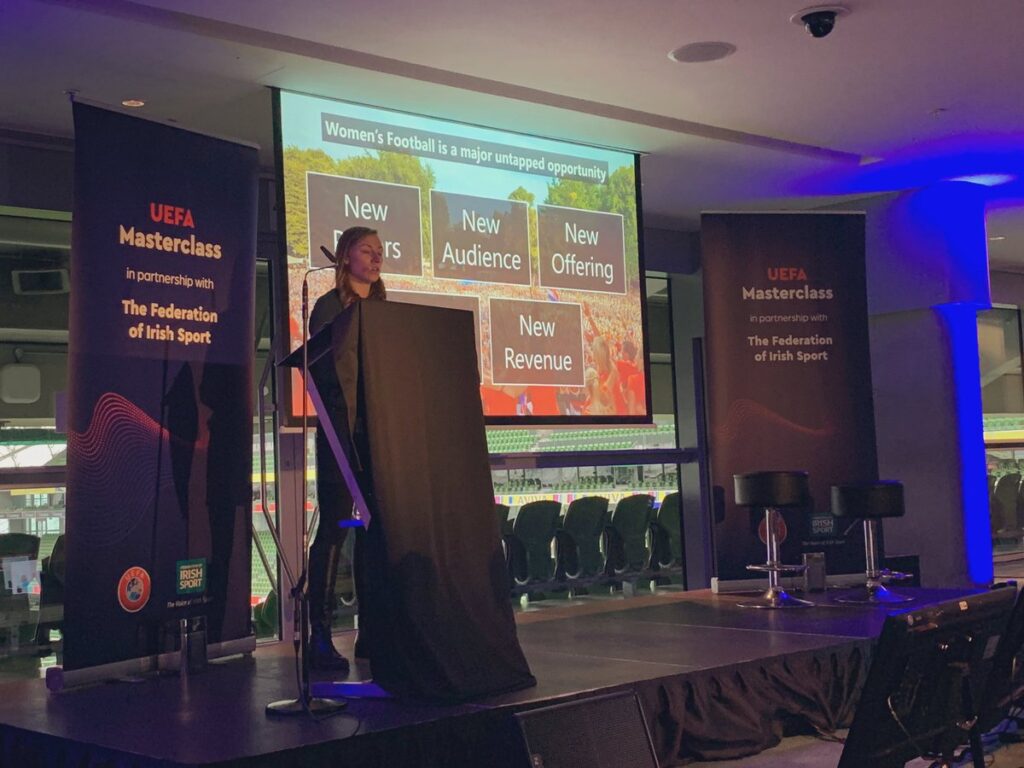
Perhaps of equal importance, in the long run, were the figures which she revealed on Friday about the growing number of women that were taking their place in the decision making echelons of the game.
From 2012 to 2018 she revealed that the number of women working at National Associations had grown from 1,301 to 2,286, an increase of 78 per cent, that at managerial level that number was up 122 per cent from 269 to 596 and in top management it had climbed 43 per cent from 105 to 150 in just the last three years.
Change at the top leads to accelerated change throughout and these are decision makers across the sport as a whole, not limited to either just the Women’s game or just the men’s game.
Mark Ward spoke about the importance of communications as part of the growth of any sporting organisations, highlighting the role of research as absolutely key to get in place and the definition of clear targets and metrics as being the most important staging post to measure progress.
A constant theme running through the different presentations was the importance of understanding the attention economy in terms of how people are engaging with all forms of entertainment, including sport.
Getting to grips with the ever-changing way in which sport is consumed was seen as key towards creating a hook for any sport to capture that valuable slice of attention and this is what will encourage participation, support, media and sponsor interest.
There were well-presented case studies on individual projects from across Europe in terms of how individual Football federations had done just that and it went wider as well with Richard Ayers highlighting the work of English Netball in terms of how it had captured interest and ultimately the right to host this year’s World Cup in Liverpool.
In a light-hearted insert he also showed the value of simple creativity in capturing attention. See if you don’t smile or laugh at least once during this compilation from YouTube animator Nick Murray Wilson…
Declan Conroy gave a whistle-stop tour of how Dublin was preparing to host four games in next year’s Euro 2020 tournament.
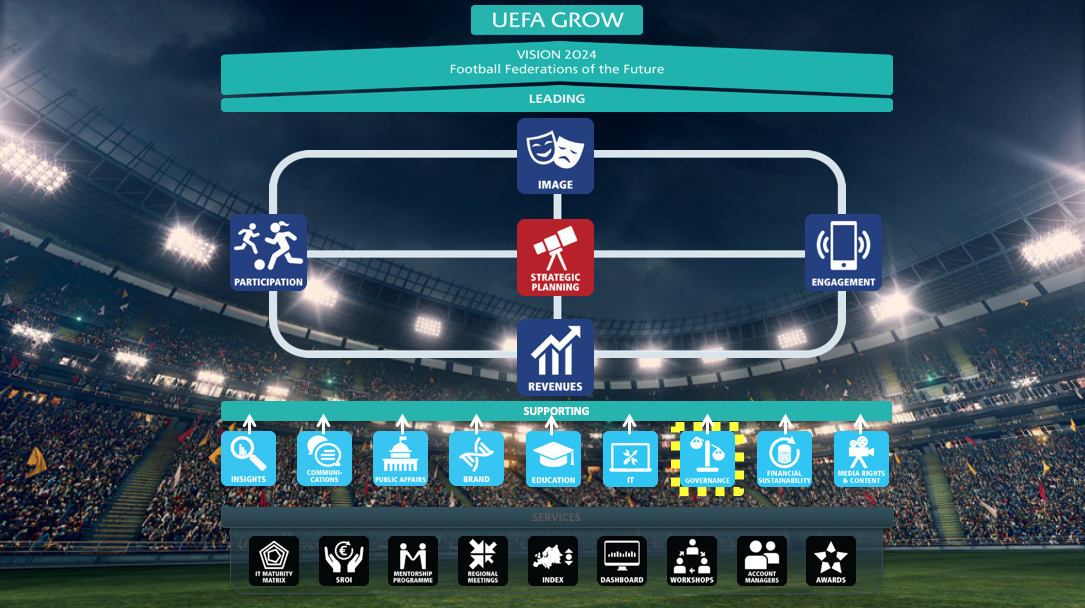
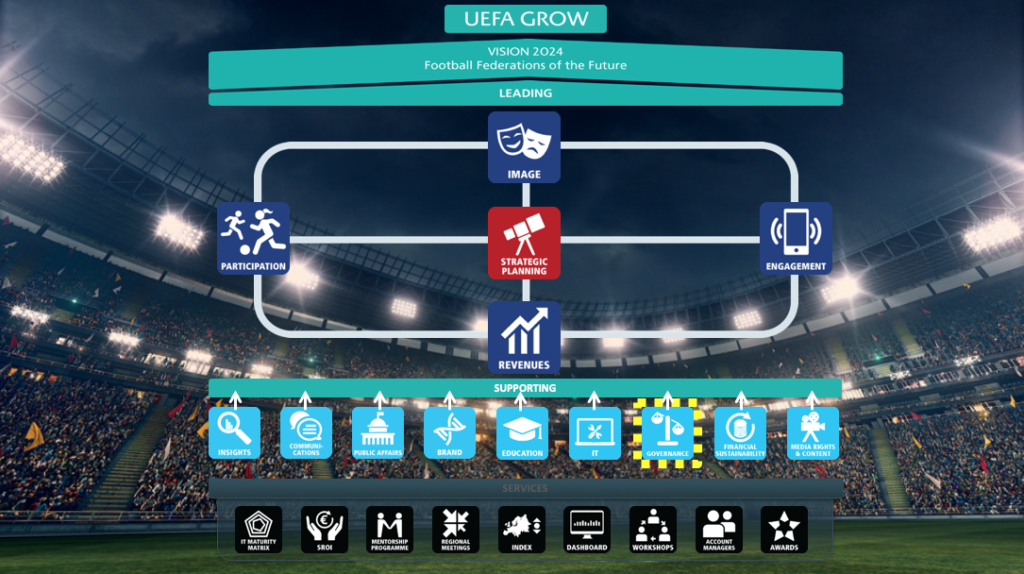
The day started with Ireland’s own Noel Mooney giving an overview of just how the UEFA Grow initiative had been developed to help national governing bodies achieve their potential and finished with John Delaney of the FAI and Razvan Burleanu, his Romanian opposite number discussing how that had been achieved and the powerful impact it had had on wider society.
The tagline of the Federation of Irish Sport is ‘Sport matters’ and Friday was a day where that came to life in so many different ways.
The presentations that were delivered will be distributed this week to those many from across the Irish sporting spectrum who were there on the day. Make sure you get to see copies of them.