Last week we witnessed the passing of a motion that will enable the purchase of Cork City FC by the owners of Preston North End from FORAS, the supporter’s trust that saved the club a decade ago.
We asked Niamh O’Mahoney, one of the founding members of FORAS to share here memories of what the trust was able to achieve and what the future might now hold for Cork City.
There’s been quite a bit written about FORAS, the supporters’ trust that still owns Cork City FC, Grovemoor Ltd and the overall concept of fan ownership in Irish football during the past 2 weeks.
Much of the narrative has suggested the cooperative somehow failed in its objectives when members backed a sale option of assets to the owners of Preston North End. The reality though is that FORAS’ first and primary aim has always been to ensure League of Ireland football in Cork.
FORAS is the Irish word for ‘development’ and an acronym for ‘Friends of the Rebel Army Society’, a cooperative that came to prominence in 2008 when it acted as the voice of fans as Cork City FC entered examinership. The seeds of the trust had been around for several years, taking shape during the time local businessman Brian Lennox owned the club. Supporters would sing: ‘Who needs Abramovich, Brian sells lots of chips’ (the best chips in the city as it happens!)
Cork City won a League title in 2005 under Lennox’s guidance and while many supporters discussed how the success could be maintained, others asked: ‘What happens after Brian?’ And that, in itself, is the core idea within Fan Ownership.
Permanent
Owners, managers, players, and staff come and go – it’s fans that are the permanent entity within a football club. Take off their colours, and they have lots of relevant skills and experience. Add a structure that allows for a collective group to act together, and you have a mechanism that permits a community to have a shareholding in and a way to protect a very important sporting and social asset.
Cork City did, of course, emerge from examinership in 2008 and spent several months working alongside the new owner before understanding that other options would be needed. The trust worked alongside two local businessmen to try and push through a takeover of the company behind the club but also took the decision to apply for a Licence to participate in the League of Ireland in its own right.
On the eve of the 2010 season, news filtered through that Cork City had failed to secure a Licence. The trust, however, had been successful and Cork City FORAS Coop (FC) entered the First Division just nine days before its first fixture.
The amateur transfer window had closed, so newly appointed manager Tommy Dunne travelled to Derry with just 13 eligible players and came away with an incredible 1-1 draw. Over 4,000 people packed into Turner’s Cross the next week to witness the club’s first game as a fan-owned entity.
What followed were years of hard work and constant, but steady progress.
Promotion back to the Premier Division was secured with a late 94th-minute win over Shelbourne on the final day of 2011 season. 2013 was about consolidating its Premier Division status before trying to push on again in 2014. When that plan stuttered, club legend John Caulfield was appointed manager for 2014. A new name to League of Ireland management, he would lead Cork City to its most successful time on the pitch to date.
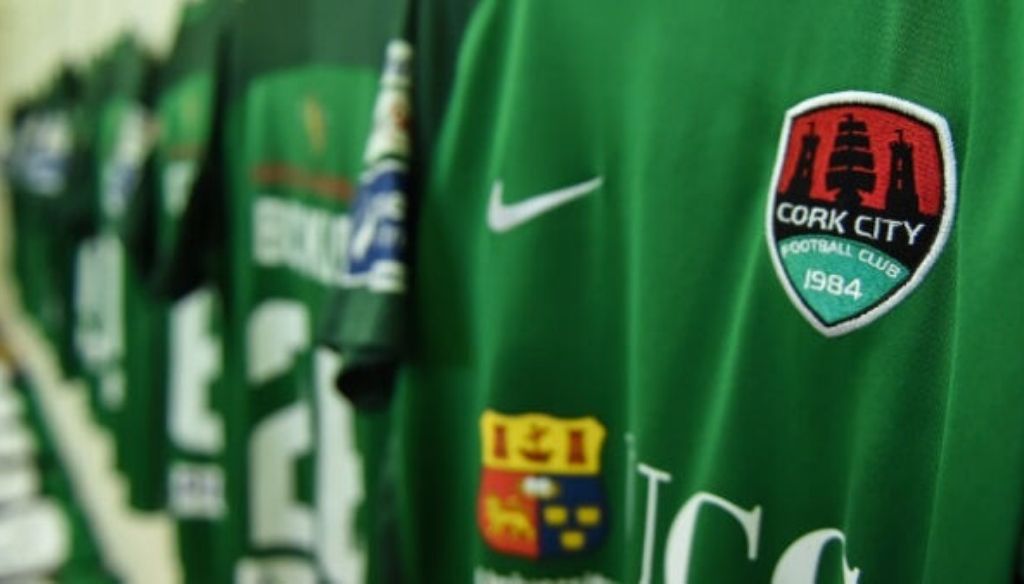
Starting with an FAI Cup win in 2016, a domestic senior men’s double was accompanied by a win in the Women’s FAI Cup final the following year. There were wins on the road in Europe, a first outing in the Uefa Youth League, a titanic – and often cutting – rivalry with Dundalk, sell-out match nights, and plenty of praise for the cooperative working behind the scenes.
FORAS, for its part, had gone about rebuilding many of the broken relationships the club had around the county. It worked to repair its connections with underage football, placed a renewed emphasis on community activities, and secured involvement in two successive EU-funded governance projects with SD Europe to promote the ideals of community ownership and fan involvement in football.
Organisations the likes of Clonakilty Food Company, UCC and Cork Credit Unions came on board as partners – citing Cork City’s NGO status, its emphasis on education and research and its cooperative, member-focused structure as key factors. The idea of developing a regional Centre of Excellence for the FAI in Glanmire claimed support from Cork County Council and secured just over €2m of Government funding earlier this year.
So how has the club ended up where it is today? Relegated and under financial pressure. In a sport dominated by money at the elite level, operating within the League of Ireland has never been an easy task.
For years, Ireland’s domestic competition was listed as one of the most competitive leagues in Europe based on the number of different winners but the honour was actually reflective of the boom-bust nature of our clubs than a level playing field.
In 2020, half of Premier Division clubs are cooperatives or member-run clubs, albeit Shamrock Rovers have investment from Ray Wilson and Dermot Desmond, so the FORAS model is not an outlier by any means. The trust itself has invested a sum of around €370,000 over the years but its rules, structures and operations, simply didn’t evolve as needed alongside on-field growth.
Unsustainable
Despite members concerns, the club’s wage budget grew to unsustainable levels in 2018 and when the success of 2017 didn’t repeat, the bumper crowds started to drift away. The increases had been largely possible because of the financial boost involved with competing in Europe but this is always temporary and the only guarantee Irish clubs have is that they will miss out on qualification at some stage. Immediate corrective action is then needed to stay afloat – regardless of ownership structure.
Without the deep pockets of an investor, fan-owned clubs need to break even as a worst-case and find it difficult to put away reserves for a rainy day while trying to fund development year after year. Having a strong pipeline of talent flowing through an Academy is essential and costs must be kept to a minimum. Stability in the boardroom is also vital and for reasons outside of Cork City’s control, there has been significant change in a short period of time in recent years.
UK football finance academic Dr John Beech often makes the point that a club can do everything within its power to be sustainable, but if it’s operating in an unsustainable environment, it will always be up against the odds.
For context, the Irish Supporters Network (ISN) calculated that LOI supporters raised almost €214,000 for their respective clubs and charitable causes during the initial Covid-19 lockdown – a sum that is almost twice the prize money on offer for winning the SSE Airtricity League Premier Division title.
The decision of FORAS members to support a sale option to Grovemoor Ltd needs to be placed against the backdrop of the uncertainty that all of football is facing right now. The Covid-19 pandemic could mean that fans won’t be back in grounds in any sort of meaningful numbers until a vaccine programme is rolled out and clubs will have to try and budget without a key income stream as a result. A new League of Ireland department within the FAI and a renewed sense of focus on Ireland’s domestic game is welcome but decades of underfunding will take time to recover from.
It’s not all that long ago either that a private owner left Cork City on the brink of disaster and it was FORAS – through its foresight and planning – that ensured League of Ireland football continued on Leeside.
It’s only natural that lingering fears will remain about any possible new owners as a result. The trust will need to understand and take responsibility for mistakes made but that shouldn’t overshadow its achievements and potential in the future either. Fans are the heart of the game, but they also deserve and have earned a place amongst the decision-makers – here in Ireland at least.
Sport for Business Partners
[logo_carousel_pro id=”51608″]