Seven recommendations but no ban
Ring fencing of money to fund education
Prohibition unworkable without international support
Future analysis of the recommendations in full
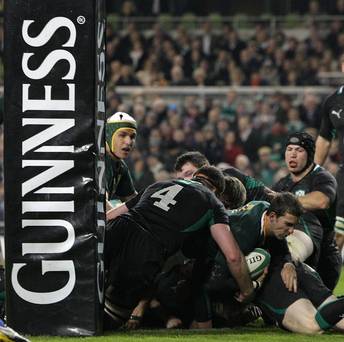
 The Oireachtas Committee investigating a proposed ban on alcohol sponsorship of sport has ruled against the merit of a ban, suggesting a number of alternative measures in its place.
The decision, though not unexpected, has brought coalition divisions to the fore again in Government with Labour seemingly lined up saying the link between sport and alcohol is ‘wrong and needs to be broken’ while Fine Gael, through Ministers Leo Varadkar and Richard Bruton in particular have focused more on what a ban would cost in terms of funding for sports programmes that do more good than harm in terms of public health.
The Committee report can be downloaded here and highlights seven key recommendations:
- Sponsorship by the Alcohol Drinks Industry should remain in place until such time as it can be replaced by other identifiable streams of comparable funding.
- A Code of Practice for the consumption of alcohol within stadia should be drawn- up by all sporting organisations.
- A fixed percentage of all sponsorship received by each and every organisation (sporting, cultural, arts, music etc.) from the alcohol drinks industry, should be ring-fenced and paid into a central fund to be administered by an appropriate body. That fund should be used exclusively for Alcohol and Substance Abuse Prevention Programmes.
- Sponsorship of sports and sporting events should be treated in the same way as sponsorship of the arts, music and other festivals.
- A Code should be introduced to make it mandatory for all brand owners and rights-holders to provide responsible training in selling, advertising and marketing and to promote responsible drinking at all sponsored events.
- All sporting organisations should be encouraged to support programmes which contribute to social inclusion in order to reduce the abuse of alcohol, particularly among young people.
- A prohibition on sponsorship by the alcohol industry should only be considered if it is done on a pan-European basis in order to ensure that Irish sports and sporting organisations are not operating at a disadvantage relative to their international competitors.
“As a Committee, we are cognisant of the fact that both the sporting organisations and the medical professionals hold strong, but opposing views, on the matter,” said Committee Vice Chairman John O’Mahony TD.
“Some Committee Members were firmly of the view that sponsorship by alcohol drinks companies should be phased out by 2016, as proposed in the Steering Group Report. However, the majority held the view that the link between sponsorship and the misuse of alcohol in society had not been established and, consequently, the Committee feels that banning sponsorship of sports by the alcohol industry is not merited at this time. In the current economic climate, the report argues, the main sporting organisations in this country would suffer inordinately if legislation for such a prohibition was introduced.”
“With overdrinking such a pressing public health issue, the Committee has been encouraged by the efforts outlined by sporting organisations to curb misuse of alcohol among young people in particular. To reinforce this work, it has recommended that a percentage of sponsorship by alcohol companies be ring-fenced to reduce alcohol misuse.”
The committee gave special praise to the GAA ASAP programme of alcohol awareness education and highlighted the importance, shared by Sport for Business that the best role model for youths in relation to how they treat alcohol and drugs comes from within activities, especially sport, that are outside the home and education structures.
The first recommendation is that alcohol sponsorship remain in place at least until such time as other comparable sources of funding can be found.
Sport for Business has covered the debate on Alcohol Sponsorship and Sport since it’s inception 15 months ago. We brought together a round table of ten thinkers in the field from Peter McKenna of the GAA to Peter O’Brien of Diageo looking for a way through what is a very emotive and very important subject.
We have put forward the suggestion that the Government might replace overt alcohol promotion with public health programmes on how to act sensibly and responsibly with alcohol will lead to a much greater understanding among young people.
This would ideally be backed up by heroes and role models bring forward messages about how they control alcohol as one part of their lives but not in a binge way that many young people do.
In order to replace the spending by alcohol companies a budget of €35 million a year would be required, a tiny percentage of the cost in terms of health, productivity, reputation and society that alcohol abuse costs us.
It would be roughly the same as the budget for the Road Safety Authority which has delivered real lives saved.
Over the coming days we will consider each of the recommendations in full, highlighting examples from around the world where similar proposals have succeeded and offering potential ways in which they might be better implemented.
Read more of our analysis of Alcohol and Sport and other issues by clicking on the links below:


Alcohol Sponsorship Membership Benefits Rugby