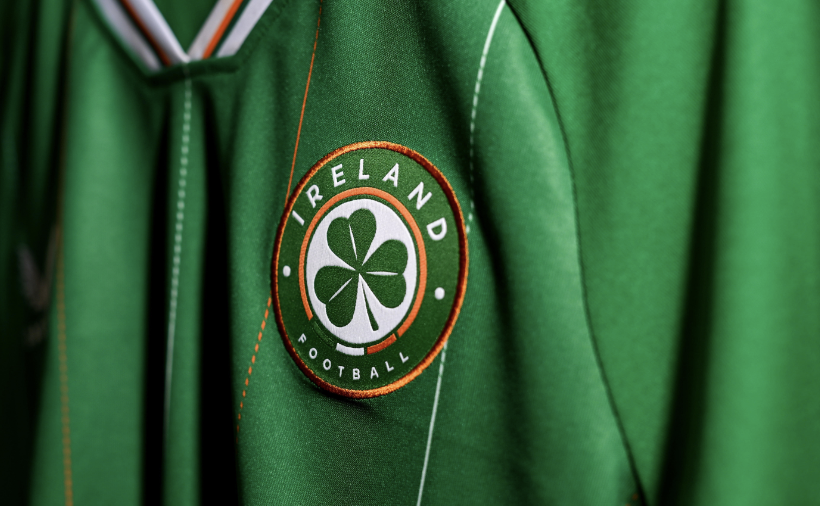
The FAI’s Extraordinary General Meeting last night delivered a clear, if not unanimous, endorsement of the Board’s decision to fulfil the Republic of Ireland’s UEFA Nations League fixtures against Israel later this year.
The motion was passed by 75 votes to 32, with three abstentions, meaning 68 per cent of delegates supported the Board’s recommendation that Ireland should meet its UEFA obligations despite widespread concern across Irish football about the humanitarian crisis in Gaza.
Let it be said that nobody wants to support Israel’s unfettered and inhuman actions across Gaza and Lebanon. Nobody wanted to come out of the Nations League draw by chance and be placed in a group with Israel.
The blame for this whole scenario lies with Israel, then with UEFA for not imposing its own sanctions to punish the many of its own rules the state is breaking.
But we live in a society that is based on playing by rules, that is organised sport in a nutshell, and if the only option is to play or pick up your ball and go home, then that is the rock and a hard place.
Perhaps history will damn us for not seeing beyond these rules to the heartbreak and the disaster that has been created by one nation’s response to one terror attack. Perhaps it will accuse us of not acting when our action could have stopped the killing. That is still the contention of the Stop the Game campaign, which has vowed to continue opposing the fixtures. Perhaps they are right. We just don’t know.
What we do know is that the Board of the FAI is charged with making all its decisions in the best interests of Irish football. That is an unequivocal obligation that leaves no room for moral frameworks beyond the guardrails of its interests. It is not a comfortable position to be in, but that’s what Board members commit to. That’s their responsibility, even when it flies in the face of public opinion, moral right and often their own personal beliefs.
Last night’s vote was by secret ballot, giving a degree of protection to those who chose to vote for their own sport, as is their obligation, rather than the higher moral ground. Perhaps they were wrong to do so. Again, we just don’t know.
Much has been made of the financial losses that would be imposed, and it is easier to frame an attack on the idea that this decision favours financial comfort over human life.
The more complex reality is the proximity of Euro 2028, seven games of which will be played in Dublin, giving an opportunity to recreate an Italia ’90 vibe on a much greater scale, in our own backyard, that will truly inspire a generation and more with a love of the sport.
Forfeiting the games, regardless of the finances, would impact the Republic of Ireland’s rankings and, depending on how many of England, Scotland, Wales, Northern Ireland, and the Republic of Ireland qualify on the pitch, our ability to ultimately play in our own staged competition.
Two host places are reserved as a safety net, but if three of the countries fail to win their group or finish as a runner-up, then the allocation of those two places could be determined by reference to the rankings.
Coming back to the obligations of those running the sport of football, in isolation, there was no other path for the FAI to follow.
Last night’s vote provides important democratic backing for a decision that has dominated discussion within Irish football for months.
The scale of the opposition, though, alongside the public debate generated by players, supporters, clubs and campaign groups, demonstrates that this remains one of the most divisive governance issues Irish football has faced in recent years.
The General Assembly was presented with an exceptionally difficult choice.
On one side sat strong moral objections, voiced by campaigners, politicians, supporters and current players.
On the other hand, there were binding UEFA regulations, significant financial consequences and the Board’s fiduciary responsibility to protect the long-term interests of Irish football.
There was no outcome capable of satisfying every constituency.
Sport has always occupied an uncomfortable space where politics, diplomacy and competition intersect.
The FAI has consistently argued that it sought Israel’s suspension through UEFA processes before accepting that, once those efforts proved unsuccessful, its obligations as a member association remained unchanged.
Whether observers agree with that conclusion or not, last night’s vote provides a little more clarity on the chosen path.
Boards exist to make difficult decisions, particularly where every available option carries significant consequences. Members, in turn, have the right to test those decisions through democratic processes.
That is precisely what happened last night.
The vote will not end the wider debate surrounding Israel’s participation in international sport, nor should it be expected to. Those discussions extend far beyond Irish football and continue across multiple international federations.
It was a result in a game where there can be no winners, determined by Irish decision-making.
 The FAI and the Irish FA, as well as the Department of Culture, Communications and Sport, are full members of Sport for Business.
If you would like to be part of the Sport for Business community and see your organisation in our content, on our stages, and in the conversation happening every day around the commercial world of Irish Sport, email us today and let’s see what is possible.
Image Credit: Sport for Business
ABOUT SPORT FOR BUSINESS
Sport for Business is Ireland’s leading platform focused on the commercial, strategic and societal impact of sport. It connects decision-makers across governing bodies, clubs, brands, agencies, and public institutions through high-quality content, events, and insights.
Sport for Business explores how sport drives economic value, participation, inclusion and national identity, and how your story can be part of ours.
Through analysis, storytelling and convening the sector, it helps leaders understand trends, share best practices, and make better-informed decisions. It positions sport not just as entertainment but as a vital contributor to Ireland’s social and economic fabric.
Find out more about becoming a member today.
Or sign up for our Daily Sport for Business Snapshot email bulletins to get a flavour of the material we cover.
Sign up for our News Bulletins here.