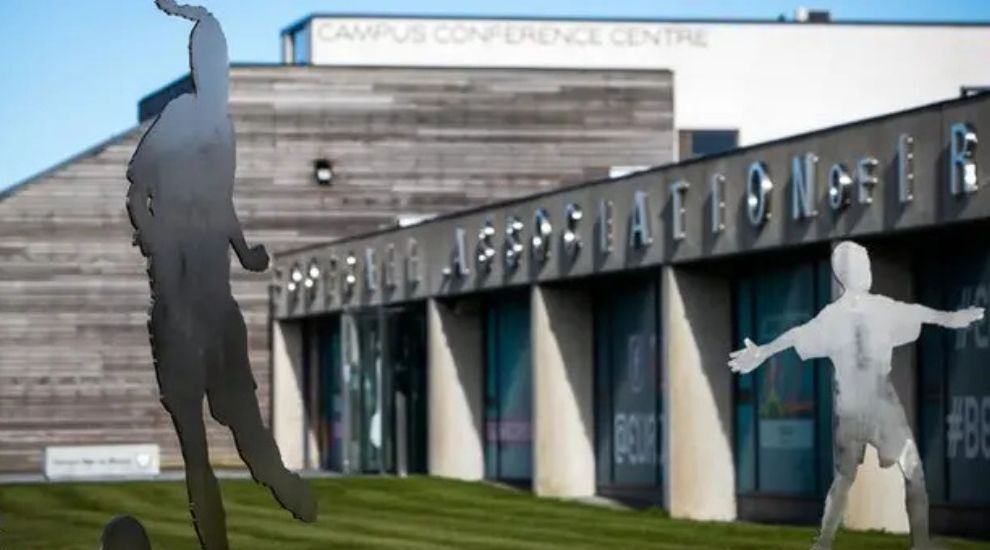
The FAI’s decision to move October’s UEFA Nations League fixture against Israel away from Dublin and behind closed doors marks one of the most politically and emotionally sensitive moments in the organisation’s recent history.
Announced on Friday, following consultation with UEFA and a series of board meetings, the game will no longer take place at the Aviva Stadium as originally scheduled. Instead, it will be played at a neutral overseas venue without supporters in attendance, with the FAI citing “operational challenges” that could have impacted the safe delivery of the fixture on home soil.
For many campaigners, it falls short of the complete boycott they had sought. For others, it is an acknowledgement that staging such a match in Dublin had become increasingly difficult after weeks of rising pressure from supporters, politicians and sections of the football community.
The FAI has consistently maintained that, while it has called on UEFA to suspend the Israel Football Association from competition, it remains bound by the governing body’s regulations.
The Association pointed to the serious consequences that refusing to fulfil the fixture would bring, including forfeiting points in the Nations League, potential disciplinary sanctions, damage to Ireland’s UEFA ranking, with potential impact on qualification for the Euro Finals to be partly staged in Dublin, and wider ramifications for funding and participation programmes.
In its statement, the FAI stressed that it understood and respected the views expressed by players, supporters and campaigners while reiterating its awareness of the humanitarian crisis in Gaza and its previous advocacy on behalf of Palestinian football. The inclusion of supportive comments from the Palestinian Football Association was an attempt to underline the difficult position in which the governing body found itself.
Momentum for change accelerated after the Republic of Ireland’s recent friendly against Qatar, when protesters twice threw tennis balls carrying “Stop the Game” messages onto the pitch. The incidents highlighted both the strength of feeling around the Israel fixture and the likelihood that similar or larger-scale demonstrations would accompany the match in Dublin.
Senior players had also expressed discomfort, with captain Séamus Coleman suggesting the issue should be resolved by administrators rather than players and Jamie McGrath voicing hope that a solution could be found before the controversy intensified further.
The FAI’s thinking was also informed by events elsewhere. Scotland’s women’s national team faced Israel in recent weeks under similarly charged circumstances, with the Scottish FA opting to play both games in Hungary behind closed doors because of security concerns.
Polling among organised supporters earlier this year suggested overwhelming opposition to playing Israel in Dublin, with large majorities indicating they would neither attend nor support the fixture taking place as planned.
That feeling has been amplified by the “Stop the Game” campaign, which has attracted backing from former internationals, current players, supporters’ groups and public figures.
Rather than disappearing after Friday’s announcement, however, opposition has remained.
At League of Ireland fixtures over the weekend, banners declaring “Not Here, Not Anywhere” made clear that many campaigners continue to argue that relocating the match is insufficient and that Ireland should refuse to play altogether.
Shamrock Rovers manager Stephen Bradley maintained that Ireland should not play Israel under any circumstances, while Shelbourne manager Joey O’Brien questioned the logic of surrendering home advantage if the Association believed it was compelled to fulfil the fixture anyway. Both argued that the current solution leaves Ireland at a sporting disadvantage without addressing the underlying moral objections.
Conversely, critics of the protests argued that moving the game represented capitulation to pressure rather than leadership.
The result is that the FAI has found itself criticised from opposite directions: by those who believe it should refuse to play altogether and by those who believe it should have hosted the match in Dublin as originally planned.
The neutral venue solution reflects the realities facing football administrators rather than offering a perfect answer.
UEFA regulations leave little room for individual associations to decline fixtures without consequence, while policing a high-profile international in Dublin would almost certainly have required an unprecedented security operation amid expectations of large-scale demonstrations.
Playing overseas behind closed doors removes much of that operational burden while allowing the competition itself to proceed.
Whether it removes the controversy remains doubtful.
An Extraordinary General Meeting requested by FAI members is still expected to debate a motion relating to the fixture, even if the governing body insists its legal obligations under UEFA regulations remain unchanged.
 The FAI is a full member of Sport for Business.
If you would like to be part of the Sport for Business community and see your organisation in our content, on our stages, and in the conversation happening every day around the commercial world of Irish Sport, email us today and let’s see what is possible.
Image Credit: Sport for Business

ABOUT SPORT FOR BUSINESS
Sport for Business is Ireland’s leading platform focused on the commercial, strategic and societal impact of sport. It connects decision-makers across governing bodies, clubs, brands, agencies, and public institutions through high-quality content, events, and insights.
Sport for Business explores how sport drives economic value, participation, inclusion and national identity, and how your story can be part of ours.
Through analysis, storytelling and convening the sector, it helps leaders understand trends, share best practice and make better-informed decisions. It positions sport not just as entertainment but as a vital contributor to Ireland’s social and economic fabric.
Find out more about becoming a member today.
Or sign up for our twice-daily bulletins to get a flavour of the material we cover.
Sign up for our News Bulletins here.