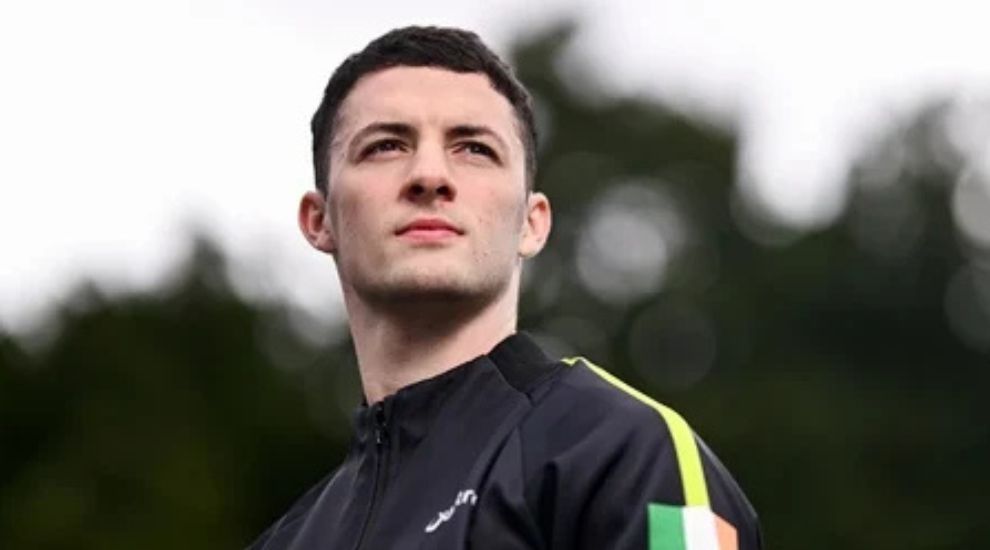
Rhys McClenaghan is prepared to sacrifice short-term success in pursuit of routines capable of winning future world and Olympic titles. Ahead of the European Championships, the Olympic pommel horse champion was in a reflective mood when sitting with us yesterday to discuss a difficult Commonwealth Games, increasingly unforgiving judging and the emergence of a stronger Irish gymnastics team.
Rhys McClenaghan has become accustomed to leaving major championships with a medal, but his disappointment at the Commonwealth Games was rooted more in the quality of his performance than the absence of silverware.
The Olympic champion had introduced a new and more difficult opening to his pommel horse routine. When the judges declined to recognise the skill, his difficulty score was significantly reduced, and his medal prospects disappeared with it.
McClenaghan has now moved quickly to place the experience within the longer-term development of a routine he hopes can carry him through another Olympic cycle.
“I guess it is just on to the next one,” he said.
“At the time, I was quite disappointed. But even if I had been standing there with a gold medal, I still would have been saying that it was a stepping stone towards something better — a better routine, a better performance and a better score.
“I am aiming beyond what I was performing there.”
That ambition requires risk. Unlike athletes in sports with extensive competitive calendars, elite gymnasts have relatively few opportunities to test new routines under genuine pressure.
“You have to test these routines out at some point,” McClenaghan said.
“You have to test the new skills. It is a shame that it has to be done at major championships because we do not perform every weekend. You cannot test it at a friendly competition.
“It can feel like you are sacrificing a major title, but it happens. I was capable of more on the day, but I now feel like I am back in the groove of competing.”
Blocking Out the Competition
One lesson McClenaghan will take into the European Championships is the need to remain insulated from his rivals’ performances and scores.
He tries not to follow the standings during a competition but acknowledged that this is easier said than done when scores are announced across the arena and other gymnasts are celebrating nearby.
“You hear a 15 and straight away you think, ‘I have never hit that before in this code of points.’
“Maybe I should pay less attention, but it is hard when it is being announced, and your competitors are right beside you celebrating.
“It is a skill I am still trying to develop — focusing entirely on my own work.”
In Zagreb, McClenaghan intends to minimise his exposure to the wider competition.
“I will be trying to limit how much gymnastics I watch at the Europeans. I do not think I will go to watch the team final or the qualification rounds.
“I will go in, do my job, leave and go back to the hotel. That means I am focused on my own work and what I am capable of. Focusing on other people does not do anything for me anymore.”
Competition Exposes the Mistakes
McClenaghan’s performances in training before the Commonwealth Games had been stronger than the routine he eventually delivered in competition.
Rather than dismissing the result as an isolated bad day, however, he believes the pressure of competition exposed small weaknesses that may previously have remained hidden.
“The Commonwealth Games put a magnifying glass on the work I was doing,” he said.
“I had done better routines in training, but it is worth paying attention to the bad competition routine because ultimately that reflects where you are at that phase of the programme.
“Competition pressure highlights mistakes. Those mistakes may always have been there in the background, but because I am more relaxed and confident in training, they can go under the radar.
“That is why it is worthwhile paying attention to the failure at the Commonwealth Games.”
The most costly mistake came in McClenaghan’s opening mount. He travelled across the pommel horse while turning, but the judges determined that there was sufficient contact with one leg to deny recognition of the skill.
“If you do not have an eye for gymnastics, you probably would not even have seen it,” he explained.
“Coaches and gymnasts came up to me afterwards saying that they had given me the wrong difficulty. I had to explain that they had not counted the mount.
“My legs go either side of the pommel, and I travel across the horse with a turn. If you put too much pressure on one leg, they can see it as your leg coming into contact and you putting your weight through it — almost as though you are cheating the movement.
“It happens so quickly, and there may not be much pressure on the leg, but if it is on the line, they will not give the skill.”
No Benefit of the Doubt
McClenaghan believes a subtle change in the current gymnastics code has made that judgement even more significant.
Previous guidance instructed judges to give the gymnast the benefit of the doubt when assessing a borderline skill. According to McClenaghan, that principle has now been reversed.
“The rule used to say, ‘If in doubt, give the benefit to the gymnast.’ Now it is the opposite. If in doubt, do not give the benefit to the gymnast.
“That has made the judging extra harsh. There are so many questionable things judges can deduct for or skills they can decide not to recognise, but now they are being pushed to be stricter.
“I think it is something that has flown under the radar.”
McClenaghan remains undecided about whether to retain the full difficulty of his opening mount at the Europeans or introduce a downgraded version.
What he will not do is abandon the new routine.
“If I changed the entire routine, that would be panic mode, and I am not in that place,” he said.
“I know I can perform this routine really nicely. I may downgrade the first mount, but it would still be in line with the new routine and would not drastically change the construction.”
Nor does he blame the judges for what happened in Glasgow.
“I hate playing the victim to judges. They did not give me the skill, but it was on the line. I am not saying they should have given it to me.
“I should be performing it better than anyone else. That is the reality.
“There needs to be no doubt. In a subjective sport, you should be undeniably the best. You should not leave anything for the judges to question.
“They should see that mount and think, ‘That is the best I have ever seen it performed.’ That is where I want to get to.”
Ireland’s Growing Medal Potential
McClenaghan will also travel as part of an Irish group carrying greater depth and ambition than in previous years.
The Olympic champion is particularly encouraged that the team has been selected against demanding performance standards rather than simply on the basis of filling available places.
“Everybody going has the potential to reach a final in some capacity, which is super exciting,” he said.
“I am now sitting here talking about multiple medal chances rather than only myself winning a medal.”
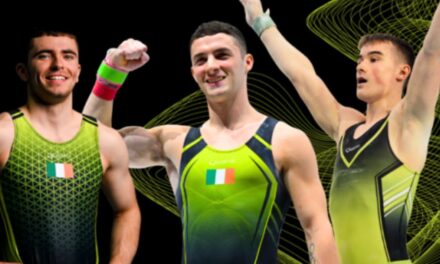
McClenaghan and James Hickey have already shared an international pommel horse podium this year, while Eamon Montgomery has been developing a floor routine intended to challenge at world level.
“I train with Eamon every day and we have similar goals,” McClenaghan said.
“He had a disappointing Commonwealth Games and so did I, but it was all in pursuit of pushing towards world-class performances.
“We could have done lesser difficulty, made the final comfortably and perhaps even won medals comfortably. But our standards are higher than that. We are looking towards world and Olympic titles.
“It is no longer just me saying that I want to win major medals. There are multiple people capable of doing it.”
Healthy, Confident and Looking Upwards
Far from damaging his confidence, McClenaghan believes the Commonwealth experience has left him more relaxed ahead of the Europeans.
It was his first major championship since undergoing shoulder surgery and provided a reminder of the rhythms and pressures that cannot be recreated in training.
“The waiting before a final, standing in the tunnel, walking out and waving to the crowd — you cannot practise all of that in the gym,” he said.
“No matter how many competitions I do, it still needs to be fresh in my mind that the Commonwealth Games is just like a World Cup, a World Cup is just like a training session and not much changes.
“I feel more confident now than I did before the Commonwealth Games.”
Most importantly, he is once again training without pain.
“During the first quarter of the year, my wrists were sore and my elbows were sore. My shoulder was good after the surgery, but the rest of my body had to adapt.
“Now I feel really healthy. That means I can enjoy every training session as well as every competition.”
The ultimate target in Zagreb has not changed.
“Always the top spot,” McClenaghan said. “But I need to focus on my own job.”
And while pommel horse remains the immediate priority, McClenaghan has not ruled out expanding his Olympic ambitions towards the floor exercise before Los Angeles 2028.
“If I am pushing for medals on floor, why not?” he said.
“Two medals are better than one.”

 Gymnastics Ireland is a full member of Sport for Business.
If you would like to be part of the Sport for Business community and see your organisation in our content, on our stages, and in the conversation happening every day around the commercial world of Irish Sport, email us today and let’s see what is possible.
Image Credit: Gymnastics Ireland, OFI and Dan Sheridan, Inpho.ie
ABOUT SPORT FOR BUSINESS
Sport for Business is Ireland’s leading platform focused on the commercial, strategic and societal impact of sport. It connects decision-makers across governing bodies, clubs, brands, agencies, and public institutions through high-quality content, events, and insights.
Sport for Business explores how sport drives economic value, participation, inclusion and national identity, and how your story can be part of ours.
Through analysis, storytelling and convening the sector, it helps leaders understand trends, share best practices, and make better-informed decisions. It positions sport not just as entertainment but as a vital contributor to Ireland’s social and economic fabric.
Find out more about becoming a member today.
Or sign up for our Daily Sport for Business Snapshot email bulletins to get a flavour of the material we cover.
Sign up for our News Bulletins here.