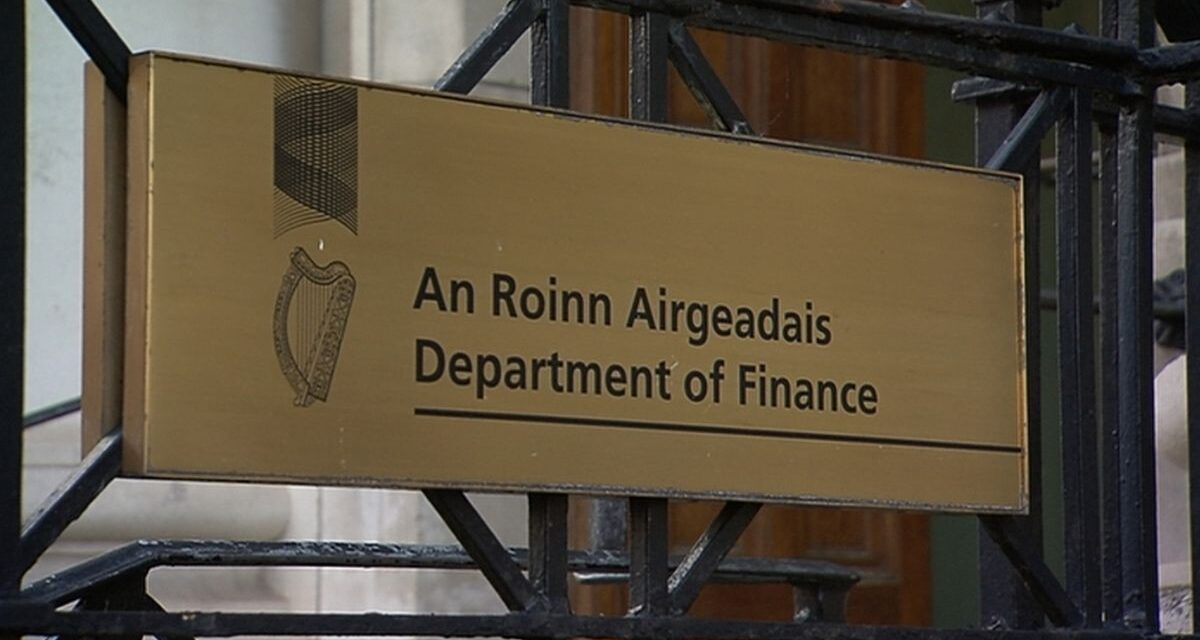
The Olympic Federation of Ireland Athletes’ Commission has submitted a targeted budget proposal to the Government, seeking changes to the tax system that it believes would better recognise the financial realities of pursuing an elite sporting career in Ireland.
This is in addition to the Federation of Irish Sport Budget submission which we covered on Sport for Business last week. Read about that here.
The Athletes proposal focuses on two areas: creating an athlete-focused tax measure modelled on the existing Artists’ Exemption, and substantially widening the scope of the existing Sportsperson’s Relief.
The Commission argues that Ireland’s high-performance system has evolved significantly while the tax treatment available to athletes has failed to keep pace. Many Olympic and Sport Ireland-carded athletes do not earn conventional salaries or significant prize money from their sport, and sponsorship, philanthropic support, and other sources are increasingly important to making a full-time sporting career financially possible.
Under the current Sportsperson’s Relief, sponsorship income does not qualify. Revenue states that the relief applies to income derived directly from participation in sport, such as salary or prize money, while excluding sponsorship, personal appearances and interview income. It is also available only once an athlete has permanently retired.
The Athletes’ Commission wants sponsorship and philanthropic income brought within the relief where it is generated wholly and exclusively through the athlete’s professional sporting activity.
It is also seeking to extend eligibility beyond the 13 sporting categories currently covered by Revenue — athletics, badminton, boxing, cricket, cycling, football, golf, horse racing through jockeys, motor racing, rugby, squash, swimming and tennis.
That would open the relief to athletes competing in all recognised Olympic sports through their relevant National Governing Bodies.
A New Athlete Tax Measure
The more significant proposal could be a tax treatment for Olympic and Sport Ireland-carded athletes aligned with the principle behind Ireland’s Artists’ Exemption.
The Commission describes its proposal as a €50,000 annual tax credit that could be used during or after an athlete’s sporting career. Its objective is to compensate, at least in part, for the earnings and career progression athletes can sacrifice during the years they devote to high-performance sport.
The comparison with artists is interesting.
Under the existing Artists’ Exemption, qualifying artistic income of up to €50,000 in a year can be exempt from income tax. It is an exemption on qualifying income rather than, technically, a €50,000 cash tax credit.
The detail of how an equivalent athlete measure would operate would therefore be important if the proposal progresses.
The Commission believes such a measure could also encourage athletes to remain resident in Ireland after retirement rather than having their financial and professional circumstances push them elsewhere.
Opportunity Cost of Elite Sport
Aifric Keogh, Chair of the OFI Athletes’ Commission, said that while Government and Sport Ireland investment had helped Ireland achieve increasing international success, the personal financial burden remained significant.
“Every week, Irish Olympic athletes represent the entire country on the world stage and bring moments of priceless national pride and social cohesion,” she said.
She argued that athletes continue to be lost from the high-performance system because of the direct costs and foregone career opportunities involved in pursuing international sport.
Olympic Federation of Ireland CEO Peter Sherrard similarly pointed to the gap between perceptions of elite sport and the financial reality for many athletes, with some combining training with part-time employment or relying on family support.
A legislative framework already exists that could help Government define who should qualify.
Section 847AA of the Taxes Consolidation Act contains definitions covering elite athletes, Sport Ireland carding and recognised National Governing Bodies. The legislation was introduced through the Finance Act 2024 to provide tax relief for donations to NGBs and elite athlete programmes.
The Commission argues that using these established definitions would allow any new measure to be tightly targeted rather than creating an open-ended sporting tax exemption.
Ireland has invested substantially in coaching, sports science, facilities and high-performance programmes. The Athletes’ Commission’s intervention raises the question of whether athlete finances now need to be viewed as another part of that performance infrastructure.
It also reflects the changing commercial model of individual sport. For athletes outside the handful of sports that can pay substantial salaries or prize money, personal sponsorship has increasingly become part of the mechanism that allows them to remain in the system.
Recognising that income within the tax code would represent a significant change in how Ireland financially supports those pursuing Olympic success.
Sport for Business Perspective
This proposal has a broader business case than simply improving athletes’ personal finances.
Ireland has increased its investment in high-performance sport over the past decade, building stronger coaching, sports science, performance and competition structures around athletes. If talented athletes are then forced to step away because the economics of staying in the system no longer work, some of that investment is inevitably lost.
The proposal also reflects how the athlete economy has changed.
For many Olympic athletes, sponsorship is not a lucrative addition to sporting income; it is part of what makes a sporting career possible in the first place. Brands are increasingly being asked to support athletes directly, particularly in the years between Olympic Games when profile and commercial opportunity can be harder to sustain.
Yet the current tax system distinguishes between income earned through competition and income earned through the commercial value an athlete creates around that competition.
That distinction looks increasingly outdated.
There is also an opportunity here for Government to create a clearer incentive for businesses and philanthropists to support Irish athletes. If sponsorship income can be treated more effectively within the tax system, each euro a commercial partner invests could go further.
That could broaden the pool of companies willing to support athletes, particularly those competing in sports with little prize money and limited professional earning capacity.
The question for Government is therefore not simply whether athletes merit another tax relief.
It is whether the tax system should become another part of the high-performance infrastructure alongside coaching, facilities, science and direct funding.
If Ireland wants to retain more athletes through multiple Olympic cycles, improve the commercial environment around them and maximise the return on public investment already being made in high-performance sport, that is a debate worth having.
Sport for Business will follow the proposal through the Budget and Finance Bill process.

 The Olympic Federation of Ireland and the Federation of Irish Sport are full members of Sport for Business.
If you would like to be part of the Sport for Business community and see your organisation in our content, on our stages, and in the conversation happening every day around the commercial world of Irish Sport, email us today and let’s see what is possible.
Image Credit: Sport for Business
ABOUT SPORT FOR BUSINESS
Sport for Business is Ireland’s leading platform focused on the commercial, strategic and societal impact of sport. It connects decision-makers across governing bodies, clubs, brands, agencies, and public institutions through high-quality content, events, and insights.
Sport for Business explores how sport drives economic value, participation, inclusion and national identity, and how your story can be part of ours.
Through analysis, storytelling and convening the sector, it helps leaders understand trends, share best practices, and make better-informed decisions. It positions sport not just as entertainment but as a vital contributor to Ireland’s social and economic fabric.
Find out more about becoming a member today.
Or sign up for our Daily Sport for Business Snapshot email bulletins to get a flavour of the material we cover.
Sign up for our News Bulletins here.