 One of the key elements that has opened up sports analytics is the use of GPS technology to track movement. Today as part of Analytics Week on Sport for Business we look at where that technology might bring us.
Horse racing was among the first to insert tracking devices into horse saddle cloths at Newmarket over ten years ago. The transmitter was roughly the size of a mobile phone and would have been too big to pin to a human performer or into a ball.
Tracking equipment had to be set up along the length of the racecourse and the data was used to analyse post race performance but also by TV companies like Channel 4 and the BBC to present a different form of visualisation of how the race was progressing.
It was an obvious step to reduce the size and introduce to field sports where the playing area id tighter and therefore easier to cover and where movement is multi directional rather than just linear.
Catapult Sports set up in Melbourne Australia in 2006 to work with the Aussie Rules Football League. It has since expanded to the English Premier League and other sports. It now has the technology to tag the ball and the relationship and movement of all players when the team is in possession or defending.
The amount of data produced is staggering and part of the business model for many of the analytics companies is to work with teams on how to derive the maximum value from all the information.
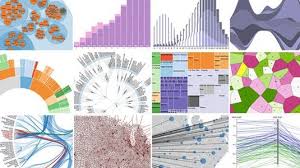
Teams can use it to review and tweak tactical plays, media companies can, as has been the case from the beginning treat the data as a visual menu from which they can build either simple or complex pictures of what has or even what is happening.
Traditionalists wil argue that there is no substitute for the human eye and that the best way to analyse a performance is to simply watch it back. That is no longer the case. Isolating individual elements such as a players responsiveness when possession has shifted can lead to real insight for a manager and highlight areas for players where improvement can be made.
At elite level it is all about the tiniest marginal gains which can improve performance. That will translate to more modest areas of sporting endeavour as technology improves and costs come down as will inevitably be the case.
The lessons learned at the Etihad Stadium, the MCG or the Institute of Sport can also translate into business life. In much the same way as the space race developed multiple technologies beyond the simple obvious fact of putting people on the moon, so too will sports analytics. Funded initially by the massive financial gains to be made through improved performance on a playing field, they will help to make us more efficient, more productive and better performers in whatever field we operate.
It would be useful for me, as an example to see over the course of a week or a month how much time I spend actually writing the articles that we produce each morning, how much time I spend getting coffee. how much time I spend researching in the hours before dawn. With detailed knowledge I can make changes to the balance of those activities that will lead to a most efficient use of time.
Some employees may rail against an intrusion such as this but what if a more efficient working environment led to a seven hour work day or a four day working week with all the work done.
We are still only at the beginning of the Data Revolution. Tomorrow morning at Accenture in Dublin we wil gather 12 smart minds to explore where the next steps forward are likely to be made. It is going to be an exciting journey. It is right at the heart of what Sport for Business is all about.
Join us for our Sports Tourism Seminar at Croke Park in Dublin on November 7th or for our next Round Table on Sport and Philanthropy on November 28th.

 Sports Analytics Round Table – Oct 24
Sports Tourism Seminar – Nov 07
Irish Sponsorship Awards
Sports Philanthropy Round Table
Youth Sports Conference
Sport for Business 20/20 for 2015 – Oct 07 2014