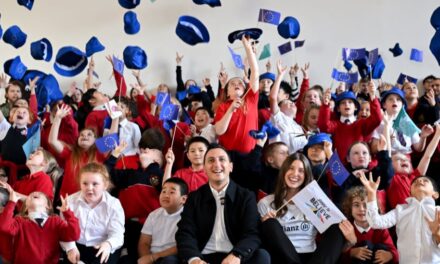
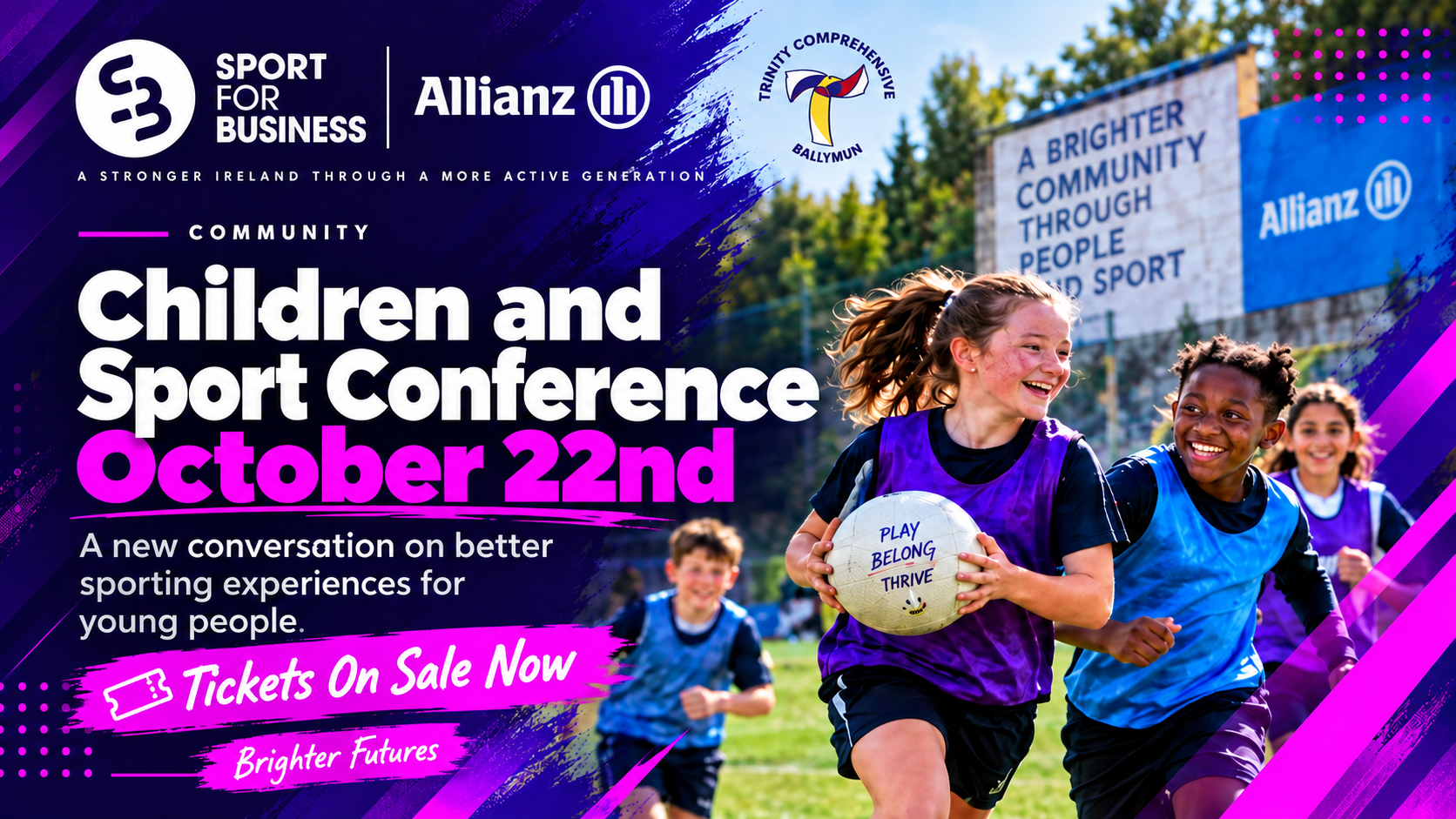
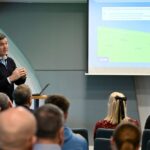
The Olympic Federation of Ireland is launching an independent evaluation of its Dare to Believe schools programme today, Thursday 22 October, at the Sport for Business Children in Sport Conference, supported by Allianz and taking place at Trinity Comprehensive School in Ballymun, Dublin.
Dr Eimear Kelly’s research highlights measurable gains in confidence, self-belief, and attitudes towards physical activity among participating young people, as well as the value of Olympians, Paralympians, and high-performance athletes meeting students in person and sharing the less polished parts of their sporting journeys.
Dare to Believe, sponsored by Allianz and supported by Olympic Solidarity, combines classroom resources with visits from athletes to schools around Ireland.
A central finding of the evaluation is that the impact of those visits comes not simply from sporting achievement, but from athletes’ ability to tell stories about setbacks, perseverance, late starts, and moments when progress has not followed a straight line.
That relatability seems particularly important in helping students see elite athletes not as distant figures, but as people whose experiences may relate to challenges in their own lives.
The research found increases in students’ confidence and self-belief, including their capacity to set goals and persevere, regardless of whether they themselves were already involved in sport.
It also identified a positive shift in attitudes towards physical activity, with students reporting increased motivation to take part in sport after completing the programme.
Teachers reported high satisfaction with Dare to Believe’s structure, the quality of the classroom resources, and how easily the programme can be incorporated into school life.
Athlete ambassadors also reported benefits from taking part, including a stronger sense of purpose and connection with their communities.
For many students, the athlete visit itself was the most memorable element of the programme.
“The Dare to Believe evaluation shows a programme in high demand, with around one in ten school applications resulting in a visit,” said Dr Eimear Kelly.
“Relatability, accessibility and attainability are key to what makes an athlete a role model. Meeting an athlete in person matters to students, and the athlete’s ordinary story, setbacks and late starts, resonates most.
“That sense of ‘someone like me’ helps young people begin to imagine what might be possible.”
The evaluation also found that school preparation can shape a visit’s impact, with those who integrated the programme most fully into classroom activity appearing to gain the most.
Dare to Believe founder and Olympian Roisin McGettigan said the findings supported the principles on which the programme had originally been created.
“We created Dare to Believe to help children see what’s possible when they believe in themselves,” she said.
“The combination of classroom learning and athlete storytelling is powerful. It gives students tools for life, not just sport.”
Demand for the programme continues to exceed the number of athlete visits currently available, with the research suggesting only around one in ten applications results in an ambassador visit.
The launch at the Sport for Business Children in Sport Conference brings the findings directly into a wider discussion involving schools, sporting organisations and those working to improve opportunities for children to experience and benefit from sport.
The conference, staged with support from Allianz, explores the role of physical education, schools, community organisations, and national sporting programmes in encouraging participation and creating positive sporting experiences from an early age.
Sport for Business Perspective
This offers an important lesson for sport that goes beyond Dare to Believe itself.
Athletes are frequently described as role models, but this research provides useful evidence around what actually makes that role effective.
It is not necessarily the medal, the international appearance or the moment on the podium that creates the strongest connection. The greater impact can come from athletes being prepared to talk about disappointment, persistence, uncertainty and the moments when their sporting pathway looked anything but inevitable.
Done properly, athlete engagement in schools can build confidence, wellbeing, physical activity, and young people’s wider development.
Allianz’s support of both Dare to Believe and the Sport for Business Children in Sport Conference reflects the value of sustained investment in programmes that connect sporting achievement with opportunities for young people.
Independent evaluation adds another layer to that relationship, providing evidence of outcomes beyond the more traditional measures of sponsorship exposure and visibility.
The research also raises a question of scale. With demand for athlete visits substantially exceeding availability, there is an opportunity to explore how more schools can benefit while preserving the personal connection that appears so central to the programme’s success.
Launching the findings at a conference dedicated to the wider benefits of children’s involvement in sport offers an appropriate setting to consider that challenge and examine how schools, sporting bodies, and commercial partners can work together to extend the reach of initiatives that demonstrate meaningful impact.
The full evaluation is available through daretobelieve.ie.
 Dublin City Council and the Department of Culture, Communications and Sport are full members of Sport for Business.
If you would like to join the Sport for Business community and see your organisation in our content, on our stages, and in the daily conversation around the commercial world of Irish Sport, email us today and let’s see what is possible.
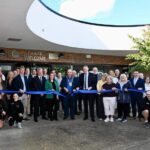
Image Credit: Dublin City Council
ABOUT SPORT FOR BUSINESS
Sport for Business is Ireland’s leading platform focused on the commercial, strategic and societal impact of sport. It connects decision-makers across governing bodies, clubs, brands, agencies, and public institutions through high-quality content, events, and insights.
Sport for Business explores how sport drives economic value, participation, inclusion and national identity, and how your story can be part of ours.
Through analysis, storytelling and convening the sector, it helps leaders understand trends, share best practices, and make better-informed decisions. It positions sport not just as entertainment but as a vital contributor to Ireland’s social and economic fabric.
Find out more about becoming a member today.
Or sign up for our Daily Sport for Business Snapshot email bulletins to get a flavour of the material we cover.
Sign up for our News Bulletins here.