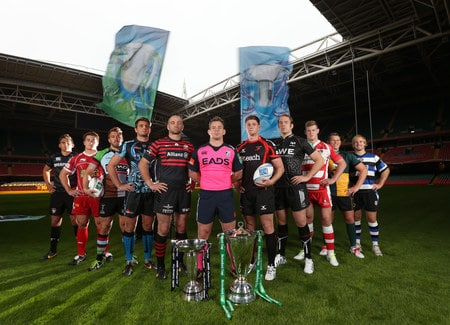
 Now we know the terms and conditions of what European Rugby Cup Limited has agreed with the Unions of Ireland, England, France, Scotland Wales and Italy. Today we pose four key questions which will determine whether they can be brought to life and the Heineken Cup in close to it’s present form saved.
First the terms. There will be two tournaments along similar lines to the Heineken Cup and Amlin Cups as exist at present.
The premier event will have twenty teams with six drawn from the top six teams in the English Premier Leaugue, six from the top six of the French League and seven drawn from the top seven finishing positions in what remains for this season as the RaboDirect Pro12. The latter though will guarantee one from each of Ireland, Wales, Scotland and Italy.
The 20th team will be determined in the first year by a play off between the English and French clubs that finish 7th in their respective leagues.
Now the conditions. Revenues generated through the tournament will be divided on an equal basis between the English, French and Celtic/Italian nations, each group receiving one third but with the caveat that Ireland, Wales, Scotland and Italy will receive no less than they currently do in real terms.
And finally, for now, the questions.
1. What is the likely reaction of the clubs that have pushed so hard to wrest control of the competition from the unions and the ERC?
The initial response is to welcome what they saw as their demands being met on numbers of teams and splits of revenues. That’s a positive. They highlighted though that the structure of governance was equally important and that a three way split in this area was of equal importance so they ‘would not be hamstrung’ in the words of English Premier League boss Mark McCaffery by the ‘smaller nations’.
It is possible that this could also be conceded by the unions so that they maintain control of this key element of the sport, and that they work together as one for what would be the best outcome for the sport. That would effectively mean it was the new structure proposed by the clubs but still organised by the existing management and the unions.
2. What about the broadcast rights?
This critical question was not covered in the agreement proposed yesterday nor referenced in any way. That is impossible to ignore as there are contracts signed between the clubs and BT Sport on one side and between Sky and the unions on the other. This is the area where compromise does not work as neither broadcaster would gain the maximum benefit that their investment demands by sharing. Yes. it does happen in the Premier League so it is possible but Rugby’s audiences are smaller and the debate here is as much about laying down a marker in a bigger battle as it is about audience share on a Saturday afternoon.
TV is providing the big money that makes this so important for the clubs, the players and the sport. It is the biggest hurdle that has to be overcome.
3. What next?
The Unions and the mediators are to meet again on November 1st to address ‘operational and management issues’. It is unclear whether the rebel clubs would be invited or willing to attend. If the Welsh clubs were to row back on their intention to jump ship to the Rugby Champions’ Cup it could still mean salvation for the status quo. But the clubs have indicated that they are planning away regardless.
4. What about sponsors?
It is unlikely that any substantive discussions have taken place with sponsors of either tournament. Early feelers will have been established but the kind of detailed planning that would go into activation of a major deal like this is unlikely until greater clarity exists on whether it will happen.
 Get a head start by signing up to our daily news digest. Relevant information on sport and business from around the world. Delivered Free before 8am.
Be part of the ideas we generate that can make a real difference between sport and business by joining us today
.