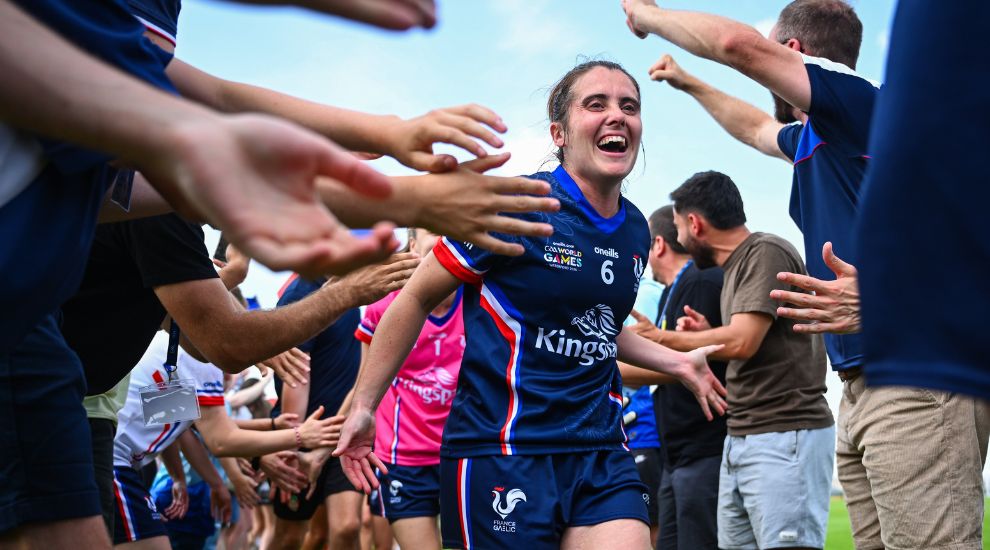
While attention on Sunday naturally turned towards Croke Park and the FIFA World Cup Final, one of the most significant sporting events of the Irish summer quietly drew to a close in Waterford.
The 2026 O’Neills GAA World Games brought together more than 2,000 players representing 113 teams from over 30 countries for what was the largest international gathering of Gaelic Games ever staged. Across five days, more than 400 matches in Gaelic football, hurling, ladies football, camogie, and, for the first time, handball were played, illustrating just how far Ireland’s indigenous games have travelled.
The tournament has become a living demonstration of sport as a vehicle for diplomacy, tourism, cultural exchange and international business relationships. That message was reinforced through the inaugural World GAA Connects forum, which brought together political leaders, Enterprise Ireland, IDA Ireland, business representatives and members of the global Irish diaspora to examine how the GAA’s worldwide network can support Irish enterprise overseas.
Few people have done more to shape that international vision than GAA International Manager Charles Harrison, whose reflections throughout the week captured the ambition behind the event.
Ahead of the Games, Harrison described Waterford as “ready” for what would be “the largest ever” World Games, thanking the hundreds of volunteers, organisers and clubs who made the event possible. He reminded participants that while more than 400 games would be played, “the World Games are about much more than sport,” highlighting the opening and closing ceremonies, the cultural programme and the World GAA Connects business forum as integral parts of the festival.
Speaking to RTÉ during the tournament, Harrison reflected on the remarkable scale of international growth.
“We’ve 113 teams taking part from all over the world. We have 43 teams from Europe here. We have 29 teams from the USA. We’ve 2,000 participants coming to play our games.”
He added that the GAA is now supporting “560 clubs” worldwide and is working to provide meaningful competition for players across every continent.
Perhaps the most telling statistic of all is that around three-quarters of those taking part are now local players from the countries they represent, rather than Irish emigrants. Gaelic Games are evolving from sports sustained by the diaspora into ones increasingly embraced by local communities around the world.
That point was echoed by Minister of State for Sport Charlie McConalogue, who described the World Games as “the ultimate example of us taking the best of our culture and sharing it with people around the world.”
He praised the growth of Gaelic Games to more than 560 clubs across over 50 countries and argued that this worldwide network represents “a huge asset” for Irish businesses seeking to strengthen international relationships. He also commended Harrison and the World GAA team “for organising such a fantastic event.”
Among the many stories to emerge from the week, the performances of teams from Zambia, Paraguay and across continental Europe illustrated the extraordinary reach of the Association. French clubs, where around 90 per cent of players are French-born, continue to demonstrate how Gaelic Games are becoming rooted in communities with little or no traditional Irish connection.
Sport for Business Perspective
The combination of international participation, Government backing, sports diplomacy, business networking and diaspora engagement points towards a model that few sports can replicate. Ireland possesses an authentic global community built not around commercial franchises but around volunteers, clubs and shared identity.
The success of World GAA Connects this week suggests considerable scope to develop it further. Enterprise agencies, tourism bodies, universities, and Irish businesses all have the opportunity to engage with a trusted international network that already operates in more than 50 countries.
The World Games may only come around every three years, but their legacy is visible every weekend wherever Gaelic Games are played around the world. That makes them not simply one of the GAA’s most inspiring events, but increasingly one of Ireland’s most valuable sporting assets.

 The GAA, LGFA, Camogie Association and the Department of Culture, Communications and Sport are full members of Sport for Business.
If you would like to be part of the Sport for Business community and see your organisation in our content, on our stages, and in the conversation happening every day around the commercial world of Irish Sport, email us today and let’s see what is possible.
Image Credit: GAA and Shauna Clinton, Sportsfile. France Players Celebrate after victory over San Francisco at Walsh Park, Waterford
ABOUT SPORT FOR BUSINESS
Sport for Business is Ireland’s leading platform focused on the commercial, strategic and societal impact of sport. It connects decision-makers across governing bodies, clubs, brands, agencies, and public institutions through high-quality content, events, and insights.
Sport for Business explores how sport drives economic value, participation, inclusion and national identity, and how your story can be part of ours.
Through analysis, storytelling and convening the sector, it helps leaders understand trends, share best practices, and make better-informed decisions. It positions sport not just as entertainment but as a vital contributor to Ireland’s social and economic fabric.
Find out more about becoming a member today.
Or sign up for our Daily Sport for Business Snapshot email bulletins to get a flavour of the material we cover.
Sign up for our News Bulletins here.