 The IRFU Strategic Plan was launched this week. It is a detailed statement of where the sport hopes to be by 2023 and how it plans to get there. Much of the media focus was on a stated ambition of winning trophies at the top end but we prefer to look at the detail in the structure of the sport upon which those ambitions can stand.
Irish rugby is in good shape, possibly never better. A Grand Slam and a Heineken Champions Cup / Guinness PRO14 double done last season and a strong sense of confidence and purpose as we head towards a World Cup in 2019 have made us bold.
And yet there are undoubted issues within the sport which the IRFU have rightly seen as their job to address.
Part of the strength of Irish rugby is the identity it fosters. ninety percent of those who play for Leinster were born in Leinster. Most of them will have gone to the same select group of rugby playing schools where the sport is an integral part of their swing from child to adult.
Yet sometimes that strength can be a weakness.
Rugby dominates our sporting culture like nowhere else bar New Zealand. Yet few of those who pack Thomond or the Aviva, the RDS, the Sportsgrounds or Kingspan Stadium have actually played. We love the sport because we are good at it but for most, it is an arm’s length support, less grounded in the clubs academy’s and universal folklore than the GAA or football.
Neil Francis caused a stir last year when claiming it as Ireland’s true national sport. Widely applauded by those cut from a similar background it was looked on in a more bemused fashion by many more.
We are a nation that will not let a bandwagon pass without hopping aboard. It adds to the joy of the nation but the bonds it creates can be a little weaker than we would like.
When Munster’s form dipped so too did the crowds in Limerick, and that from a hotbed of ‘never give up’ strength.
So then in order to maintain the top strata of the sport work needs to be constantly done on the foundations and that is where the strategic plan is of greatest interest.
 It looks to increase the number of players by eight percent to 210,000. That may seem on the low side but the sport is battling against worries over concussion and in fact, it could be seen as ambitious.
It will not happen by accident and the Rugby Development Programme will provide the pointers to how it can be achieved.
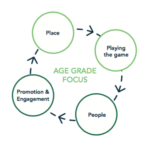 It is divided into four distinct areas of developing good facilities, encouraging a better playing experience, improving the supports available to volunteers at every level and expanding the ‘Spirit of Rugby’ concept to promote the sport better.
Rugby 7’s looks to be a key part of the promotion to non-traditional areas which is a smart move. Five a side soccer lifted the participation and engagement rates by being simple. Rugby in the 15 a side format is a technical and skilled sport which does not lend itself to late adoption. Sevens, on the other hand, is as easy as ‘Jumpers for Goalposts’ and can be a real winner to encourage people to get involved at a lighter level.
The success of Aldi’s Play Rugby campaign in primary schools is highlighted as well as the importance of transitioning players into clubs and new secondary schools.
The clubs will be critical and perhaps need to be better treated than is currently the case in relation to schools.
A major problem for clubs that have a thriving mini section is that once the kids get older and go to a secondary school that they become locked into that system and taken away from the clubs. If you are good enough to play at school you can’t play for club, leaving those behind to wonder if they are not good enough then why bother.
School days finish but the expectation then, at such a time of change in the lives of young people, that they should go back to the club scene from which they have been absent for six such formative years is a big reach.
To suggest a lessening of the premium on the schools game would be heresy at the present time but it is the elephant in the room when it comes to club rugby. Perhaps in the next Strategic Plan times will have changed a little more and clubs will be seen as too precious an element on the pathway to World Cup success to be squeezed on one side by schools and on the other by the dominance of the provincial system.
Tomorrow we will turn our attention towards the financial elements of the plan. If you have a view on what we have expressed here today, please feel free to get in touch. None of us have all the answers and debate is the best way to stimulate change for the better.