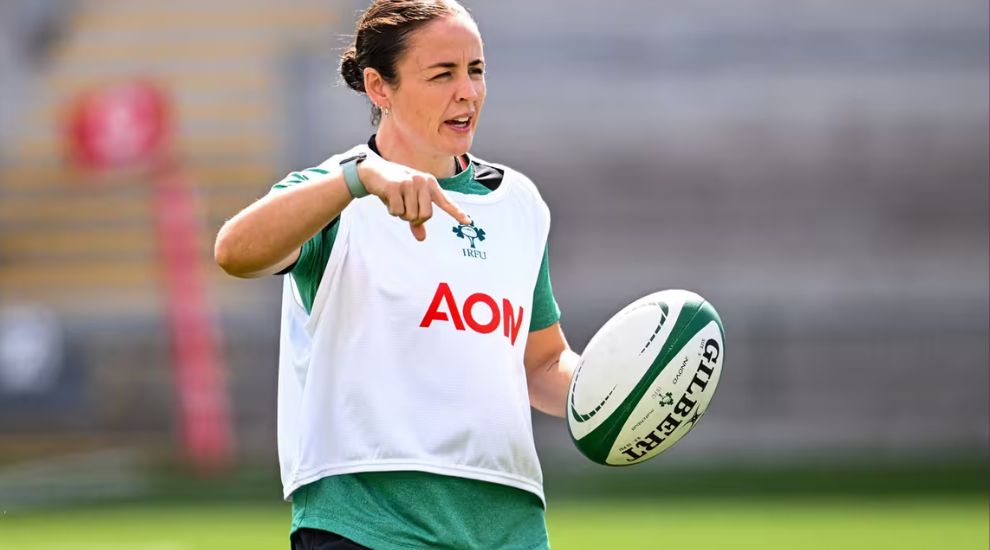
Irish Rugby has announced the appointment of four full-time provincial Women’s Rugby leadership roles in a landmark step in the continued development and professionalisation of the women’s game across Ireland.
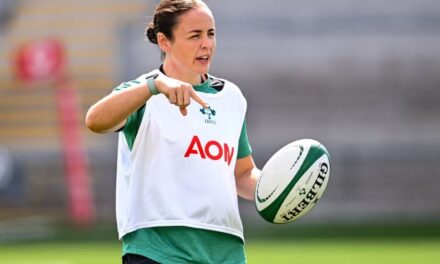
Larissa Muldoon has been appointed in Connacht, Derek Maybury in Leinster, Niamh Briggs in Munster, and Neill Alcorn in Ulster.
The appointments follow the earlier advertising of the roles as part of a coordinated national strategy to strengthen the player pathway, support the transition from age-grade to senior rugby, and accelerate growth across the four provinces.
The new roles will form an integrated provincial network, with a particular focus on players aged between 16 and 23, creating a more connected bridge from domestic rugby and provincial age-grade development through to the senior performance environment.
Building the Pathway
The roles sit deliberately at the intersection of domestic rugby, age-grade development and performance pathways. The aim is to create a more sustainable and aligned system across the country, with each province having dedicated leadership while also contributing to a national framework.
It is a significant structural development at a time when women’s rugby in Ireland is growing in profile, participation and ambition.
Three of the successful candidates, Muldoon, Briggs and Alcorn, move into the roles from positions within the Women’s National Talent Squad and associated pathway programmes. Irish Rugby says those vacated WNTS roles will now be advertised, creating new opportunities for coaches and practitioners to work within the women’s high-performance pathway at an earlier stage of player development.
That creates a useful ripple effect within the system. Experienced leaders move into senior provincial pathway roles, while new appointments into the WNTS structure can strengthen the next layer of talent identification and development.
Experienced Leadership
Muldoon and Briggs both bring strong international playing experience to their new roles, with Briggs a former Ireland captain and central figure in the Grand Slam-winning side of 2013. Muldoon was also part of that historic generation and has since built her reputation in coaching and player development.
Maybury will lead the Leinster role, while Alcorn’s appointment in Ulster continues his involvement in the women’s pathway.
The four appointments give Irish Rugby a named leadership point in each province, charged with improving alignment, standards and player experience. Each province will adapt the role to its own needs, but the wider ambition is clearly national.
“These appointments represent a hugely important step forward for the women’s and girls’ game in Ireland,” said Lynne Cantwell, Head of Women’s Strategy at Irish Rugby.
“By establishing dedicated leadership roles in each province that are centrally connected through Irish Rugby, we are building the structures needed to support players at every stage of their journey, within a connected system of people across domestic, pathway and performance rugby.”
“Just as importantly, the movement of experienced people into these positions creates new opportunities within our national talent programmes.”
“That ripple effect strengthens the entire system, from emerging players to the coaches and performance support staff who support them, and ensures we continue to build depth and sustainability across women’s rugby.”
Cantwell also reflected on the passing last week of Philip “Goose” Doyle, one of the most influential figures in the history of the women’s game in Ireland.
“It has been a difficult week for women’s rugby in Ireland following the loss of Philip ‘Goose’ Doyle, who was so influential in women’s rugby,” she said.
“Knowing him as we did, we know he would be happy to see the signs of growth in the game through the roles being announced, reflecting progress being made and building on the legacy he leaves.”
Delivery
The key test now will be delivery: ensuring that the new network creates consistency across provinces, supports players wherever they are based, and builds the coaching and support structures needed to match the ambition of the women’s game.
For players, coaches and clubs, the move should provide a clearer line of sight between the domestic game, provincial development and national performance programmes.
Sport for Business Perspective
The professionalisation of women’s sport is not only about contracts at the top end of the pyramid. It is equally about the systems beneath the surface: the coaches, administrators, performance staff, and development leads who create the conditions for talent to flourish.
These four appointments are significant because they put dedicated leadership in place across all four provinces and connect that leadership to a national plan.
In commercial and strategic terms, that matters. Brands, broadcasters, communities and supporters are increasingly drawn to women’s sport when they can see clear ambition backed by real infrastructure.
Irish Rugby has had challenging periods in its recent relationship with the women’s game, but this is a tangible step in the right direction.
The legacy of Philip Doyle was built on belief, persistence, and the ability to bring players along. The next phase will require those same qualities, but within a more modern, connected and properly resourced system.

 The IRFU and each of the provinces are full members of Sport for Business.
If you would like to be part of the Sport for Business community and see your organisation in our content, on our stages, and in the conversation happening every day around the commercial world of Irish Sport, email us today and let’s see what is possible.
Image Credit: Irish Rugby, Inpho.ie
ABOUT SPORT FOR BUSINESS
Sport for Business is Ireland’s leading platform focused on the commercial, strategic and societal impact of sport. It connects decision-makers across governing bodies, clubs, brands, agencies, and public institutions through high-quality content, events, and insights.
Sport for Business explores how sport drives economic value, participation, inclusion and national identity, and how your story can be part of ours.
Through analysis, storytelling and convening the sector, it helps leaders understand trends, share best practices, and make better-informed decisions. It positions sport not just as entertainment but as a vital contributor to Ireland’s social and economic fabric.
Find out more about becoming a member today.
Or sign up for our twice-daily bulletins to get a flavour of the material we cover.
Sign up for our News Bulletins here.