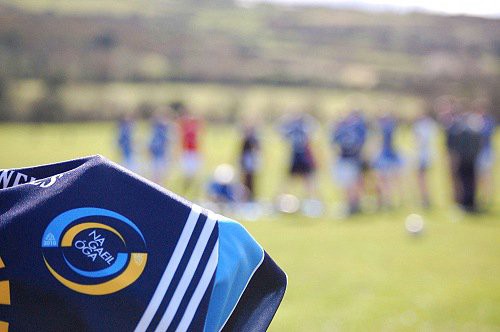
 Daithí de Butléir is a former member of Sport for Business through the Thinkhouse agency. He has kept in touch with us through his journey to the United States where he now lives in New York and works as a Chief Marketing Officer in the technology sector.
Last week he reached out to see if we would be interested in publishing this reflection of his helping to create Na Gael Óga GAA club and the lessons he has taken from that through his life. This time of year is one of reflection and once we had read it we thought it was a perfect fit for many of the strengths that come from being involved so closely around sport at every level.
We hope you will feel that it is a worthwhile read as well.
9 things starting an Irish-speaking GAA club has taught me about business & life
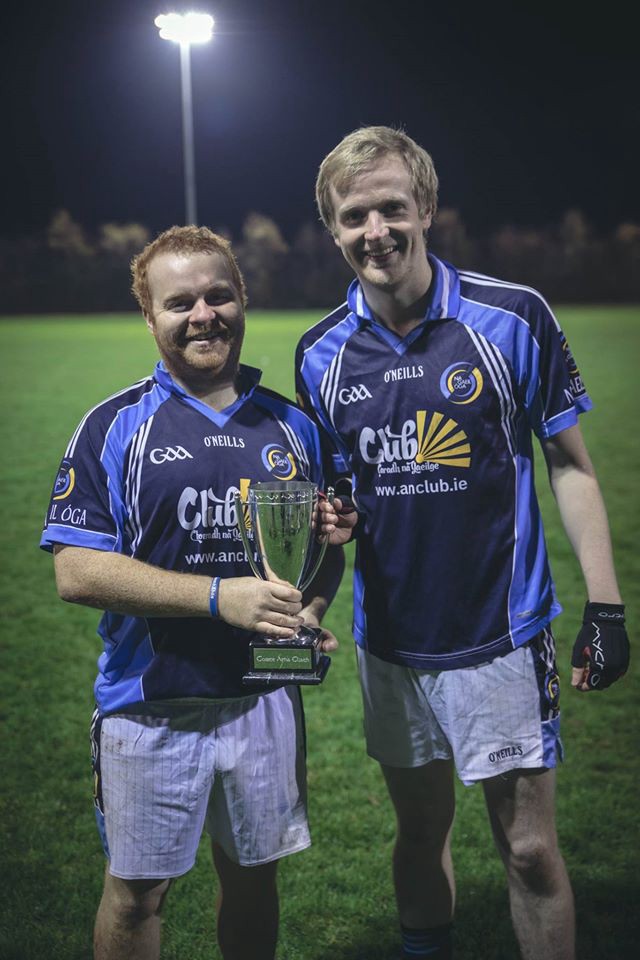
When I was 20 years of age, I was lucky enough to fall in with a small group of young Irish speakers with big ambitions. We ended up starting Na Gaeil Óga CLG, Dublin’s Irish speaking GAA club which now has over 500 members across 25 teams. We’ve created a vibrant outlet for young Irish speakers to explore their love of language through sport and in the process created Ireland’s fastest growing sports club.
The club has played a massive role in my development. It’s given me the confidence and skills to chase other entrepreneurial dreams and is a constant source of learning for me. As the 10th anniversary of our foundation approaches, I just wanted to take a step back to reflect what Na Gaeil Óga has taught me about business & life.
1. Look after people and results will come
The GAA is one of the most amazing social, cultural and sporting organisations in the world. However, there are hundreds of thousands of people all across Ireland who have become disenfranchised with an association they love. For many of these people a ruthless pursuit of perfection has caused them to stop playing the games they love.
Through a mixture of accident and design, Na Gaeil Óga have always prided ourselves on being a people orientated GAA club. People have feelings, emotions, wants and needs, and for a sporting club or any organisation to maintain a relevance in people’s lives they have to give fulfilment to people. For some people that is being fit, for others it’s being the best hurler they can be, for others it’s about camaraderie or learning a new language.
Sometimes people forget the GAA is a cultural and social organisation, not simply a sporting one. Na Gaeil Óga are committed to ensuring these three principles thrive hand in hand.
We want to move away from the age old GAA narrative of dictating to people how they need to live their lives. By providing a balanced environment in which people can thrive both as sports people and human beings, we are creating an atmosphere which people will go out of their way to be a part of.
Key Learning: Create spaces for people to learn, laugh and grow and you will become a key part of their lives.
2. Energy combined with experience can move mountains
When we started Na Gaeil Óga CLG, I don’t think there was a single member of the executive committee over the age of 30. I was chairperson at 20. The energy we had was infectious. We were on a mission and would do anything it took to grow as a club or a team.
If there was a sniff of a new player to be had, we’d follow it. Our methods weren’t always conventional. I remember one night the whole team (there was probably about 10 of us at this stage) headed to Coppers dressed in full kit to try and rustle up a few more players. I’m sure there was more than a few sore heads scratching their heads wondering why they were getting texts in Irish the next morning.
However, our energy wasn’t always enough. There are a million and one small nuances which go into running a GAA club, dealing with the county board, sourcing pitches etc. We were blessed to have one or two more experienced members who helped out as managers, coaches, mentors and advisors. People who might never have done the exact thing we were doing but had a wealth of experience from other projects. They ensured we were always focusing on the key areas of Na Gaeil Óga, helping us to accelerate our growth at all times.
Key Learning: When you are going on any journey, try to find people who’ve been on similar journeys before.
3. The best time to grow is when you are growing
The temptation when you land on a good thing is to stand still. However, this is also the best time to keep pushing and growing. When we started Na Gaeil Óga, everyone was so energised by the success that we went from 0 to 5 adult teams in three years. We added one adult team over the next five seasons. When growth is your normal, people are always in stretch mode looking at ways to contribute to growth. As soon as things slow down a little it can be harder to reignite the beast and get everyone to adopt a growth mindset again.
Every year we try to organise multiple challenges matches between our adult teams and juvenile teams in the club. It’s important to give children something to aspire to.
We’ve learned from this with the juvenile section, we’ve gone from 0 to 20 teams in five years and are still growing at a phenomenal rate. People consistently go above and beyond the call of duty to keep this incredible growth.
Key Learning: It’s easier for people to get out of bed in the morning to build something special than it is to keep trucking along.
4. It’s not them, it’s you
Na Gaeil Óga are in the slightly sensitive position of having not had any juvenile teams come all the way through to adult level yet. We won’t be in this position for another six years. This means that the vast majority of our players have played for other clubs previously. In the parochial driven nature of the GAA this can be contentious for certain people.
The vast majority of players who come to Na Gaeil Óga have not played with any club for a few years. When I ask incoming players why they stopped there is a variety of answers, generally it comes back to one of two macro issues, the commitment required to continue playing was becoming physically and emotionally exhausting or they felt that the atmosphere in their local club had become toxic and unwelcoming.
Create environments people enjoy being a part of
This Christmas all over the country GAA clubs will congregate and inevitably conversations will turn to players who have slid away from the scene over the last few years. Many players will be dismissed as flaky or soft. In so many cases the players have just developed a severe emotional allergy to the pervasive culture within their clubs. This culture of belittlement is doing nothing to get people back into GAA clubs. More often than not the problem is with your club and it’s culture.
In life and in business don’t judge people who have stopped coming back, reach out to them and ask them why?
Key Learning: When things aren’t going to plan, sometimes you need to look at yourself, not just at other people.
5. Bumps are inevitable, don’t let them define you
It’s not easy to start things, sometimes it’s even harder to sustain them. Setbacks happen. Over the years with Na Gaeil Óga we’ve had plenty. We’ve lost big matches, been relegated, given walkovers, trainers have quit, managers have stepped down, players have walked away. The easy thing to do in these situations is panic, however panic leads to indecision. Indecision leads to a downward spiral.
We’ve come through every setbacks stronger because we knuckled down and ploughed on. I remember one year, one of our adult football teams got relegated with the last kick of the game in a relegation play-off. Of the team that played that day — the goalkeeper, the full-back, centre-back, two midfielders and centre-forward all decided they couldn’t commit to playing football the following year due to work, travel, hurling etc. This was a team who had been promoted three years on the bounce, they weren’t used to losing. Now the core of their team was gone. The easy thing to do was slide into terminal decline.
The leaders stood up, they organised themselves and went again. In spite of a bumpy start to the next season, they went on to win promotion again next year and followed that up with two league wins on the bounce.
Lots of people can identify problems, the difference between progression and decline is the ability to get down off the ditch and do something about it.
Key Learning: Setbacks will come, are you going to roll up your sleeves and come out stronger or are you going to live in a world of what could have been.
6. Sometimes unconventional answers are the best ones
The GAA is an organisation steeped in tradition. There are massive amounts of positive aspects to this. However, one downside is that people are constantly benchmarking themselves against other clubs. Worrying about how many people they have training, who is managing them etc.
This has caused challenges for us over the years. Ultimately we are building a type of club which has never been built before. This means that while we share a lot of commonalities with other GAA clubs, there are certain challenges which are unique to us. We need to worry less about what everyone else is doing and figure out how to solve our own problems.
A great example is team managers. There is a tried and tested model for running a GAA team which consists of centralised management teams generally consisting of ex-players/coaches etc. In recent years the GAA have seen a trend of club managers being paid even at low levels to train and coordinate teams. Na Gaeil Óga has never been in a position to do this. We’ve made a conscious decision to invest any additional resources we have in our burgeoning juvenile structure.
This often leaves our teams at a crossroads where they can’t find a manager. Instead of worrying ourselves into paralysis we’ve reimagined what management means. Ultimately if you decentralise responsibility amongst the players, let someone communicate with players, let someone train the team, let someone else coordinate on match days you are left with a model which incentivises players to take responsibility for themselves.
Interestingly, of our three adult teams which reached finals this year, all of them were run and managed by players. Sometimes they were supported by non-playing selectors who helped out on match days allowing the players to concentrate fully on their performances. Since we started the club, every team which has transitioned from a non-playing management to a playing management structure has been promoted within a year or two.
This isn’t to say that the right non-playing management won’t help drive teams on in the future. In fact, finding further managerial support for teams is a massive challenge for the club and any input is welcome. However, we’re not happy to let it be a barrier to our progress.
Key Learning: Just because everyone else is doing something, doesn’t mean you have to do it too. Find the way that works for you with the resources you have available and keep moving in the right direction.
7. It pays to be positive
In the early years our adult hurlers were struggling, we hadn’t won a match in 9 months. We were barely scraping the bodies together required to field a team. We actually made the national press at one stage because we lost a match 8–12 to 2–9 against a team who hadn’t won a match in three years. It wasn’t the most enjoyable place to be.
That winter I got a call from a senior player recommending we fold the team. The appetite just didn’t seem to be there. I rang around a few other players for a temperature gauge. One player spelled it out simply “The environment has become too negative, people are getting on each others backs about mistakes — if we just outweigh the positivity with negativity the thing will take off”.
That one mindset switch really turned things around. We went on to get promoted three years on the bounce. We didn’t ban negativity, sometimes home truths are needed. However, we did make sure to keep constant streams of positivity reinforcing to people what they were doing well. The leaders on the team would keep watch on each other. When one person was negative, they would follow up 5 minutes later with a large dose of positivity to keep the atmosphere around the group upbeat.
It’s scientifically proven that negativity is bad for your health, however, the way our brains are wired means that we are often predisposed to be negative about certain things. Making a conscious effort to become more positive not only helps you become a happier person but it also helps you build dynamic environments in which people can thrive.
Key Learning: Stop telling people what they are doing wrong and start telling them what they’re doing right.
8. Vulnerability is a great trait
Silicon Valley gurus and psychology experts all agree on the strengths of a growth mindset. I’ve been lucky to do many weird and wonderful things in my life which have helped me grow as a human.
Without a doubt the thing for me which embodies growth mindset more than anything is learning language through immersion. I’ve had the pleasure to do this with Irish & French in my time and intend to knock off another few languages throughout my life.
The world over we are socially conditioned to be “strong”, whatever that means. People are often afraid to show weakness, in relation to health, their position in society etc. This can become a massive barrier to growth for people. It stops them having honest conversations with themselves and people who are important to them. It also stops people achieving what they want to achieve in life.
To learn a language through immersion is to reject this philosophy, it shows a willingness to embrace vulnerability. It is to intentionally place yourself in a social setting where you will not be the strongest so that you can grow. It can be tough and frustrating at times but it’s enlightening and transformative for many people.
I have so much respect for the 100s of people who have made this jump with Na Gaeil Óga. When you stop worrying about how other people perceive you and start embracing new ideas and concepts, magical things can happen.
Key Learning: Jump in at the deep end more often, learn to swim and grow as a human.
9. It’s about the journey not the destination
In sport and life it’s easy to obsess over results. Over the last 10 years, I’ve been on a rollercoaster. I’ve played on teams that have won and teams that have lost. We’ve been promoted and relegated. We’ve celebrated like we’ve won All-Irelands and we’ve drowned our sorrows like we’ve lost ones.
When I look back on it, it’s easy to hone in on the victories snatched from the jaws of defeat or the hammer-blow loses. That’s not what its about. It’s about the 1,000 fleeting moments of magic in-between.
It’s the friendships and memories which transcend a game.
It’s pulling on a jersey which used to mean nothing and now means something to so many people.
It’s the thanks of an old man who can rest peacefully knowing his tradition lives for another generation.
It’s knowing you’ve done your best and there’s no more you can do.
It’s seeing the excitement on a child’s face as they play their favorite game in a language they love.
It’s the smiles, the laughter, the tears, the joy.
It’s about the journey.
Key Learning: Find something you’re passionate about and go for it. Who cares what happens, you’ll learn so much on the way