The Government has sought input from those with an interest in Irish Sport on how to frame a new national Sports policy for the next decade.
This is the first time in 20 years that such a framework will be adopted at Government level and it is a crucial opportunity to put sport into its important context as part of overall Government thinking.
The Key Areas of interest and the Sport for Business views on each are as follows:
- Contribution of sport
- Participation
- High Performance
- Local and Regional Facilities
- National Sports Campus
- Governance
- Coaching
- Volunteer engagement
- Safety in sport
- Integrity of sport and international influence
- Sport in a cross-sectoral context
- Outdoor recreation
- Sports Tourism
- Financing Irish sport
- Measuring the impact of sport
The questions asked of us in relation to Coaching
How can it be ensured that sports coaching is as effective as possible at all levels and that coaches are given the necessary support to work with a variety of people, including children, older people and people with disabilities
Coaching in its most holistic version is as much about values as it is technique. There is a recognition now not only of the critical importance of a good coaching infrastructure but of the fact that this will never happen by accident.
Each of the major sports has a strong programme of progressive coach education bringing mainly volunteer coaches through different levels of competence to keep up their skills.
Developing this to ensure that different life stages are catered for in terms of assistance with physical activity will be a further development needed in time and provide an outlet for the majority of coaches brought into the game through coaching their own children to stay with it when they have moved on.
Try out days as applied to players could be extended to include elements of coaching as well. This is an area which could be most important in areas of disability sport.
Our favourite coaching mantra for the development of children’s sport is one that was expressed most clearly by Pat Daly of the GAA. His belief is that up to the age of 12 children in sport are playing to learn, only from then to the age of 16 should they be learning to compete and only from then into adult sport should they be competing to win.
The belief that the final score of an under 8 game is the single most important element of introducing children to sport is almost certain to leave them burned out early and turning away from sport in playing terms when they can make their own choices.
How effective are the current coaching structures?
The idea of the coach as an omnipotent factor in the success of any sporting team or athlete is fuelled by media coverage that hangs on every word.
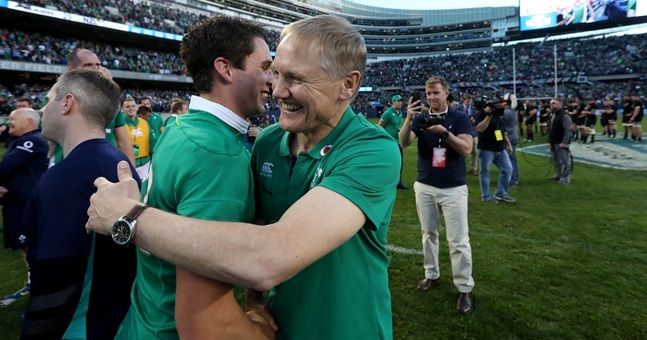
Joe Schmidt, Jim Gavin, Stephen Kenny and Martin O’Neill in Ireland are credited with being among the best in Europe if not the world within their spheres and the production of talent coming through to senior and elite level appears to suggest a strong tier at grassroots level as well.
There is in a volunteer environment perhaps still too little time given over to continuous development of a coaches skills but that tends to happen with younger coaches coming on stream and bringing their own fresh ideas.
Are there areas within the current coaching structures that could be improved?
A greater education on matters of technology in general and ‘distance’ coaching in particular would be a useful development over time. The use of camera based and stats based coaching tools is widely prevalent at elite level and will become ever more so throughout every level of sport.
Making sure that our next generation of coaches are familiar with these developments will be important.